
 Destinations, Experiences & East Africa Travel
Quick answer: Laikipia conservancies are private ranches and community-owned lands on the Laikipia Plateau, managed for wildlife, cattle and tourism. The best known are Ol Pejeta, Lewa, Borana and Loisaba. Nanyuki, the gateway town, is about 190 km (3 to 3.5 hours) from Nairobi by road, or 45 to 75 minutes by air from Wilson Airport.
Laikipia conservancies are private ranches and community-owned lands on the Laikipia Plateau in central Kenya, managed for wildlife alongside cattle and tourism, and home to black and southern white rhinos, Grevy’s zebra and the last two northern white rhinos. The county has no national park or national reserve, yet one research team puts its share of Kenya’s wildlife at about 10 percent. From Nairobi it is about 190 km (3 to 3.5 hours) by road to the gateway town of Nanyuki, or roughly 45 to 75 minutes by air from Wilson Airport.
This guide is the hub for our Laikipia County safari pages: what a conservancy is, how to get there, the main conservancies, wildlife, activities, the best months, costs, and how to combine Laikipia with the Masai Mara and Samburu. For geography alone, see where Laikipia is.
Planning this trip? Get a free quote in 6 hours →
Laikipia quick facts
| Topic | What to know |
|---|---|
| Location | Central Kenya, north of Mount Kenya and east of the Great Rift Valley. The equator runs through Nanyuki. |
| County size | About 9,000 km² (sources give 8,700 to 9,500 km²) |
| Altitude | Mostly 1,600 to 2,000 m above sea level |
| Gateway town | Nanyuki, population 72,813 at the 2019 census |
| Nairobi to Nanyuki | About 190 km, 3 to 3.5 hours by road; about 45 to 75 minutes by air from Wilson Airport |
| Land | Private ranches, trust land and community group ranches. The Laikipia Conservancies Association lists 24 members on 350,000 hectares. |
| Headline wildlife | Black and southern white rhinos, the last two northern white rhinos, Grevy’s zebra, reticulated giraffe, African wild dog, lion, elephant |
| Rainy seasons | Long rains March to May; short rains October and November |
| Temperatures (Nanyuki) | Days about 22 to 26 °C; nights about 7 to 11 °C |
| Fee example | Ol Pejeta daily entry: USD 110 per non-resident adult |
What is a conservancy in Laikipia?
In Kenya, a conservancy is land managed for wildlife that is not a government national park or reserve. In Laikipia that land falls into two groups. Private conservancies grew out of cattle ranches. Under colonial rule the British took much of the plateau’s fertile land and held it privately, and many ranches later rebranded as wildlife conservancies to attract tourism, according to a Yale Tropical Resources Institute summary. Community conservancies came later, owned collectively by the pastoralist families who live on the land. Il Ngwesi, for example, became a community conservation area in 1995.
The Laikipia Wildlife Forum, a membership body of landowners and communities, was founded in 1992. The Laikipia Conservancies Association, formed in 2019, lists 24 member conservancies covering 350,000 hectares. Set against the county’s area, that is roughly a third to two-fifths of Laikipia, by our own arithmetic from two different county-size figures. Many conservancies are still working ranches. Ol Pejeta keeps a herd of about 6,300 Boran cattle and reinvests its commercial revenue in conservation, and Sosian is a working beef and dairy ranch with one lodge.
The Laikipia Plateau
The Laikipia Plateau sits north of Mount Kenya, which forms part of the county’s south-eastern border and whose highest peak, Batian, rises to 5,199 m. Its volcanic rock formed 20 to 25 million years ago. Most of its rivers flow north and join the Ewaso Ng’iro, which runs on through Samburu National Reserve. Maasai, Samburu, Pokot and Turkana pastoralists graze livestock across the plateau, so a Laikipia safari passes through working land as well as wilderness.
How to get to Laikipia from Nairobi
By road, the route runs up Thika Road through Thika, Makuyu, Karatina, Nyeri and Naro Moru to Nanyuki. Ol Pejeta says two-wheel-drive vehicles can reach it in the dry season but recommends a 4×4 in the rains. Travelers with less time fly from Wilson Airport (not Jomo Kenyatta) on scheduled services by Safarilink and Air Kenya to Nanyuki and to airstrips at Lewa Downs, Loisaba and Kamok, the strip for Ol Pejeta. Nanyuki’s airstrip is a few kilometers south of town. Both airlines limit luggage to 15 kg in soft bags.
| Route | By road | By air |
|---|---|---|
| Nairobi to Nanyuki | About 190 km, 3 to 3.5 hours | Wilson Airport to Nanyuki, about 45 to 75 minutes |
| Nairobi to Ol Pejeta | About 220 km, 4 to 4.5 hours (Ol Pejeta’s figure) | Scheduled flights to Nanyuki or the Kamok airstrip |
| Nairobi to Lewa | About 4 hours (Lewa’s figure) | Wilson to Lewa Downs, about 45 minutes to 1 hour |
| Nairobi to Loisaba | Roughly 6 to 8 hours (operator estimates) | Wilson to Loisaba, about 1 hour |
| Nanyuki to Ol Pejeta | About 4 to 22 minutes, depending on the gate and lodge | — |
| Nanyuki to Lewa | 51 km, about 1 hour 23 minutes (route planner) | — |
| Nanyuki to Loisaba | 78 to 80 km, 1.5 to 3 hours depending on the road | — |
Road times are mostly route-planner estimates, so allow extra for Nairobi traffic. Our Nairobi to Laikipia guide covers both options in detail, and the Nanyuki travel guide covers the town. A typical blend is our 8-day Ol Pejeta, Masai Mara and Amboseli luxury safari, which drives to Ol Pejeta, then flies from Nanyuki airstrip to the Mara.
The main Laikipia conservancies
Sizes vary by source and by unit, so treat them as approximate.
| Conservancy | Approximate size | Known for |
|---|---|---|
| Ol Pejeta | 90,000 acres (about 360 km²) | Black rhinos, the last two northern white rhinos, Sweetwaters chimpanzees |
| Lewa | 62,000 acres | Rhinos, Grevy’s zebra, UNESCO listing with Mount Kenya |
| Borana | About 30,000 acres | Rhino tracking on foot, riding, Mount Kenya views |
| Loisaba | About 58,000 acres | Star beds, a young rhino population, a northern wildlife corridor |
| Segera | About 50,000 acres | Black rhinos since 2025, luxury retreat |
| Mugie | About 50,000 acres | Grevy’s zebra, Jackson’s hartebeest |
| Sosian | 24,000 acres | Working ranch, riding, walking, fly camping |
| Ol Jogi | About 234 km² | Private rhino sanctuary since 1980 |
| Suyian | 44,000 acres | andBeyond lodge opened July 2025, wild dogs |
| Il Ngwesi | 8,645 hectares | Maasai-owned eco-lodge, built 1996 |
Ol Pejeta
West of Nanyuki, Ol Pejeta is the easiest conservancy to reach from Nanyuki. It is not-for-profit, sits on the equator and describes itself as the largest black rhino sanctuary in East Africa, with well over 150 black rhinos. It is the only place to see the last two northern white rhinos, Najin and Fatu. The daily entry fee includes meeting the chimpanzees at Sweetwaters and an all-day game drive from 7 am to 7 pm. Night drives run in two slots, 7 to 9 pm and 9 to 11 pm, booked at least a day ahead. See our Ol Pejeta guide, the story of Najin and Fatu and the Sweetwaters Chimpanzee Sanctuary.
Lewa
Lewa lies on the northern edge of the plateau. Its rhino sanctuary began in 1983 and the conservancy was formed in 1995. In 2013 UNESCO extended the Mount Kenya World Heritage Site to include Lewa and the Ngare Ndare Forest. With neighboring Borana it forms a landscape of about 90,000 acres, and Lewa’s own page counts more than 280 rhinos there. Lewa also counts 264 Grevy’s zebra across the wider landscape and says 14 percent of Kenya’s rhinos live on the conservancy. Read the Lewa guide or the head-to-head Ol Pejeta vs Lewa.
Borana
Borana covers about 30,000 acres on the northern slopes of Mount Kenya. It received a founding population of 21 black rhinos in 2013. Borana Lodge lists tracking rhino on foot at first light, “Riding Wild” horse riding, e-bike rides and fly camping. That is the only listing we found that offers rhino tracking on foot, so do not assume it elsewhere. More in our Borana guide.
Loisaba
Loisaba covers about 58,000 acres of northern Laikipia and links the plateau to Samburu and Isiolo. In 2014 ownership moved to the Loisaba Community Trust with help from The Nature Conservancy. From January 2024, 21 black rhinos were translocated in to found a population, and a late-2025 newsletter reported 26 black and 11 white rhinos. Stays include Loisaba Tented Camp, Lodo Springs, Galago Private Canvas and the Star Beds, open-air beds on a rocky kopje above a permanent waterhole. Loisaba does not publish its conservation fee. See the Loisaba guide.
Private conservancies: Segera, Mugie, Sosian, Ol Jogi and Suyian
These properties are smaller, and most are built around a single lodge or retreat. Segera received 21 black rhinos from Ol Pejeta starting on 25 May 2025 into a 22,000-acre sanctuary. Mugie has two properties, Governors’ Mugie House and Ekorian’s Mugie Camp. Sosian, about two hours by road from Nanyuki, offers riding, walking and fly camping, and Expert Africa notes semi-resident wild dogs. Ol Jogi was provisionally registered with the Kenya Wildlife Service as a conservancy in March 2026. andBeyond Suyian Lodge opened in July 2025 with 14 suites. Solio, near Nyeri, has been a private rhino sanctuary since 1970. Details are in our guide to Laikipia’s private conservancies.
Community conservancies
Il Ngwesi is owned and managed by almost 7,000 Laikipiak Maasai pastoralists, and 40 percent of its eco-lodge’s net profit goes to community development such as water, schools and health. The lodge has six open-fronted cottages, two with star beds, and offers night drives and walks with a Maasai guide and an armed ranger. Lekurruki’s Tassia Lodge and the community-owned Koija Starbeds, opened in 2002, are other stays. See Laikipia’s community conservancies.
Two private ways to see Laikipia
Prices are per person, midrange, low season, two sharing. The 9 Days Untamed Safari to the Hidden Northern Kenya Circuit is from USD 4,730 and includes Loisaba Lodo Springs and Laikipia Wilderness Camp. The 7 Day Untamed Skies Safari is from USD 3,840. The 10-Day Kenya Safari: Samburu to the Maasai Mara is from USD 5,100.
- 7 Day Untamed Skies Safari: Flying The Hidden North of Kenya: a mainly fly-in route through Samburu, Meru and Ol Pejeta for travelers who prefer short flights to long drives. From USD 3,840 per person.
- 9 Days Untamed Safari to the Hidden Northern Kenya Circuit: a road trip through Ol Pejeta, Loisaba, Meru and Samburu for travelers who want quieter parks and conservation stops. From USD 4,730 per person.
Every trip is private, with its own 4×4 vehicle and guide. Prices depend on season, group size and lodge choice.
Laikipia wildlife
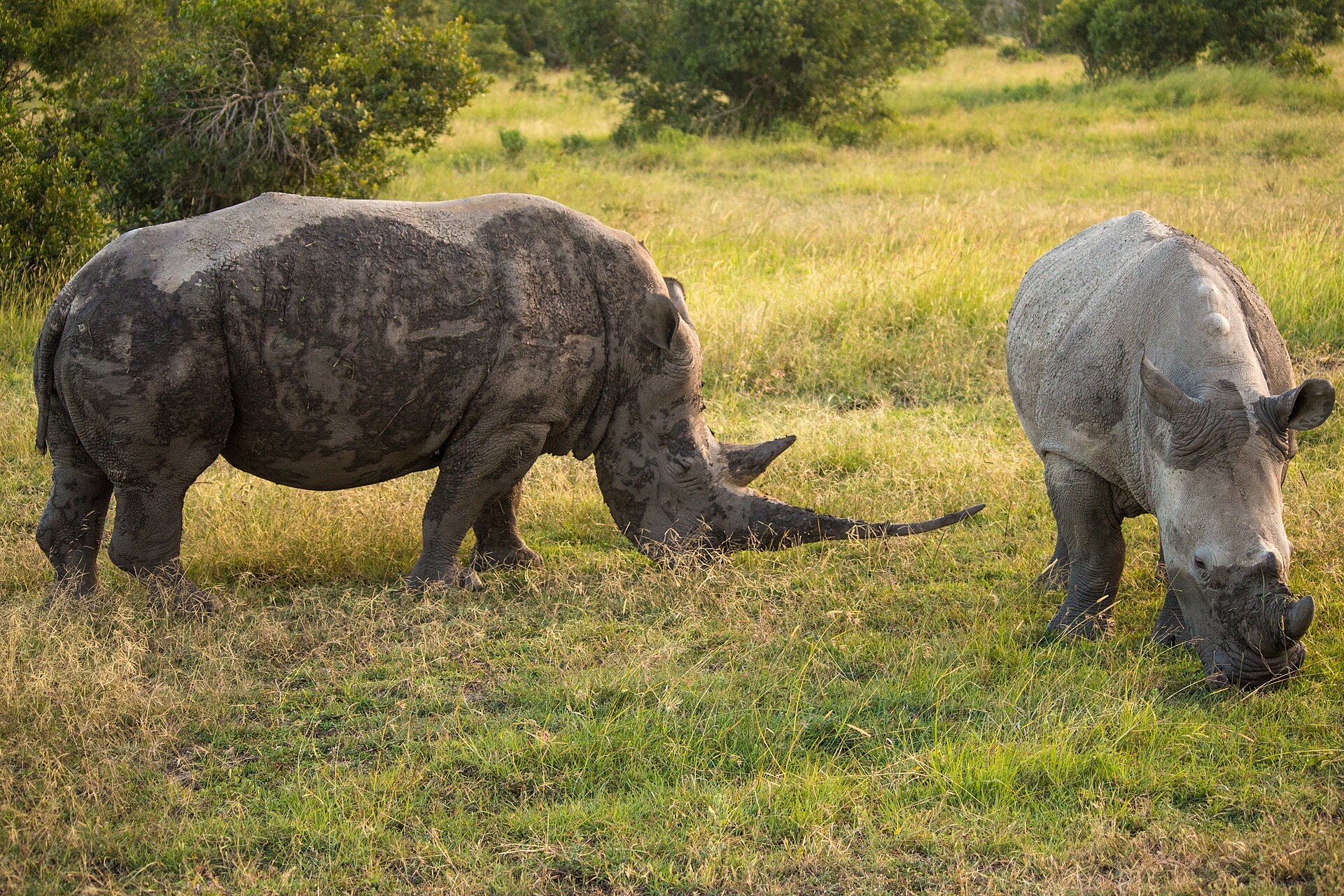
Rhinos are the reason most travelers come. Kenya’s total rhino count rose from 384 in 1987 to 2,102 at the end of 2024, according to the Kenya Wildlife Service (KWS), and the plateau holds a considerable share of the country’s black and white rhinos. KWS says the sanctuaries are nearing their carrying capacity, which is why animals are being moved, such as the 21 black rhinos sent from Ol Pejeta to Segera. Our rhino conservation guide tells the story and our Laikipia wildlife guide covers every species.
| Animal | Status and numbers | Where Laikipia visitors look |
|---|---|---|
| Black rhino | Critically Endangered; 1,059 eastern black rhinos in Kenya at the end of 2024 | Ol Pejeta, Lewa, Borana, Loisaba, Segera, Ol Jogi, Solio |
| Southern white rhino | 1,041 in Kenya at the end of 2024 | Ol Pejeta, Lewa-Borana, Loisaba, Ol Jogi |
| Northern white rhino | Two females, Najin and Fatu, guarded around the clock | Ol Pejeta only |
| Grevy’s zebra | Endangered; about 3,042 worldwide in 2018; 2,250 counted in Kenya in 2016 | Lewa, Mugie, Sosian, Segera, Suyian |
| Reticulated giraffe | Endangered; about 20,900 remain in the wild | Sosian, Ol Jogi, Segera, Suyian |
| African wild dog | Hit by canine distemper after the 2017 drought; sightings cannot be promised | Sosian, Suyian, Lewa |
| Elephant | 7,475 in the 2021 survey of the Laikipia-Samburu-Marsabit-Meru landscape; 60 percent were in Laikipia | Across the plateau |
| Lion | Present on several properties | Lewa, Segera, Sosian, Suyian; lion tracking at Ol Pejeta |
| Chimpanzee | Rescued apes, not wild Kenyan animals; Wikipedia gives 43 (undated) | Sweetwaters at Ol Pejeta |
Northern white rhinos. BioRescue’s update of 22 April 2026 said 39 pure northern white embryos now exist. Three embryo transfers into southern white surrogates in the second half of 2025 did not lead to a long-term pregnancy, and no pregnancy had been announced at that point.
Grevy’s zebra. A 2016 count write-up called Laikipia home to the largest population in Kenya, noting that the plateau was historically outside the species’ natural range and began as a refuge.
Wild dogs. Mpala Research Centre reports that Laikipia’s wild dogs were nearly gone by the 1990s, recovered to over 300 and were hit again by canine distemper after the 2017 drought. Read where and how to see wild dogs in Laikipia.
Things to do in Laikipia
Because the land is private or community-owned, each conservancy sets its own rules, and many allow walking, night drives and riding that national parks and reserves generally do not. Offerings differ by property and season, so we confirm them when we plan a trip. Our Laikipia activities guide goes deeper, and walking safaris in Kenya compares regions.
| Activity | Where it is listed | Notes |
|---|---|---|
| Guided walks | Ol Pejeta, Lewa, Borana, Sosian, Il Ngwesi, Ol Jogi, Suyian | At Elewana’s Lewa Safari Camp in 2026, a 2-hour walk is USD 85 per person and a 4-hour walk USD 115 |
| Rhino tracking on foot | Borana Lodge | At first light; the only listing we found |
| Night drives | Ol Pejeta, Elewana’s Lewa Safari Camp, Il Ngwesi, Suyian | Lewa Safari Camp charges USD 120 per person (minimum two) in 2026 |
| Horse riding | Borana, Sosian, Ol Jogi, Suyian, Ol Malo | A 2-hour horse or camel safari at Lewa Safari Camp is USD 120 per person, minimum age 12 |
| Camel treks | Elewana’s Lewa Safari Camp, Ol Malo | Ol Pejeta does not list horse or camel rides |
| Fly camping and sleep-outs | Borana, Sosian, Loisaba Star Beds, Segera | Loisaba’s Star Beds are open-air beds above a waterhole; Segera lists sleeping under the stars |
| Cultural visits | Il Ngwesi, Segera, Ol Jogi | Lewa Safari Camp lists a Ngwesi boma visit at USD 80 per person |
| Mount Kenya hikes | Sirimon and Naro Moru routes from Nanyuki | Point Lenana, 4,985 m, needs no technical climbing; check KWS fees first |
Nanyuki also has an equator sign beside the A2 road, where visitors stop for photographs.
Best time to visit Laikipia
Laikipia has no migration spectacle on the Masai Mara’s scale, and the big draws such as rhinos live on their conservancies year-round, so weather and price should decide your dates. Two Nanyuki climate tables disagree on rainfall, with a yearly total of roughly 700 to 1,000 mm, but both show the same pattern. Our best time to visit Laikipia guide goes month by month.
| Period | Weather in Nanyuki | Safari notes |
|---|---|---|
| January to February | Driest months; about 8 hours of sun a day; coldest nights, about 7 to 8 °C | Dependable weather for walking and riding |
| March to May | Long rains; April is the wettest month | Ol Pejeta recommends a 4×4 in the rains; Elewana treats April and May as green season at Lewa Safari Camp |
| June to September | Cooler days, about 21 to 23 °C in July and August; June and September among the drier months | Elewana’s high season at Lewa Safari Camp runs 1 July to 31 October |
| October to November | Short rains; November has the most rainy days | Showers are likely, so keep a rain layer |
| December | Drier again; nights about 8 °C | High season from 20 December to 3 January at Lewa Safari Camp |
Safaris that fit this guide
 9-Day Hidden Northern Kenya SafariLaikipia, Meru and Samburu off the beaten track9 days · from $4,730 ppView trip →
 7-Day Untamed Skies: Northern Kenya by AirSamburu, Meru and Ol Pejeta by light aircraft7 days · from $3,840 ppView trip →
 10-Day Samburu to Masai Mara SafariSamburu, Ol Pejeta, Nakuru and the Mara10 days · from $5,100 ppView trip →
Every trip is private and can be changed to suit you. Get a free, tailor-made quote in 6 hours →
What a Laikipia safari costs
Costs come in layers: conservancy fees, lodge rates, activities, flights and the vehicle and guide. Many lodges bundle the conservation fee, others add it. Here are the published figures we found. Our Laikipia safari cost guide breaks them down further.
| Item | Published figure | Note |
|---|---|---|
| Ol Pejeta daily entry | USD 110 adult, USD 55 child (3 to 11), USD 32 student; under 3 free | Includes the chimpanzees and an all-day game drive; leaving and re-entering means paying again |
| Lewa conservancy fee | About USD 165 to 183 per adult per day (non-residents, 2026) | Borana lists USD 92 per child; often bundled in lodge rates |
| Borana Lodge | USD 1,025 (standard) or USD 1,320 (peak) per adult per night, inclusive, 2026 | Includes a 24 percent conservancy contribution; minimum stay 2 nights (3 in peak) |
| Ol Pejeta The Stables | USD 70 single, USD 140 double per night, full board | Conservancy fee extra; no game-drive vehicle supplied |
| Scheduled flight, one way | Roughly USD 150 to 400 per person | Industry estimate; check current fares |
Fees last verified: October 2026.
Here is what our private trips with a Laikipia stop cost. Prices are midrange from-prices per person. They assume low season and two people sharing, and they depend on season, group size and lodge choice.
| Trip | Route | Price |
|---|---|---|
| 7 Day Untamed Skies Safari | Samburu, Meru, Ol Pejeta (mainly flying) | From USD 3,840 per person |
| 10-Day Samburu to the Maasai Mara | Samburu, Ol Pejeta, Lake Nakuru, Masai Mara (by road) | From USD 5,100 per person |
| 9 Days Hidden Northern Kenya Circuit | Ol Pejeta, Loisaba, Meru, Samburu (by road) | From USD 4,730 per person |
| 8 Days Ol Pejeta, Mara and Amboseli | Ol Pejeta, Masai Mara, Amboseli (luxury) | From USD 10,270 per person |
Where to stay in Laikipia
Expert Africa lists 28 lodges, camps and houses in Laikipia. Its tiers below repeat directory wording rather than price bands, and it uses the word budget for none of them. Our Laikipia lodges guide goes conservancy by conservancy.
| Style | Examples |
|---|---|
| Luxury and exclusive-use | Segera Retreat, Solio Lodge, Sirikoi, Loisaba Tented Camp, Governors’ Mugie House, andBeyond Suyian Lodge, Sanctuary Tambarare, Ol Pejeta Safari Cottages |
| Comfortable lodges and tented camps | Kicheche Laikipia Camp, Sweetwaters Serena Camp, Lewa Safari Camp, Lewa Wilderness, Lewa House, Kifaru House, Borana Lodge |
| Simple and rustic | Ol Pejeta Bush Camp, Porini Rhino Camp, Loisaba Star Beds, El Karama Lodge, Moon’s Camp |
| Community-owned | Il Ngwesi Eco-Lodge, Tassia Lodge, Koija Starbeds |
Ol Pejeta also lists campsites, where an armed ranger is mandatory at KES 5,000 per ranger per night. Sweetwaters Serena Camp has Mount Kenya views, and Loisaba Tented Camp sits on a ridge facing the mountain.
Combining Laikipia with the Masai Mara and Samburu
Laikipia and the Mara suit different appetites. The Mara is known for the scale of its herds and the Great Migration, while Laikipia offers rhinos, walking, riding and night drives. Many travelers pair them. Start with our Masai Mara safari guide, then compare them in Laikipia vs Masai Mara and see sample plans in Laikipia and Masai Mara itineraries.
| Pairing | Travel between them | Notes |
|---|---|---|
| Laikipia and the Masai Mara | Nanyuki to the Mara: about 1 hour 15 minutes by air; 374 km, about 7 hours 40 minutes by road | An aggregator lists one daily flight; schedules change by season |
| Laikipia and Samburu | Nanyuki to Samburu National Reserve: 118 km, about 2 hours 20 minutes by road; about 30 to 40 minutes by air | Samburu covers 165 km² on the Ewaso Ng’iro |
| Laikipia and Lake Nakuru | Nanyuki to Lake Nakuru National Park: 161 km, about 3 hours 40 minutes by road | A fenced 188 km² park set up as a rhino sanctuary |
Our 10-day Samburu to the Maasai Mara safari follows that arc by road, with a night at Ol Pejeta between Samburu and Lake Nakuru. For the northern loop see Laikipia and Samburu and our northern Kenya safari guide.
Practical tips before you go
- Layers: nights in Nanyuki run about 7 to 11 °C, so pack warm clothing even though days are mild.
- Health: Lewa and Loisaba both describe malaria risk as low and run on-site clinics with nurses around the clock. Ask a travel clinic about prevention before you go.
- Vehicles: Loisaba allows only 4×4 vehicles in green or brown shades, which matters if you arrive in your own car.
- Entry rules: check Kenya eTA and entry requirements before booking flights.
Get your free safari quote in 6 hours
Tell us your dates and who is travelling. A planner in our Nairobi office replies within 6 hours with a day-by-day itinerary, the camps we suggest and a fully itemised price. No payment is needed to enquire.
Prefer to talk? WhatsApp or call +254 799 871 255.
Go deeper on each conservancy
- Loisaba Conservancy
- Borana Conservancy
- Lewa Wildlife Conservancy
- Laikipia community conservancies
- Laikipia safari cost and best time to visit Laikipia
More conservancy guides
- Kenya wildlife conservancies: every region compared
- Samburu community conservancies: Kalama, Westgate, Sera and Namunyak
- Amboseli conservancies
- Lumo and Taita Hills conservancies (Tsavo)
- Soysambu, Oserengoni and the Naivasha and Nakuru conservancies
Frequently asked questions
How far is Laikipia from Nairobi?
Nanyuki, the usual gateway, is about 190 km (3 to 3.5 hours) from Nairobi by road. Ol Pejeta quotes about 220 km and 4 to 4.5 hours to its gates and lodges, and Lewa says about 4 hours. Flights from Wilson Airport take roughly 45 to 75 minutes. See our guide to reaching Laikipia.
Is Laikipia a national park?
No. Laikipia has no national park or national reserve. Its wildlife areas are private or community conservancies, each with its own fees, rules and activities. That is why walks, night drives and riding are often possible.
Which Laikipia conservancy should I choose?
Ol Pejeta suits travelers who want rhinos, the northern white rhinos and chimpanzees with a published daily fee. Lewa and Borana suit those who want walking, riding or rhino tracking on foot. Loisaba suits a star-bed night and the northern plains, and community conservancies suit anyone who wants a stay owned by the host community. Compare the two best-known in Ol Pejeta vs Lewa.
Can you see the Big Five in Laikipia?
Wikipedia says all of the Big Five are present at Ol Pejeta, and lions are listed at Lewa, Segera, Sosian and Suyian. As everywhere, no sighting is certain, and leopards are usually the hardest to spot.
How many nights do you need in Laikipia?
Two nights is a practical minimum for one conservancy, and three or four let you fit in a walk, a night drive and a full game-drive day without rushing. Borana’s minimum stay is two nights in standard season and three in peak, and Il Ngwesi recommends three nights or more.
Is Laikipia safe?
Laikipia has had tension over land and grazing. During the 2017 drought, armed herders moved onto ranches and farms, and dozens were killed, according to AFP. The UK Foreign Office does not list Laikipia among the areas it advises against visiting, though it notes continuing security operations in parts of northern Kenya. An earlier US advisory named parts of western and northern Laikipia, not the Nanyuki side, but its current wording may differ. Check the advisories before you book, and ask us what they mean for your dates. Travel advice for Kenya changes, so check your own government’s latest advice before you book and again before you fly.
Can I visit the last northern white rhinos?
Yes. Ol Pejeta lists “Meet the Last Two Northern White Rhinos” as an experience and says the booking supports rhino conservation. Its page shows no price, so we confirm it when we quote. Read more about Najin and Fatu.
All our Laikipia guides
- Where Laikipia is
- Ol Pejeta Conservancy
- The last northern white rhinos
- Sweetwaters Chimpanzee Sanctuary
- Lewa Wildlife Conservancy
- Borana Conservancy
- Loisaba Conservancy
- Segera, Mugie, Sosian and Ol Jogi
- Community conservancies
- Nairobi to Laikipia
- Best time to visit
- Laikipia safari cost
- Laikipia wildlife
- Wild dogs
- Rhino conservation
- Where to stay
- Things to do
- Ol Pejeta vs Lewa
- Laikipia vs Masai Mara
- Laikipia and Masai Mara itineraries
- Laikipia and Samburu
- Nanyuki travel guide
- Northern Kenya safari
Photo: Southern White Rhinos, Ol Pejeta Conservancy, Kenya (44968104354) by Ray in Manila, CC BY 2.0, via Wikimedia Commons


Comments are closed