
 Safari Planning, Travel Guides & Practical Advice
A luxury safari Tanzania Kenya itinerary links two countries that share one wildlife system but offer different kinds of luxury. This guide covers comfort levels, seasons, border crossings and visas.
Can you combine a luxury safari in Tanzania and Kenya?
Yes. The best luxury safari Tanzania Kenya combination pairs the Maasai Mara with the Serengeti, ideally over 10 to 12 days. Fly between the two with a border stop at Migori and Tarime, arrange Kenya and Tanzania entry approvals separately, and match the season to the herds: July to October for the Mara, January to March for the southern Serengeti.
Key takeaways
- Kenya suits a smooth first safari: private conservancies, walking and night drives, short flights. Tanzania adds scale and the Ngorongoro Crater.
- Fly between countries. A road transfer from the Mara to the Serengeti can take 8 to 10 hours or more.
- Two sets of paperwork. Kenya requires an eTA. Tanzania needs its own visa, as the East Africa Tourist Visa does not include it.
- Season decides the route. Herds are in the Mara from July to October. Calving is in the southern Serengeti from January to March.
- Stay three nights per camp where you can. Fewer moves mean more wildlife time.
Planning this trip? Get a free quote in 1 hour →

| Destination | What It Does Best | Plan Around |
|---|---|---|
| Maasai Mara, Kenya | Concentrated big-cat viewing and Mara River crossings during migration season. | Peak-season crowds; consider a private conservancy. |
| Samburu and Laikipia, Kenya | Northern wildlife species, rhino conservation, and selected walking or night-drive experiences. | Additional flights or transfer time from Nairobi. |
| Serengeti, Tanzania | Vast open plains, a remote wilderness atmosphere and southern Serengeti calving season. | Long distances; consider flying between camps. |
| Ngorongoro Crater, Tanzania | Exceptional wildlife viewing within a dramatic volcanic caldera. | Allow a full morning for a crater game drive. |
| Zanzibar or Diani | A relaxing coastal finish with beaches, ocean activities and time to unwind. | Flight connections and seasonal coastal weather. |
| Comfort Level | Typical Experience |
|---|---|
| Classic Comfort | Well-run lodges and tented camps with en-suite accommodation, good food and reliable service. |
| Premium Comfort | Smaller camps in carefully selected locations, flexible game drives and extras such as plunge pools at some properties. |
| Ultra-Luxury | Exclusive-use properties or private-conservancy camps with fewer guests, personalised service and experiences such as private bush dinners. |
| Travel Period | What to Consider |
|---|---|
| July–October | Migration herds may be in the Maasai Mara and northern Serengeti. River crossings can occur, but their timing and location are unpredictable. |
| January–March | The southern Serengeti and Ndutu area can offer calving-season wildlife viewing. Kenya also offers resident wildlife, including lions, elephants and cheetahs. |
| Shoulder Months | Some areas may have fewer visitors and a quieter atmosphere. Conditions, road access and wildlife viewing vary with rainfall and location. |
Vehicles and park fees: Cross-border vehicle operations are subject to country-specific rules and permits. A vehicle or guide change may be required, and park or conservation fees are charged according to the relevant country's rules. Review the practical guidance from 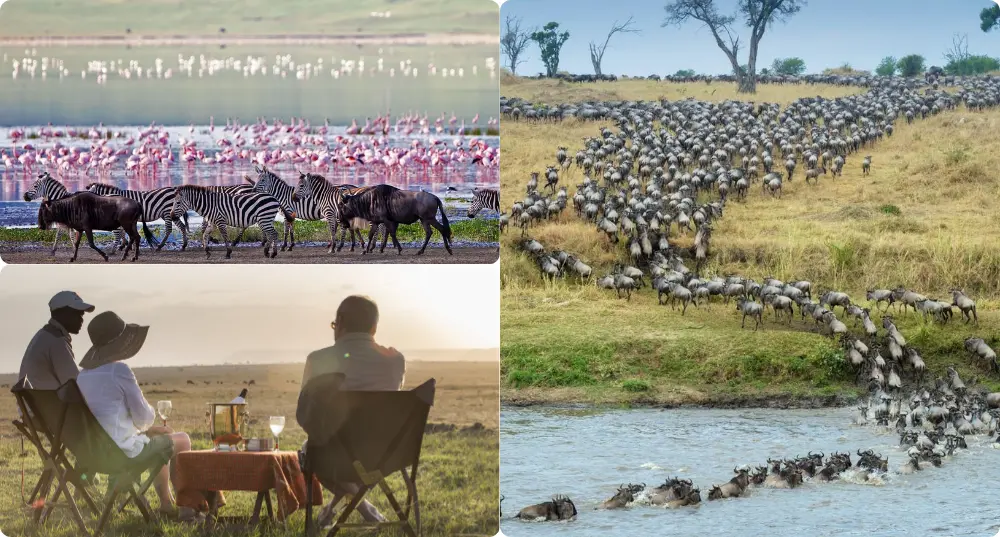
Packing and pacing for light aircraft
Bush flights use small aircraft with strict luggage limits. Many scheduled operators allow around 15 kg per person in soft bags, though allowances vary by airline and route, so confirm yours. Pack in layers, leave formal clothing at home and ask your Nairobi hotel to store larger cases.
Pacing matters as much as packing. Two or three nights per camp leaves time for a slow breakfast, an afternoon rest and the unplanned sighting that often becomes the best memory of the trip.
Beyond the game drive: coast and culture
A safari feels complete with a slower chapter. Zanzibar offers Stone Town’s Swahili heritage, spice farms and warm Indian Ocean beaches, while Kenya’s Diani Beach is a shorter hop from the Mara. Our bush and beach safaris and Zanzibar pages show how.
For culture, choose a community-run Maasai visit and ask how the fees are shared. It is a simple way to make sure your stay benefits local people.
Questions to ask a luxury safari Tanzania Kenya planner
- Who provides the vehicle and guide on each side of the border?
- How are flights, border formalities and visas handled?
- Does the quote itemize park, conservancy and camp fees per country?
- What happens if weather delays a flight?
Frequently asked questions
How many days do I need for a luxury safari Tanzania Kenya trip?
Eight days is possible. Ten to twelve days is more comfortable, allowing three nights per camp and flights between them.
Do I need two visas?
Yes. Kenya requires an approved eTA, and Tanzania has its own visa process. The East Africa Tourist Visa covers Kenya, Uganda and Rwanda but not Tanzania.
Is it better to fly or drive between the Mara and Serengeti?
Flying saves most of a day and avoids long border queues. Driving suits travelers who prefer overland scenery and have time to spare.
Which month is best?
July to October suits the Mara and northern Serengeti. January to March suits calving in the southern Serengeti. Both are rewarding.
Is a luxury safari suitable for children and grandparents?
Yes, with a private vehicle and a flexible pace. Camps set their own age limits, so share everyone’s ages before booking.
How much does a luxury safari cost?
It depends on comfort level, season, camps and flights. Ask for an itemized quote that shows park and conservancy fees for each country.
Plan your luxury safari Tanzania Kenya journey in 6 hours
Tell us your dates, who is traveling and your preferred comfort level. A planner in our Nairobi office replies within 6 hours with a day-by-day itinerary and a fully itemized price. No payment is needed to enquire.
Prefer to talk? WhatsApp or call +254 799 871 255.
Comments are closed