
 Wildlife Safaris
First-Time African Safari Guide: What Nobody Tells You Until You’re Already There
The moment a lion walks past your open vehicle close enough to hear its breathing, close enough to smell the dust on its coat something inside you rearranges itself. Quietly. Permanently.
No photo prepares you for it. No documentary. Not even this guide.
But a first-time African safari is one of the most planned, most dreamed-about, most misunderstood trips in travel. People spend months researching and still arrive unsure what to wear, what to expect, or whether they picked the right destination. Most guides give you generic lists. This one gives you the truth and a clear, practical path from first question to first game drive.
We are Entice Africa Safaris. We are locally owned, KATO Bonded, and based in Nairobi, Kenya. We have planned first African safaris for travelers from more than 30 countries since 2017. What follows is every answer your first-time African safari guide search was actually looking for.
|
What Is an African Safari? A First-Timer’s Real Definition
The word “safari” is Swahili for journey. Today it means a guided wildlife experience in Africa’s wild spaces national parks, game reserves, and private conservancies where animals live entirely free.
Here is what first-timers sometimes miss: a safari is not a zoo. Animals do not appear on demand. A lion might be sleeping 200 meters from the vehicle. A leopard might be invisible in a tree you drive right past. That uncertainty the not-knowing is precisely what makes it extraordinary. Patience is part of the experience. The bush rewards it.
Your first African safari will likely include:
- Morning and evening game drives in an open 4WD with a professional naturalist guide
- A guided walking safari reading the bush on foot, tracking animals at ground level
- All meals included at your lodge or tented camp most run fully all-inclusive
- Cultural visits to local Maasai, Samburu, or other communities
- Sundowners in the bush a cold drink, a golden sky, and absolute silence
What it will not include: crowds, deadlines, or decent Wi-Fi. That is the whole point.
The Big Five: Every First-Time Safari Traveler’s Must-Know List
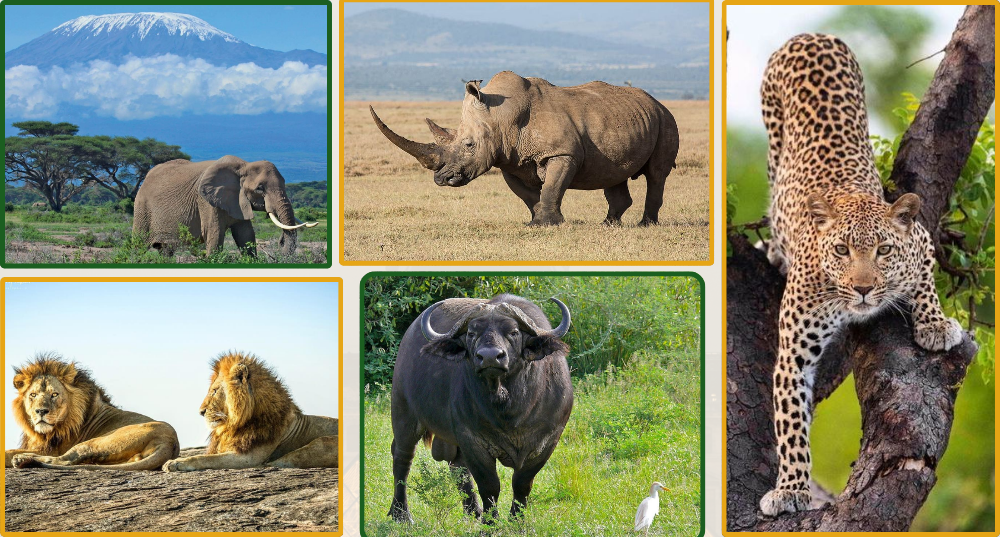
If there is one piece of wildlife vocabulary every first-time African safari traveler needs before they land, it is the Big Five. The term was coined by big-game hunters to describe the five most dangerous animals to track on foot. Today it is the benchmark for any serious safari experience — and Kenya is one of the best places on Earth to see all of them.
|
Animal |
Why It’s Special |
Best Place in Kenya |
Best Season |
|
Lion |
Africa’s apex predator |
Maasai Mara, Nairobi National Park |
June–October |
|
Leopard |
Most elusive of the five |
Maasai Mara, Samburu |
Year-round (nocturnal) |
|
Elephant |
Africa’s largest land mammal |
Amboseli (with Kilimanjaro backdrop) |
Year-round |
|
Black Rhino |
Critically endangered |
Ol Pejeta, Solio, Laikipia (Kenya) |
Year-round |
|
Buffalo |
Found in massive herds |
Maasai Mara, Tsavo |
June–October |
Spotting all five on a single game drive is rare. That rarity is part of the thrill. Kenya’s Maasai Mara, Nairobi National Park, and Ol Pejeta Conservancy together give you one of the most complete Big Five experiences in Africa.
One fact that surprises almost every first-time safari visitor: Nairobi National Park where you can see lion, leopard, rhino, buffalo, and giraffe against a city skyline is just 10 minutes from JKIA airport. Your first African safari can begin before you even leave the capital.
Best African Safari Destinations for First-Timers in 2027
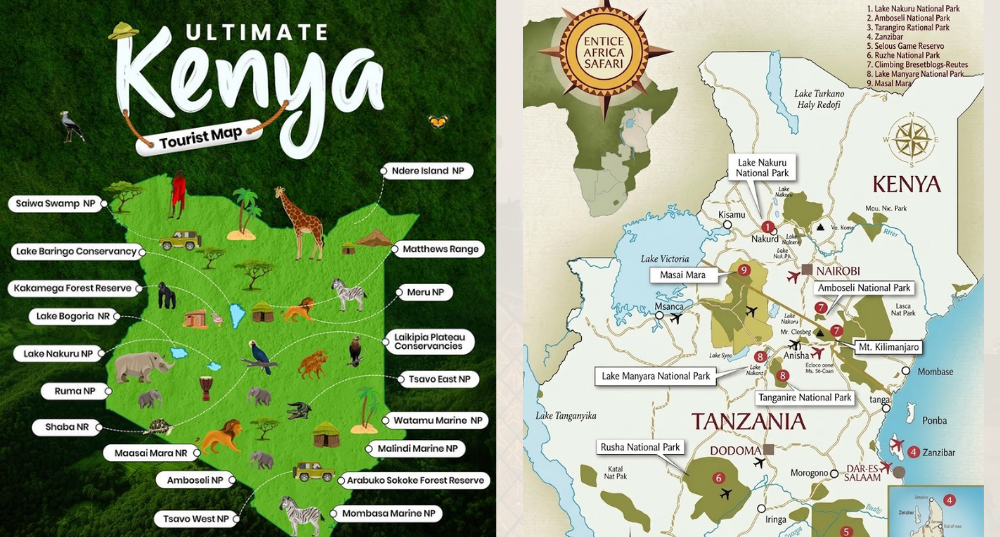
Africa has over 50 safari destinations. For your first time, three consistently deliver the most reliable, accessible, and unforgettable wildlife experiences.
Kenya — The First-Timer’s Safari Dream
Kenya is where the safari idea was born. The Maasai Mara. The Great Migration. The red dust plains. The Maasai in ochre and beads. The feeling impossible to fully explain that you are in Africa as it truly is.
- Maasai Mara National Reserve — lions, leopards, cheetahs, the Great Migration (Jul–Oct)
- Amboseli National Park — elephant herds with the iconic Kilimanjaro backdrop
- Samburu National Reserve — the unique Northern Frontier ‘Special Five’ species
- Ol Pejeta Conservancy — the largest black rhino sanctuary in East Africa
- Nairobi National Park — Big Five game drive 10 minutes from JKIA airport
- Diani Beach — the perfect safari-and-beach extension after the bush
Tanzania — The Serengeti and Ngorongoro Crater
Tanzania is where the Great Wildebeest Migration starts. The Serengeti offers a scale of wildlife that humbles every first-time visitor. The Ngorongoro Crater a volcanic caldera with the highest density of predators in Africa is arguably the single most extraordinary wildlife experience on the continent. Tanzania pairs perfectly with Kenya for a 10–14-day first safari.
South Africa — The Easiest Entry for First-Timers
South Africa offers the most accessible first African safari: no malaria in many private reserves, world-class infrastructure, Big Five sightings in Kruger and the Sabi Sands, and the option to combine wildlife with Cape Town. Ideal for families, travelers nervous about health requirements, and anyone wanting to ease into Africa at a gentler pace.
What to Expect on Your First African Safari A Real Day in the Bush
The first game drive is almost always different from what you imagined. Quieter. More patient. More beautiful. Here is what an actual day on an East Africa safari looks like — no filters.
5:30 AM — Pre-Dawn Wake-Up
Your guide knocks softly. Coffee and rusks appear from nowhere. The stars above the camp are the kind you forgot existed. You are in the vehicle before the sun rises, moving into a landscape that is already alive with sound.
6:00 AM — Morning Game Drive
Golden hour. Predators are most active. Light is most beautiful. Your guide knows where the lions rested last night. Two to three hours in the open vehicle — no rushing, no schedule except the animals’.
9:00 AM — Bush Breakfast
A full breakfast back at camp or a packed spread in the bush. This is where stories get swapped. Someone saw a cheetah hunt. Someone else drove right past a leopard in a tree. This is also how safaris work, and it is wonderful.
Midday — Lunch & resting
Most animals rest in midday heat. So do you. Alternatively, a bush walk with an armed ranger gives you the micro-experience the vehicle cannot: tracking footprints, reading bird calls, feeling the ecosystem at ground level.
4:00 PM — Afternoon Drive + Sundowner
The light turns golden again. A cold drink is passed over the vehicle side at a viewpoint as the sun drops. This is the sundowner one of the great rituals of African safari life, and one that every first-timer falls in love with immediately.
Night Game Drive (where permitted)
A spotlight sweeps the grass. Nocturnal animals leopard, aardvark, bush baby, honey badger, hyena appear from the dark. This is the Africa most tourists never see, and the one first-timers talk about longest afterward.
How to Choose the Right First-Time African Safari: 5 Honest Questions
This is where most first-timers get lost. Here are the five questions that actually determine which safari is right for you:
- What is your dream sighting?
Great Migration river crossings? A black rhino on foot? Baby elephants? Gorilla trekking? Each experience has a destination and a season attached to it. Start with the one wildlife moment you cannot leave without, then build the itinerary around it.
- How much time do you have?
Seven to ten nights is the ideal first-time African safari length. Less than five nights feels rushed. Two weeks opens up combinations: Maasai Mara + Samburu + Diani Beach, or Kenya + Tanzania. The bush rewards time.
- What is your budget?
Budget: from $2,500 per person for 7 days in shoulder season. Mid-range: $4,000–$7,000 per person for 8–10 days with private conservancy access. Luxury all-inclusive: $10,000–$25,000+ per person for exclusive camps, private vehicles, walking safaris, and the JW Marriott-level experiences. Maasai Mara park fees run $200 per adult per day in high season (Jul–Dec). Entice Africa Safaris gives you full itemised pricing. No surprises.
- Who are you traveling with?
Families with young children: consider malaria-free reserves or family lodges with junior ranger programmes. Solo travelers and couples: maximum flexibility, any season. Groups of six or more: private vehicle rates change the economics entirely. Senior travelers: we design accessible, unhurried itineraries built around comfort without sacrifice.
- Who is your operator?
This is the most important decision you will make for your first African safari. The difference between a forgettable trip and a life-changing one is almost entirely your guide. A great guide reads the bush like a language, knows where the animals slept last night, and explains what you are seeing in a way that makes it mean something.
Entice Africa Safaris has planned first-time African safaris from Nairobi since 2017. We are locally owned. We do not sub-contract. Your guide, your vehicle, your 24/7 support are all part of our family. Your first safari is our personal responsibility.
First African Safari Packing List: What to Actually Bring
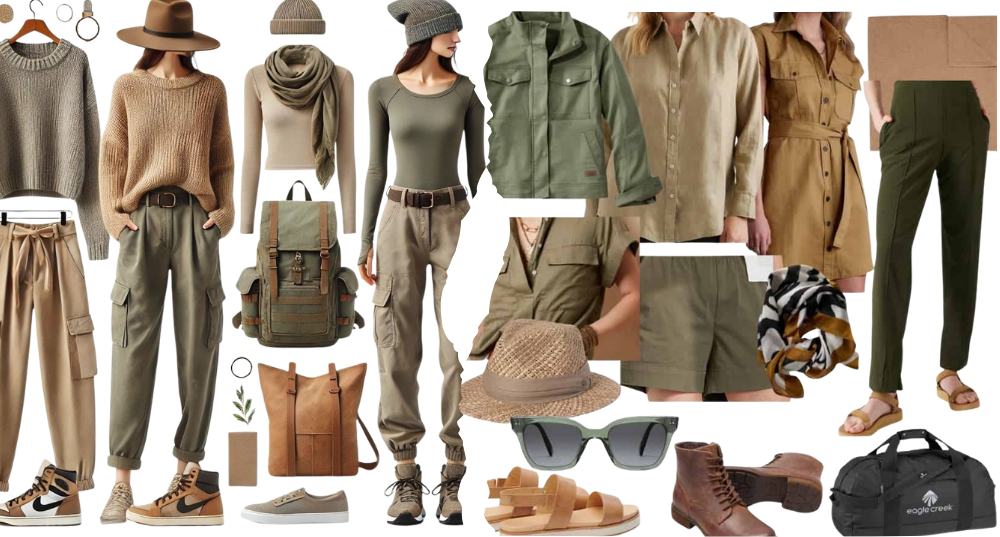
Packing for your first African safari is simpler than you think. Three golden rules: neutral colours, layers, and far less than you think you need.
Clothing (what to wear on an African safari)
- Khaki, olive, beige, or tan — neutral colours blend with the landscape and do not disturb animals
- Light long-sleeve shirts for morning drives and mosquito protection at dusk
- A fleece or light jacket — Nairobi sits at 1,795m elevation; early mornings are cooler than expected
- Comfortable closed shoes for walking safaris — no sandals in the bush
- Wide-brimmed hat and quality sunglasses — you will thank yourself at noon
Health Essentials
- Malaria prophylaxis — consult your travel health clinic 6–8 weeks before departure
- High-SPF sunscreen and insect repellent with DEET
- Yellow fever certificate if continuing to Tanzania or arriving from an endemic country
- Travel insurance with emergency medical evacuation cover — non-negotiable
- Camera with at least 200mm zoom lens — phone cameras are fine on open vehicles but wildlife needs reach
- Binoculars (8×42 minimum) — transforms every game drive
- Portable power bank — long drives drain devices fast
- Soft-sided duffel bag — charter aircraft enforce strict weight limits (15–20kg) and reject hard cases
Documents
- Passport valid for at least 6 months beyond your travel dates
- Kenya eTA approval — apply at etakenya.go.ke at least 72 hours before departure
- Travel insurance policy document and emergency numbers
- Printed booking confirmations for all lodges and flights
|
Charter flight weight warning: If your Kenya safari includes domestic charter flights between parks, you face strict weight limits typically 15kg total including hand luggage. Soft bags only. Hard suitcases are rejected on the airstrip. Pack accordingly from home or store excess luggage in Nairobi. |
First-Time African Safari FAQ The Questions Everyone Asks
Is Africa safe for first-time travelers?
Yes, for the vast majority of safari travelers. Kenya, Tanzania, and South Africa have mature, well-regulated tourism industries. The parks and conservancies in this guide are professionally managed and among the safest visitor destinations on the continent. Choose a licensed, KATO Bonded operator. That single decision eliminates most risk.
How much does a first African safari cost?
Budget: from $2,500 per person (7 days, shoulder season). Mid-range: $4,000–$7,000 per person (8–10 days). Luxury all-inclusive: $10,000–$25,000+ per person (10–12 days, JW Marriott-level lodges, private vehicles). Entice Africa Safaris itemises every cost in your quote. No hidden fees, no surprises.
What is the best time for a first African safari?
June to October is the peak season in East Africa: dry, excellent game visibility, Great Migration river crossings in August–September. January to February is quieter, cheaper, and still extraordinary. For South Africa, May to September is optimal. No month in Kenya is truly wasted each season offers something the others cannot.
What is the Great Migration and do I need to see it?
The Great Wildebeest Migration is the largest overland animal movement on Earth: 1.5 million wildebeest, 200,000 zebra, and 500,000 gazelle moving in a continuous cycle between Tanzania’s Serengeti and Kenya’s Maasai Mara. The dramatic Mara River crossings crocodiles, chaos, dust, and noise peak in August and September. Book 6–12 months ahead for this window.
Can I do a first African safari with children
Absolutely. Kenya is one of the world’s best family safari destinations. The Giraffe Centre, David Sheldrick Elephant Orphanage, and Ol Pejeta Conservancy all offer hands-on conservation experiences that children talk about for years. We recommend January–February or June–July for families.
What do I need to know about game drives?
Stay seated. No sudden movements. No shouting. Phones on silent. Wear neutral colors. Trust your guide. The vehicle is seen by animals as one large non-threatening object the moment a human silhouette rises above it, that changes. Silence and patience produce better sightings than enthusiasm.
Do I need vaccinations for an African safari?
Yellow fever vaccination is required if arriving from or continuing to an endemic country. Malaria prophylaxis is recommended for most Kenya safari regions (not required in Nairobi city). Consult a travel health clinic at least 6–8 weeks before departure.
Your First African Safari Starts Here
Here is the one thing every single client who has come back from their first Kenya safari says:
“I wish I had done this sooner.”
Not sooner in their trip. Sooner in their life.
The moment you are actually in Africa not watching a documentary about it, not scrolling photographs of it, but sitting in an open vehicle with the wind in your face and a lion 30 meters away you understand that no amount of planning replaces going. The only way to experience your first African safari is to book it.
We will handle everything else.
The Kenya eTA guidance. The lodge selection. The domestic charter flights. The park fees. The guide who knows where the lions slept last night. The sundowner stops. The 3am emergency number if you ever need it.
You bring an open heart. Entice Africa Safaris brings nine years of turning first-time African safari dreams into the stories our clients tell for the rest of their lives.
→ Great Migration lodges for August–October 2027 are filling now. If that window is yours, reach out today — before it closes.


Comments are closed