

 Destinations, Experiences & East Africa Travel
Amboseli National Park is only the centre of the Amboseli ecosystem. Around it lie Maasai-owned group ranches and conservancies, including Kimana, Olgulului-Ololarashi, Selenkay (Eselenkei) and Mbirikani, and beyond them the Chyulu Hills, where one lodge sits on the slopes with Kilimanjaro in view. These community lands are where Amboseli’s elephants and other wildlife spend much of the year, and some of them allow walks and night drives, which the park generally does not. They are part of the wider network described in our guide to Kenya’s wildlife conservancies.
If you only visit the park, you see the swamps, the open plains and the mountain. If you add a conservancy or group ranch stay, you see the land the animals actually use to move between Amboseli, the Chyulu Hills and Tsavo, and you travel with Maasai guides on land their own families own.
Planning this trip? Get a free quote in 6 hours →
At a glance
| Area | What it is | Known for |
|---|---|---|
| Kimana | Group ranch east of the park, with community-run conservancies and a wildlife sanctuary | Elephant movement between the park and Tsavo, community-owned land |
| Olgulului-Ololarashi | The largest group ranch bordering Amboseli National Park | Open grazing and wildlife land around the park, Maasai culture |
| Selenkay (Eselenkei) | Community conservancy just north of the park | Quieter game viewing outside the park boundary |
| Mbirikani | Large group ranch between Amboseli and the Chyulu Hills | Conservation work, Chyulu Hills access, walking |
| Chyulu Hills | Volcanic hills and national park between Amboseli and Tsavo West | Green hills, forest, long views to Kilimanjaro |
Boundaries and the number of group ranches vary between sources. Some describe six group ranches around the park and others describe more, so treat the list above as the places most travellers hear about.
What group ranches and conservancies are
Much of the land around Amboseli National Park is owned by Maasai families through group ranches. A conservancy is a part of that land set aside, usually by agreement among the landowners, for wildlife and low-density tourism. The landowners earn lease or bed-night income from camps, and many of the rangers and guides come from the same community.
This matters to a traveller for three reasons. The money from your stay reaches the landowners. Fewer vehicles are usually allowed than in a busy park sector. And the rules for walking and night drives are set by the landowners and the camp, not by park regulations, so they are often more flexible.
Kimana
Kimana lies east of the park on the route towards Tsavo. Over the past two decades its land has been subdivided, and a group of landowners have set aside parts of it as conservancies and a sanctuary so that wildlife can still move through. Its value is as a link. Elephants and other animals use this land to travel between Amboseli and the Tsavo ecosystem, so it is a place where protecting the corridor matters more than any single list of animals.
For visitors, Kimana is best understood as part of a day or two on the park’s edge, combined with Amboseli itself. Ask your planner which camp is on a Kimana conservancy before you book, because stay options change.
Olgulului-Ololarashi
Olgulului-Ololarashi is the largest group ranch around the park, and it shares a long boundary with Amboseli National Park. Its families graze cattle across the same plains the elephants use, and conservation here depends on keeping that shared use workable. If you drive in toward the park, you will cross or skirt this land.
You can arrange a visit to a Maasai homestead from here, which gives context to the whole area. Our Amboseli safari packages guide explains how many days to allow for the park itself.
Selenkay (Eselenkei)
Selenkay is a community-owned conservancy on Eselenkei Group Ranch, just north of the park. It is a place to see open country with fewer vehicles. Camps here usually offer game drives in the conservancy, and some may offer walks and night drives, depending on the property’s own rules. Confirm these activities with the camp, since they differ.
Mbirikani and the Chyulu Hills
Mbirikani Group Ranch lies between Amboseli and the Chyulu Hills. The conservation group Big Life Foundation describes its work across about 2 million acres of the Amboseli, Tsavo and Kilimanjaro landscape, with Mbirikani among its core areas. Rangers, many of them local, patrol the land and respond to conflict between people and elephants.
Ol Donyo Lodge is the property most travellers associate with this area. It stands on Mbirikani Group Ranch on the slopes of the Chyulu Hills, with suites that face Mount Kilimanjaro. Guests can walk on the plains or up into the hills, and the lodge is known for activities beyond a normal vehicle safari, such as horseback riding and mountain biking. It sits at the high end of the market, so ask for a quote before you plan around it.
The Chyulu Hills
The Chyulu Hills are green, volcanic and cooler than the plains. The national park there protects forest and grassland, and a small number of black rhino live in the dense forest, rarely seen by visitors. Come for the scenery, the walking and the quiet, not for a long checklist of animals.
Elephants, corridors and Kilimanjaro
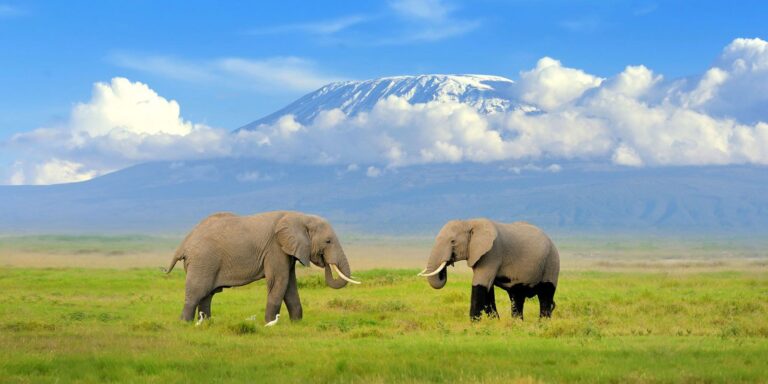
Amboseli is known for its elephants, and the Amboseli Trust for Elephants has studied the population for decades. Those elephants do not stay inside the park. They cross group ranches and corridors toward Tsavo, which is why the conservancies matter. When a corridor closes because of farming or fencing, the animals lose routes and conflict with farmers rises.
Kilimanjaro sits across the border in Tanzania, but the classic views are from the Kenyan side. Mornings are usually clearest, and cloud often builds later in the day. Camps with a mountain-facing deck or room make the most of it. Our comparison of the Mara, Amboseli and Samburu shows how Amboseli fits against Kenya’s other main areas.
Walks and night drives: what to expect
| Activity | Inside Amboseli National Park | On group ranches and conservancies |
|---|---|---|
| Day game drives | Yes, on park tracks | Yes, sometimes off-track where the property allows it |
| Guided walks | Generally not allowed | Often offered, depending on the camp |
| Night drives | Generally not allowed | Sometimes offered, depending on the camp |
| Cultural visits | Outside the park | Often arranged with the community |
Rules differ between properties and can change, so ask for the current position on walks and night drives at the camp you are considering. Walking usually has a minimum age, so say so if you travel with children.
Safaris that fit this guide
 10-Day Save the Elephant SafariSheldrick, Tsavo and Amboseli elephants10 days · from $8,700 ppView trip →
 14-Day Kenya Safari and Diani BeachMara, lakes, Amboseli, Tsavo, then the beach14 days · from $4,860 ppView trip →
 10-Day Best of Kenya by AirAmboseli, Lumo and Diani Beach10 days · from $4,375 ppView trip →
Every trip is private and can be changed to suit you. Get a free, tailor-made quote in 6 hours →
How to include these areas in a Kenya safari
Most travellers combine Amboseli and its surroundings with the Masai Mara, either by road or by a short flight. The trips below are Entice itineraries that include Amboseli. Prices come from the trip pages, based on midrange, low season, two sharing, and depend on season, group size and lodge choice.
Reaching the conservancies
The park sits south-east of Nairobi, and the group ranches wrap around it. Some camps offer a transfer by road, and others by light aircraft to a nearby airstrip. Ask your planner for the transfer time for the property you choose, since it differs between camps.
When to go
The dry months, roughly June to October and January to February, are easiest for game viewing because animals gather near water. The rains bring green scenery and fewer visitors, but roads can be slower. Dust and haze are common in the dry months, so Kilimanjaro is not visible every day in any season.
Two ways to see Amboseli and beyond
- 6-Day Fly-In Big Five Safari: Amboseli and Mara. Suits travellers short on time who want two famous parks without long drives. From USD 4,043 per person.
- 7 Day 6 Nights Fly Package. Suits those who want an extra day to slow down. From USD 3,985 per person.
Elephant-focused travel
If elephants are the reason you are travelling, our 10 Day Save the Elephant Safari is built around them, from USD 8,700 per person. Ask your planner how much of it falls in the Amboseli area and whether a conservancy stay can be added.
Who these stays suit
A conservancy or group ranch stay suits travellers who have already seen a busy park, or who want a slower pace with more time outside the vehicle. It also suits anyone who wants their stay to support the families who own the land. First-time visitors with only a few days may prefer to keep to the park and add one conservancy night if the budget allows. Tell us what matters most and we will suggest a mix that fits.
Practical points
- Pack for dust and cool mornings. Neutral clothes, a warm layer for early drives, a hat and sunscreen.
- Binoculars help. Birds and distant elephants reward them.
- Conservancy fees are separate from park fees. They are usually included in a camp’s rate, but ask. No fee figures are quoted here because they change. Fees last verified: October 2026.
- Respect community land. Ask before photographing people, and follow your guide on homestead visits.
Other conservancy areas to compare: the smaller Mara conservancies and Lumo and Taita Hills, which sit on the Tsavo side of the same elephant range.
Get your free safari quote in 6 hours
Tell us your dates and who is travelling. A planner in our Nairobi office replies within 6 hours with a day-by-day itinerary, the camps we suggest and a fully itemised price. No payment is needed to enquire.
Prefer to talk? WhatsApp or call +254 799 871 255.
Frequently asked questions
What is the difference between a conservancy and a group ranch?
A group ranch is land owned collectively by a community, in this case Maasai families. A conservancy is a part of that land, or neighbouring land, set aside for wildlife and tourism under an agreement among the owners.
Can I do a night drive in Amboseli?
Not inside the national park as a rule. Some camps on surrounding community land offer night drives, so check with the property you choose.
Which conservancy is best for Kilimanjaro views?
The views depend more on the weather and the camp’s position than on the conservancy. Mbirikani and the Chyulu Hills slopes are known for mountain-facing suites, and mornings are usually clearest.
Do I still need to visit Amboseli National Park?
Most itineraries include it, because the swamps and open plains are the classic setting for elephants. The conservancies add variety and activities, so they work best as an addition.
Are these areas suitable for children?
Yes for game drives, but walks often have a minimum age. Tell us the ages in your group and we will suggest suitable camps.
Do the conservancies benefit local people?
Landowners receive lease or bed-night income, and many rangers and guides come from the community. How much depends on the individual conservancy, so ask the camp how it works.
How many days should I allow?
Two or three nights around Amboseli is common. Add more if you want to include the Chyulu Hills or a walking stay. Our planners can shape this around your dates.


Comments are closed