
 Safari, Wildlife & Conservation
Giving Back Through Tourism: The Africa Your Safari Actually Builds
Giving back through tourism is not a tagline. It is not a checkbox on a responsible travel certificate or a line in a brochure designed to make you feel better about your flight emissions.
It is a school in the Maasai Mara with 240 children who would not have it without the safari camps on the other side of the fence. It is a ranger in Laikipia who feeds his family because the conservancy that employs him exists because you chose to come here. It is a woman in a beading cooperative near Amboseli who now sends her daughter to secondary school because a lodge’s cultural programme generates income that the land alone never could.
When you choose a responsible safari in Africa, you are not just watching wildlife. You are the reason the wildlife is still there.
At Entice Africa Safaris, we have been part of this story since 2017. We are a 100% locally owned, KATO Bonded Destination Management Company based in Nairobi. Three percent of every safari we book flows directly into local community programmes. This post explains exactly how that works and why it matters more than you may realize.
Why Giving Back Through Tourism Is the Most Powerful Conservation Tool in Africa
Here is a number worth sitting with: in Kenya alone, tourism contributes approximately 10% of GDP and supports over 600,000 direct jobs. That figure does not include the hundreds of thousands of indirect livelihoods the farmers who supply the lodges, the artisans who sell to guests, the community health workers whose salaries are funded by conservancy fees.
The relationship is stark and direct: where responsible tourism thrives, wildlife survives. Where it does not, the land gets converted to agriculture, to charcoal, to development. Africa loses approximately 3.4 million hectares of forest annually, mostly in areas without functioning tourism economies to give local people a financial reason to protect what is there.
Tourism makes wildlife more valuable alive than dead. Bed-night fees, conservancy levies, park entry charges and cultural tourism revenue give local communities a direct economic stake in keeping their landscapes intact. That is not sentiment. That is the mechanism by which much of East Africa’s wildlife has survived the last 50 years.
| The number that matters: In Kenya’s private conservancies, communities earn more per acre from wildlife-based tourism than from any alternative land use. In the Maasai Mara ecosystem alone, conservancy payments to Maasai landowners exceed $5 million annually a direct transfer from international travelers to the people who share the land with lions. |
How Giving Back Through Tourism Works in Practice: 5 Ways Your Safari Creates Impact
When guests ask us “how does my safari actually help?” we give them a specific answer, not a vague one. Here are the five primary channels through which responsible safari tourism in Kenya transforms lives and landscapes.
1. Community Conservancy Payments: The Land Lease Model
In Kenya’s private conservancy system most powerfully in the Maasai Mara ecosystem Maasai landowners lease their land to conservation operators rather than converting it to agriculture. Every night you spend at a conservancy lodge generates a direct lease payment to the family or community that owns the land beneath it.
This model, replicated across Laikipia, Samburu, and other regions, has transformed the economics of land use. Maasai families who historically earned modest returns from cattle now receive consistent, reliable income from wildlife. Their land stays open. The wildlife corridors that lions, elephants, and wild dogs need to survive stay connected. And the communities themselves gain something that decades of external conservation funding never delivered: genuine ownership of the outcome.
When you book an all-inclusive bespoke safari experience through Entice Africa Safaris to a private conservancy, a meaningful portion of your total trip cost flows directly into this system not to a charity, but as fair payment for land used.
2. Local Employment and Skills Development
Kenya’s finest safari lodges are also some of the most significant employers in their regions. A well-run luxury safari camp of 20 guests typically employs 40 to 80 local staff: guides, trackers, chefs, housekeeping, maintenance, management, and administration.
These are not low-skill, low-wage positions. Safari guiding is a recognised profession in Kenya, requiring years of training, formal examination by the Kenya Wildlife Service, and ongoing development. The naturalist guides who lead game drives at properties we work with earn professional salaries, carry professional pride, and pass deep ecological knowledge to the next generation through structured apprentice programmes.
Beyond the lodge itself, responsible operators commission locally. Food from regional farms. Firewood from community woodlots. Construction materials sourced within the county. The economic reach of a single well-run safari camp extends far beyond its perimeter fence.
- Entice Africa Safaris works exclusively with properties that employ locally, train continuously, and promote from within. We ask about employment ratios before we partner with any lodge.

3. Conservation Funding: Rangers, Anti-Poaching and Wildlife Research
Protecting Africa’s wildlife is expensive. Anti-poaching units, ranger salaries, veterinary care for injured animals, wildlife monitoring technology, and habitat management all require sustained, reliable funding. That funding, in the most effective conservation models, comes from tourism.
Kenya’s Ol Pejeta Conservancy home to two of the world’s last northern white rhinos and one of the most successful black rhino breeding programmes on Earth is funded almost entirely by tourism revenue. Lewa Wildlife Conservancy, which holds 12% of Kenya’s entire rhino population, operates on the same model. The Solio Conservancy in Laikipia, where Entice Africa Safaris offers unrivaled wilderness access through its JW Marriott partnership, runs the continent’s most successful black rhino breeding programme funded by the guests who come to see these animals.
When you visit these places, your bed-night fee pays the ranger who walked 20 kilometres last night to check snare lines. It funds the drone that monitors elephant movements in real time. It pays for the darting and radio-collaring that keeps track of which lions are where and whether they are healthy.
|
Conservation by the numbers in Kenya: |
4. Education, Healthcare and Women’s Empowerment
The impact of responsible safari tourism on local communities extends well beyond employment and land payments. Many of Kenya’s finest safari operators run or fund community programmes that are quietly transformative.
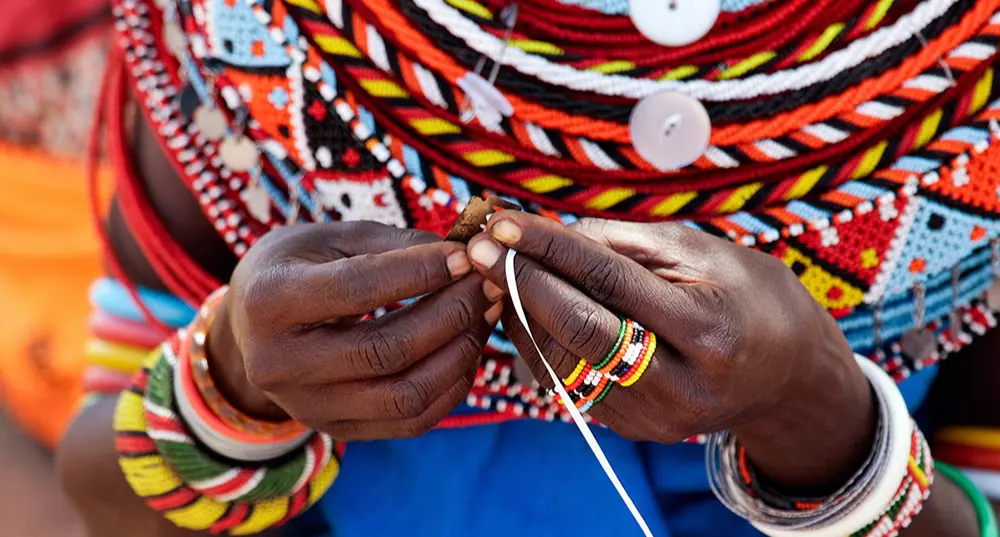
Schools built adjacent to conservancies. Bursary programmes that send the children of rangers and lodge staff to secondary school and university. Mobile health clinics that reach communities hours from the nearest facility. Women’s beading and craft cooperatives that generate independent income for Maasai, Samburu, and Turkana women income they control, that they invest in their children’s education, that shifts generational trajectories.
These are not charity. They are the social contract of responsible tourism: the communities that live alongside wildlife, that accept the restrictions that conservation places on their land use, receive meaningful, tangible returns on that acceptance.
At Entice Africa Safaris, 3% of every bespoke safari we design flows directly into community programmes. We can tell you exactly where it goes, because we are based here. We know the schools. We know the cooperatives. We know the families.
5. Cultural Tourism: Protecting Heritage, Creating Dignity
One of the least celebrated but most powerful forms of giving back through tourism is cultural exchange done with genuine respect.
The Maasai, Samburu, Kikuyu, Luo and dozens of other Kenyan communities carry living traditions of extraordinary richness music, dance, craft, oral history, ecological knowledge that modernity threatens to erode. When well-designed cultural tourism programmes create economic value around these traditions, communities gain a reason to protect them. Young people see that their heritage is worth keeping. Elders find that their knowledge has an audience.
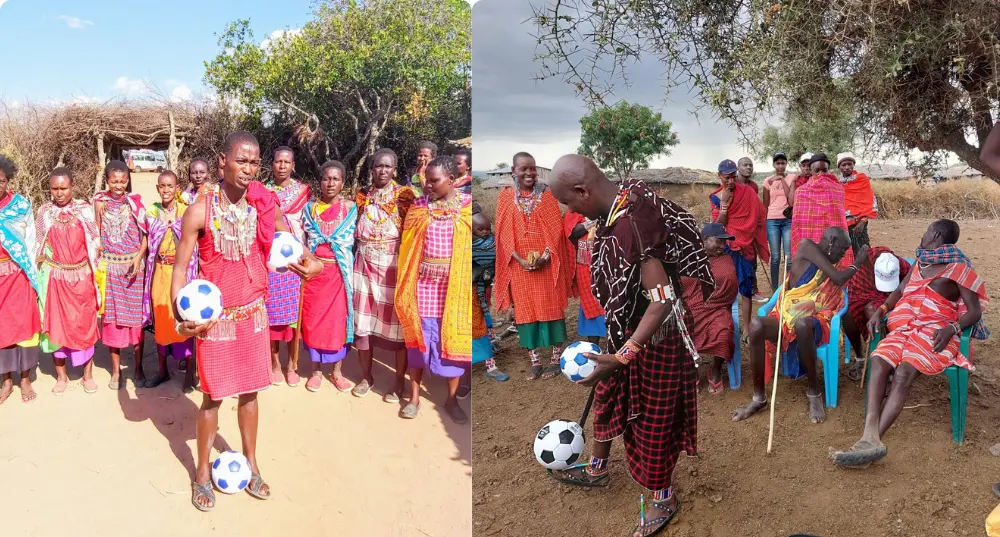
Entice Africa Safaris designs cultural immersion into every itinerary where our guests desire it not as a performative addition, but as a genuine encounter. Maasai village visits structured around real conversation. Bomas of Kenya performances that celebrate Kenya’s 42 tribes. Karen Blixen Museum visits that contextualise the colonial history that shaped this landscape. These encounters generate income for participating communities and create the kind of cross-cultural understanding that changes how international visitors see the world.
How to Choose a Safari That Actually Gives Back: 6 Questions to Ask
Not every safari company delivers on the promise of community impact. Greenwashing is real lodges that display the right certifications and the right language but channel the money nowhere that matters. Here is how to tell the difference.
- Where does the community contribution go, specifically? A credible operator names the projects, the communities, and the amounts. Vague language about “supporting local communities” is a warning sign.
- What percentage of staff are from the local community? The answer should be a high number 70% or more at well-run properties. Asking this question signals to operators that it matters to you.
- Does the lodge use local suppliers? Food, materials, services the most impactful lodges source locally as a deliberate policy, not an afterthought.
- Is the land community-owned or community-leased? The conservancy model creates the most direct financial transfer to local people. Ask whether the property sits inside a community conservancy.
- Does the operator hold formal accreditation? KATO bonding in Kenya (as Entice Africa Safaris carries) means financial protection and vetted operating standards. Kenya Tourism Board accreditation signals formal accountability.
- Can the operator show you the impact? Entice Africa Safaris can. We are based in Nairobi. We know the projects our contribution funds because we chose them deliberately.
The Entice Africa Safaris Commitment to Giving Back
We are not a global travel brand with a corporate social responsibility department. We are a Nairobi-based family of safari professionals who have been designing refined, all-inclusive bespoke safari experiences across Kenya and East Africa since 2017.
Our community commitment is not a marketing position. It is the way we operate.
- 3% of every safari we book flows directly into verified local community programmes
- We work exclusively with lodges that employ locally, source locally, and invest locally
- Our guides are Kenyan naturalists with formal KWS licensing and deep ecosystem expertise
- We are KATO Bonded your booking is financially protected and our standards are accountable
- We can name the communities our contribution reaches, because we know them
When you book with Entice Africa Safaris, you are not just investing in an unforgettable wilderness experience. You are investing in the people and landscapes that make it possible.
Frequently Asked Questions: Giving Back Through Tourism in Africa
Does a luxury safari really support local communities, or is that just marketing?
It depends entirely on the operator. The most credible community impact comes from operators who can name specific programmes, show verified funding flows, and are accountable to formal bodies like KATO. Greenwashing exists. The difference is transparency. At Entice Africa Safaris, we are transparent because we are local we live alongside the communities our programmes support.
What is a community conservancy, and how does it work?
A community conservancy is a model in which Maasai, Samburu, or other indigenous landowners lease their land to conservation operators rather than converting it to agriculture or settlement. Lease payments flow directly to the community. The land stays open for wildlife. The model is most developed in Kenya’s Maasai Mara ecosystem and in Laikipia, where Entice Africa Safaris offers several exclusive-use all-inclusive bespoke safari experiences.
Is responsible safari tourism better for wildlife than traditional conservation?
In most African contexts, yes. Conservation programmes funded by external donors are fragile they end when the funding ends. Tourism-funded conservation is self-sustaining: as long as wildlife exists and is accessible, the economic incentive to protect it persists. Kenya’s rhino recovery from 300 in the 1980s to over 1,000 today is the clearest evidence of this model working at scale.
How do I know my safari money is actually reaching communities?
Ask your operator to name the communities and programmes. Ask what percentage of staff are local. Ask whether the lodge sits inside a community conservancy. A credible operator answers all three questions specifically. Entice Africa Safaris does.
Your Safari Can Change More Than Just Your Life
Every great journey leaves something behind. A responsible safari in Africa leaves schools, rangers, conserved wildlife, and dignified livelihoods in communities that chose to share their land with the wild things that live on it.
That is the journey Entice Africa Safaris designs. Not just unforgettable. Not just exclusive. Meaningful.
We are based in Nairobi, minutes from JKIA. We know Kenya’s communities, parks, and conservancies from the inside. We design all-inclusive bespoke safari experiences that deliver unrivaled wilderness access while ensuring your investment reaches far beyond the lodge fence.
|
Comments are closed