

The Positive Impact of Luxury Safaris Starts the Moment You Book
Here is something most tour operators will never tell you outright.
When you choose a responsible luxury safari in Kenya, you are not just buying a travel experience. You are voting. You are casting a deliberate, powerful, financial vote for the survival of lions, black rhinos, and wild dogs. For the ranger who walks 20 kilometers through the dark to protect a herd of elephants from poachers. For the Maasai woman whose beadwork cooperative is funded by the conservancy next door. For the child in a community school built entirely by safari tourism revenue.
You are voting, with every dollar of your safari investment, for a world in which Africa’s wilderness still exists in fifty years.
That is what responsible tourism actually means. Not a badge. Not a brochure promise. Not a solar panel on the roof of a luxury tent. It means a verifiable, traceable chain of impact from your booking confirmation to a black rhino calf born safely in a protected conservancy.
At Entice Africa Safaris, we have been part of that chain since 2017. This is what we know, what we have seen, and what we believe every traveler deserves to understand before they choose their operator.
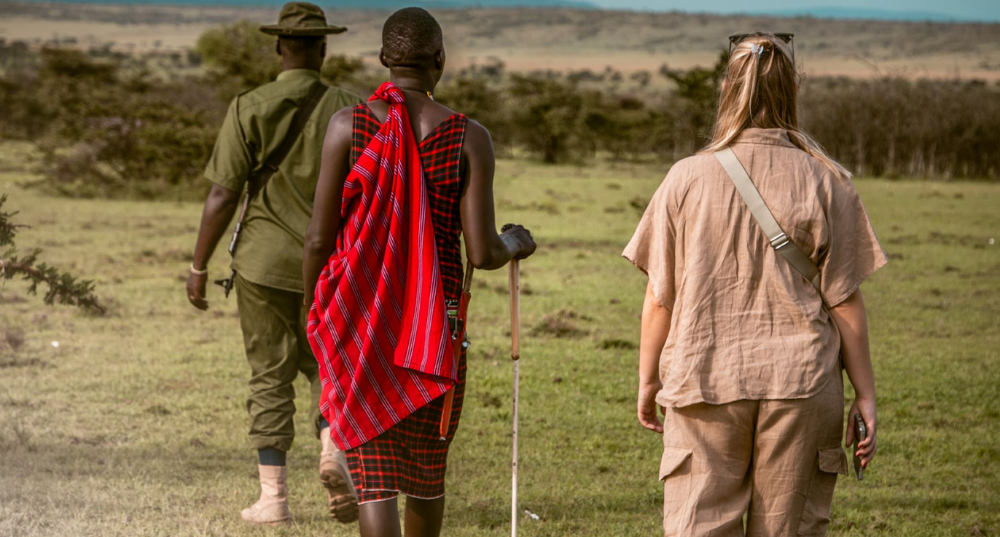
Why Responsible Tourism Is the Most Powerful Conservation Tool on Earth
Wildlife conservation is expensive. Ranger patrols, anti-poaching technology, habitat restoration, veterinary care for rescued animals, community development, education none of it is free. And none of it happens at scale without a sustainable funding model.
Responsible safari tourism is that model.
Across Kenya, iconic ecosystems like Maasai Mara National Reserve rely on safari-generated income to sustain operations Park entry fees fund wildlife protection and habitat management. Private conservancies reinvest tourism income into conservation. And the numbers are significant: Kenya’s community conservancies now protect over 11 million acres of critical wildlife habitat larger than all of Kenya’s national parks combined
This is not a feel-good footnote. This is the architecture of survival for species that have no other constituency.
When done correctly, safari tourism creates a powerful incentive to protect nature rather than exploit it. Across Africa, tourism revenue directly funds conservation efforts, supports community development and ensures that wildlife remains more valuable alive than lost.
The critical word in that sentence is “correctly.” Which brings us to the distinction that matters most.
The Positive Impact of Luxury Safaris Over Mass Tourism: Why It Matters
Not all safari tourism is created equal. And this is where the positive impact of luxury safaris specifically not mass tourism, not high-volume budget operations become clearest.
A luxury safari in a private conservancy or exclusive-use concession operates on a fundamentally different model from a high-volume park operator. The economics are straightforward, and the conservation outcomes are measurable.
Low Volume, High Value
Private conservancies adjacent to the Maasai Mara Mara North, Olare Motorogi, Naboisho, and the Solio Rhino Sanctuary in Laikipia charge premium rates precisely because they limit guest numbers. Fewer guests mean less pressure on wildlife, quieter sightings, and a more intimate wilderness experience. It also means each guest generates significantly more conservation revenue per head than a busload of visitors sharing a lion sighting with fifteen other vehicles.
The Maasai Mara National Reserve banned self-drive vehicles in 2025 and restructured its fee system to reflect exactly this logic: premium access, premium responsibility.
Exclusive-Use Concessions: The Gold Standard of Ethical Wildlife Travel
An exclusive-use concession means a lodge or camp holds sole rights to a defined area of wilderness. No other operator. No other vehicle. Just you, your guide, and the landscape.
This model funds conservation in the most direct way possible: the concession fee paid by the lodge to the landowner (often a community trust or conservancy) goes directly into habitat management, anti-poaching, and community benefit programs. When you stay in an exclusive-use property, your refined hospitality experience is the revenue stream that keeps a wildlife corridor intact.
All-Inclusive Bespoke Experiences: Where Luxury and Ethics Converge
The best responsible luxury safari operators and this is a standard Entice Africa Safaris holds itself to design all-inclusive bespoke experiences in which every element is curated for both guest transformation and conservation impact. Night game drives, walking safaris, conservation briefings, community visits, rhino sanctuary experiences: these are not add-ons. They are the core product. And they generate the awareness, advocacy, and repeat visitation that conservation depends on for long-term funding.
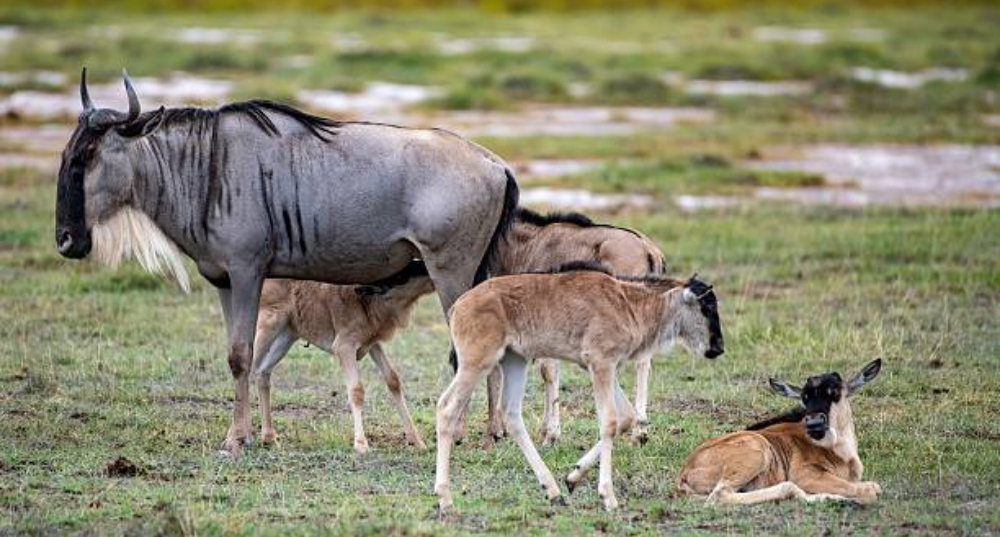
How Responsible Luxury Safaris Protect Wildlife Directly
Anti-Poaching Funding: The First Line of Defense
Revenue from tourism helps fund anti-poaching patrols, wildlife monitoring, and habitat restoration, ensuring that Kenya’s wildlife is protected from threats posed by both human activity and climate change
In practice, this means ranger salaries, patrol vehicles, GPS tracking technology, camera trap networks, aerial surveillance, and community informant programs. At Ol Pejeta Conservancy in Laikipia, anti-poaching funding has made it one of the most secure rhino sanctuaries in Africa. At Lewa Wildlife Conservancy, which holds 12% of Kenya’s entire rhino population, the same model has produced population growth in a species that was heading toward extinction.
These are not coincidences. They are outcomes of deliberate, well-funded, tourism-backed conservation programs.
Wildlife Corridors: Keeping the Wild Connected
One of the most significant and least-discussed conservation contributions of responsible safari tourism is the funding of wildlife corridors the strips of protected land that connect national parks and reserves, allowing animals to migrate, feed, and breed across their natural range. Conservancies create important buffer zones around the parks and wildlife reserves, form extended wildlife corridors, and deter poachers When landowners receive direct income from safari tourism, they have a powerful economic reason to maintain that land as wildlife habitat rather than converting it to agriculture or livestock.
This is how the Maasai Mara ecosystem remains connected to the Serengeti. This is how the Great Migration still happens.
Critically Endangered Species Recovery
Kenya is home to three of Africa’s five critically endangered species: the black rhino, the African wild dog, and the reticulated giraffe. Responsible safari tourism funds the breeding programmes, veterinary support, and habitat security that have enabled measurable population recovery for all three.
At Solio Conservancy, where the JW Marriott Solio Rhino Sanctuary is located, the most successful black rhino breeding programme on the continent operates precisely because safari tourism revenue makes it economically viable. When you choose a luxury safari that includes a Solio conservancy experience, you are directly funding that programme.
- Black rhino: population growing at Solio, Ol Pejeta, and Lewa due to tourism-funded protection
- African wild dog: range expansion in Laikipia supported by conservancy income
- Reticulated giraffe: Samburu National Reserve populations stable under tourism-backed management
How Responsible Safari Tourism Empowers Local Communities
Conservation that excludes communities fails. This is one of the best-evidenced lessons in African wildlife management, and the reason why the most successful conservation models in Kenya are built on community benefit.
Responsible luxury safari tourism, when structured correctly, creates an economic argument for conservation that reaches deep into local communities. And when communities benefit tangibly from wildlife, they become its most effective protectors.
Employment and Livelihoods
Local people find good jobs in conservancies indeed many of the most senior and best-paid roles such as camp managers and head guides are taken by members of indigenous communities
At Entice Africa Safaris, this is not a policy statement. It is a hiring practice. Every guide, driver, and operations team member is Kenyan. Many are from communities adjacent to the conservancies and parks they work in. Their expertise built over years of living alongside wildlife is irreplaceable, and their employment is a direct transfer of safari tourism revenue into local households.
Community Conservancy Revenue Sharing
Employment and revenue-sharing create long-term benefits for surrounding communities.In the Mara ecosystem, community conservancies such as Mara North, Naboisho, and Olare Motorogi operate on a lease model: lodge operators pay the Maasai community landowners directly for the right to operate within the conservancy. That income, distributed to individual families and community trusts, has replaced or supplemented the income previously derived from livestock farming which was the primary driver of habitat conversion.
The result: land that was being converted to agriculture has been returned to wildlife. Because wildlife, through tourism, now pays more.
Education, Healthcare, and Women’s Empowerment
The most forward-thinking responsible safari operators invest tourism revenue in community infrastructure: schools, clinics, women’s cooperatives, and vocational training programmes. These investments create the long-term social stability that makes conservation durable.
At Entice Africa Safaris, 3% of every safari booking is channeled directly into local community programs. Over seven years of operation, that contribution has supported school feeding programs, bursaries for secondary education, and income-generating projects for women in communities adjacent to the parks we operate in.
We do not announce this on every page of our website. We simply do it.
|
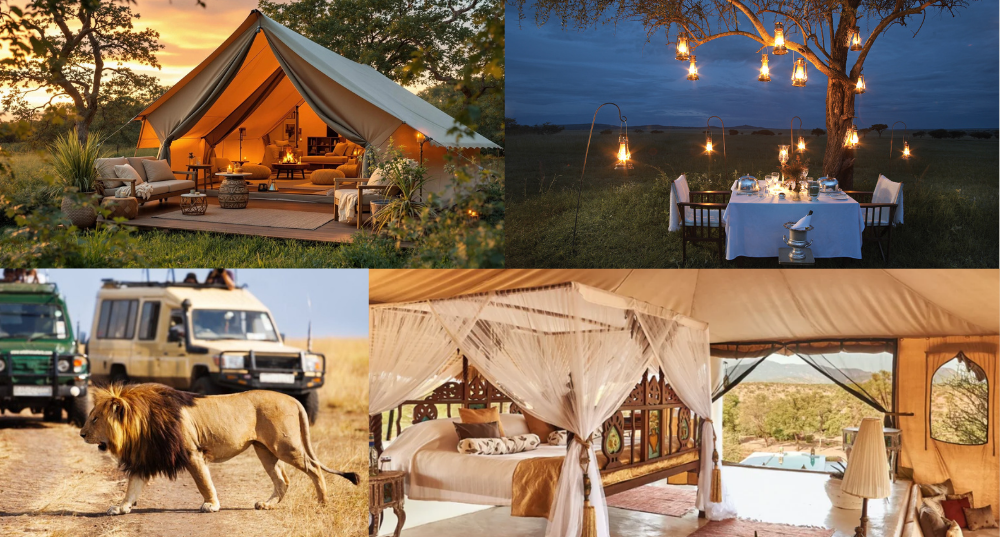
How to Choose a Responsible Luxury Safari Operator: What Actually Matters
The market for “responsible” and “sustainable” safari experiences has grown rapidly. So has the marketing language around it. Here is what separates genuine conservation-led operators from those who use the vocabulary without the substance.
Industry Accreditation Is the Baseline, Not the Badge
A responsible operator holds verifiable, independent accreditation. In Kenya (KATO) bond is the industry standard for financial accountability and operating legitimacy. The Kenya Tourism Board accreditation is the government’s recognition of operating standards. These are not decorative they mean your booking is protected and your operator is accountable.
Entice Africa Safaris is KATO Bonded and Kenya Tourism Board accredited. We have been since our founding in 2017.
Ask Where Your Money Goes
A responsible operator should be able to tell you, specifically, what percentage of their revenue goes into conservation and community programs, and where. If the answer is vague, the commitment probably is too.
Look for Unrivaled Wilderness Access, Not Volume
The best responsible safari experiences prioritize unrivaled wilderness access over volume. Private game drives. Exclusive-use vehicles. Off-road access in conservancies. Small group sizes. Dawn and dusk drives not available in the national parks. These are not luxury indulgences they are conservation outcomes. Fewer vehicles mean less wildlife stress. More intimate experiences mean deeper guest engagement with conservation.
Local Expertise Over Intermediaries
Book with an operator who is based in the destination, not one who sub-contracts from overseas. Local operators employ local guides, use local suppliers, and keep more of the tourism revenue in the destination economy. Entice Africa Safaris is 100% locally owned, Nairobi-based, and has never sub-contracted a tour.
- KATO Bonded and Kenya Tourism Board accredited verified operating standards
- 3% of every booking to community and conservation programmes
- 100% locally owned maximum revenue retained in Kenya
- Private, exclusive-use game drives in conservancies and national parks
- All-inclusive bespoke safari packages with no hidden costs
- 24/7 on-the-ground support from a Nairobi-based team since 2017
What You Are Actually Protecting When You Book a Responsible Safari
We want to be specific. Because “conservation” can feel like a category, and what it actually contains is individual animals with names and stories, ecosystems that took millions of years to develop, and communities whose entire way of life is built on the land they share with wildlife.
When you book a responsible luxury safari with Entice Africa Safaris, here is what your investment specifically protects:
- The black rhino at Solio Conservancy — one of the 6,000 remaining on Earth that will calve this year because the anti-poaching programme your safari fees fund has kept her safe
- The Maasai family on the Naboisho Conservancy whose lease income from safari lodges has replaced the need to expand their livestock into wildlife habitat
- The ranger at Lewa Wildlife Conservancy whose salary paid by the conservancy, funded by tourism means he can protect 12% of Kenya’s entire rhino population
- The child in the community school adjacent to Mara North Conservancy, whose school fees are subsidised by the conservancy’s community fund built from safari tourism revenue
- The lion pride in Olare Motorogi that has grown in number because the Maasai landowners who graze cattle alongside them have an economic reason tourism income not to retaliate against predator attacks
These are not statistics. They are the people and animals whose survival is entangled with your travel decision.
Your Safari. Your Impact. Start Here.
Responsible luxury safari tourism is not a compromise between a great experience and doing good. It is the discovery that the two are, when done well, the same thing.
The most extraordinary wildlife encounters on Earth happen in the most carefully protected ecosystems. The most knowledgeable guides are the ones who grew up alongside the animals they interpret. The most emotionally resonant moments of a safari the ones that change how you see the world and your place in it happen when you understand that what you are witnessing is precious, and that your presence here is helping keep it alive.
That is what we offer at Entice Africa Safaris. Not just a trip. A contribution. A chapter in a conservation story that has been unfolding in Kenya for over a century, and that needs you your investment, your advocacy, your return to continue.
We have been doing this since 2017. We know every conservancy, every community programmed, every sunrise and every ecosystem. We will design an all-inclusive bespoke safari experience that is exactly right for you and exactly right for Kenya.
|
Comments are closed