
Kenya is one of the best places to travel in 2027. Lonely Planet named Kenya’s Tsavo National Parks on its Best in Travel 2027 list, and Intrepid Travel selected Samburu National Reserve as a top emerging destination for the year. Kenya offers a combination that is rare anywhere on Earth: the Great Wildebeest Migration in the Maasai Mara, red-dusted elephant herds in Tsavo, critically endangered rhinos in Laikipia, and pristine Indian Ocean beaches at Diani all within one country, accessible from a single international hub at Jomo Kenyatta International Airport
Best Places to Travel in 2027: Why Kenya Belongs on Every List
Every September, the world’s most respected travel publications sit down and ask the same question: where should people go next year?
Planning a safari? Get a free, tailor-made quote in 6 hours →
In 2026, two of them Lonely Planet and Intrepid Travel gave the same answer, independently. Kenya.
Lonely Planet named Tsavo East and Tsavo West National Parks on its Best in Travel 2027 list, calling them a place of “endless savannahs and volcanic landscapes” home to red elephants and a newly established rhino reserve. Intrepid Travel, drawing on its global network of local experts, named Samburu National Reserve as one of 2027’s standout emerging destinations. Both selections pointed to the same thing: travelers in 2027 are done with crowds, done with passive sightseeing, and looking for somewhere that feels genuinely wild.
Kenya has always been that place. In 2027, the world is finally catching up.
Key Takeaways
- Lonely Planet named Kenya’s Tsavo National Parks on its Best in Travel 2027 list. Intrepid Travel named Samburu.
- Kenya offers the Great Migration, Tsavo’s red elephants, Samburu’s rare northern species, Laikipia’s rhinos, and Diani Beach all in one trip.
- The best travel destinations in 2027 reward travelers who slow down. Kenya is built for that.
- Safari in Kenya does not require you to choose between wildlife and comfort. Private conservancies deliver both.
June to October is peak season for the Great Migration. January to February is quieter, with excellent wildlife and lower
What Makes Kenya One of the Best Travel Destinations in 2027
Most countries offer one signature experience. A beach, a city, a monument. Kenya offers an ecosystem a complete, layered, living world that changes depending on where you stand and what time of year you arrive.
That ecosystem is why Kenya keeps appearing on best destinations for 2027 lists, and why travelers who visit once almost always come back.
Here is what the ranking articles rarely go deep enough to explain.
Tsavo: Africa’s Largest Wilderness, Newly in the Spotlight
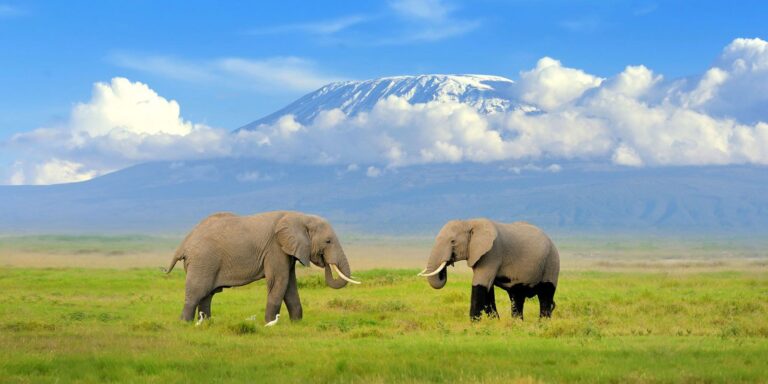
Tsavo East and Tsavo West together form the largest protected area in Kenya roughly the size of Wales. The red-earth landscape here is unlike anything else on the continent. Elephants coat themselves in the rust-coloured volcanic soil until they look prehistoric. The Chyulu Hills rise above Tsavo West in a ridge of dark green. The Galana River cuts a silver line through the dry east.
Lonely Planet’s 2027 selection specifically noted Tsavo West’s newly established rhino reserve. The black rhino is critically endangered globally, and Kenya holds more than any other country in Africa outside South Africa. A rhino encounter in Tsavo feels nothing like a zoo visit. These animals move freely across tens of thousands of acres, and finding them requires a guide who reads the land.
Tsavo is less visited than the Maasai Mara. That is part of its value in 2027: the kind of game drive where you do not share the road with another vehicle for an hour is increasingly rare in East Africa, and here it is still possible.
Samburu: Northern Kenya’s Best-Kept Secret
Samburu National Reserve sits in northern Kenya along the Ewaso Nyíro River, in a landscape that is semi-arid, rugged, and unlike anything in the south. Intrepid Travel named it one of 2027’s best emerging destinations, and the reason is straightforward: Samburu hosts five wildlife species you cannot find anywhere else in Kenya.
Reticulated giraffe the world’s largest, with a distinctive rectangular pattern walks the riverbank in the early morning. Grevy’s zebra, critically endangered with fewer than 3,000 remaining globally, grazes on the open flats. The gerenuk, an impossibly long-necked antelope that stands on its hind legs to browse acacia branches, is found here and almost nowhere else. Add Beisa oryx and Somali ostrich, and Samburu offers a wildlife checklist that is simply not available in any other park.
For a traveler who has already seen the Mara, or who wants to go somewhere genuinely different in 2027, Samburu is the answer.
The Maasai Mara: Still the Standard, for Good Reason
Every list of best places to travel eventually circles back to the Maasai Mara, and with reason. The Great Wildebeest Migration 1.5 million animals moving between Tanzania and Kenya in one of the last great wildlife movements on Earth peaks here between July and October. The Mara River crossings during August and September are among the most dramatic wildlife events a traveler can witness in person.
What is less often written about is the Mara outside migration season. Resident lion prides roam year-round. Leopards rest in fig trees above the Sand River. Cheetahs hunt in the open grass. In January and February, the herds are gone but the park is quieter, the light is softer, and a game drive can feel genuinely private.
Private conservancies bordering the reserve Mara North, Olare Motorogi, Naboisho operate with vehicle limits that the main park does not. If the experience you are looking for in 2027 is unhurried and unshared, these conservancies are where to find it.
Laikipia: Rhinos, Wild Dogs, and the Landscape That Changes Everything
Laikipia sits on a high plateau north of Nairobi, beneath the slopes of Mount Kenya. It is the kind of place that does not appear on most travel lists and that is precisely what makes it worth including here.
The plateau holds the highest concentration of black and white rhino outside South Africa. Ol Pejeta Conservancy, in the Laikipia lowlands, is home to two of the world’s last remaining northern white rhinos. Solio Conservancy, where the JW Marriott Solio now operates, runs the continent’s most successful black rhino breeding programme. A walking safari in Laikipia no vehicle, no roof, your guide reading the ground ahead of you brings you closer to endangered wildlife than almost any other experience in Africa.
African wild dogs, one of the continent’s rarest large carnivores with fewer than 6,000 remaining globally, pass through the plateau. Sightings are not guaranteed, but they happen here more reliably than almost anywhere else in Kenya.
Diani Beach and the Kenyan Coast
Kenya’s Indian Ocean coastline runs south of Mombasa through a series of beaches backed by coral reef, mangrove forest, and Swahili architecture that has not changed in centuries. Diani Beach, a 17-kilometre sweep of white sand, is where most safari travelers end their trip three or four days of complete stillness after the intensity of the bush.
The combination matters. A week of wildlife and a few days of ocean produces something a beach holiday alone cannot: the particular contentment of having seen something genuinely wild, then being given time to absorb it.
Lorem ipsum dolor sit amet, consectetur adipiscing elit. Ut elit tellus, luctus nec ullamcorper mattis, pulvinar dapibus leo.
| Question | Short Answer |
|---|---|
| Best for | Travellers seeking wildlife, culture, conservation and coast in a single destination. |
| Why 2027? | Tsavo and Samburu have been highlighted in travel recommendations for 2027, reflecting growing interest in distinctive wildlife and less-crowded experiences. |
| Peak season | July to October. Generally dry conditions and excellent wildlife viewing, with Great Migration activity in the Maasai Mara depending on herd movements. |
| Quieter season | January to February. Often rewarding for wildlife viewing, with attractive photography conditions and potentially lower visitor numbers at selected lodges. |
| Key parks and reserves | Maasai Mara, Tsavo East and West, Samburu, Amboseli, Laikipia and Ol Pejeta Conservancy. |
| Getting there | Fly into Jomo Kenyatta International Airport (NBO) in Nairobi. Direct and connecting services are available from international hubs including London, Amsterdam, Dubai and Doha, depending on airline schedules. |
| Entry requirements | Most visitors need an approved Electronic Travel Authorisation (eTA) before departure, subject to applicable exemptions. Apply through the official website: etakenya.go.ke. Processing times vary, so apply well before travel. |
| Comfort level | Choose from comfortable tented camps and boutique lodges to exclusive private conservancy properties offering personalised service, fine dining and selected wellness facilities. |
Safaris that fit this guide
9-Day Hidden Northern Kenya SafariLaikipia, Meru and Samburu off the beaten track9 days · from $4,730 ppView trip →
11-Day Migration Fly-In SafariAmboseli, Samburu and four nights in the Mara11 days · from $7,625 ppView trip →
14-Day Kenya Safari and Diani BeachMara, lakes, Amboseli, Tsavo, then the beach14 days · from $4,860 ppView trip →Every trip is private and can be changed to suit you. Get a free, tailor-made quote in 6 hours →
What the 2027 Travel Lists Get Right — and What They Miss
Lonely Planet’s Tsavo selection and Intrepid’s Samburu pick both reflect something real: the shift in how experienced travelers approach Africa in 2027. Less about iconic names, more about space, depth, and encounters that feel unscripted.
What the roundup articles rarely address is the practical question: how do you actually put a Kenya trip together in a way that delivers what those lists are describing?
A safari that covers Tsavo, Samburu, the Mara, and the coast is not complicated, but it benefits from planning by someone who knows each ecosystem well. Flight connections between parks save days. Guide expertise varies significantly by region. The difference between a good conservancy and a great one is not always visible in a booking listing.
That is the gap between a travel list and a real trip. We close it.
Plan your safari with a Nairobi team
Tell us your dates and who is traveling. A planner replies within 6 hours with a day-by-day plan and an itemised price. No payment is needed to ask.
Frequently Asked Questions
Is Kenya really one of the best places to travel in 2027?
According to Lonely Planet’s Best in Travel 2027 list and Intrepid Travel’s 2027 emerging destinations list, yes. Tsavo National Parks and Samburu National Reserve both received independent recognition. Beyond the lists, Kenya holds the Great Migration, the highest concentration of black rhino in East Africa, five endemic northern species in Samburu, and an Indian Ocean coastline that most visitors are surprised to find at the end of a safari.
When is the best time to visit Kenya in 2027?
June to October is peak season: dry, clear, and timed with the Great Wildebeest Migration. July to September is best for Mara River crossings. January and February are an excellent alternative quieter, good wildlife, and lower rates at most lodges.
What is the difference between Tsavo and the Maasai Mara?
The Mara is open grassland, famous for the Migration and big cats. Tsavo is Kenya’s largest wilderness volcanic, red-earthed, and home to the largest elephant herds in the country. They offer different landscapes and different atmospheres. Many travelers combine them.
Do I need a visa to visit Kenya?
Yes. Kenya’s Electronic Travel Authorisation (eTA) is required before departure. Apply at etakenya.go.ke. Most nationalities are approved within one to three business days. EAC citizens are exempt.
How many days should I spend in Kenya?
Seven nights covers one or two parks well. Ten to fourteen nights allows two or three parks plus the coast. For a trip that includes Tsavo, Samburu, and the Mara, ten to twelve days is a sensible minimum.


Comments are closed