
 Safari, Wildlife & Conservation
Nobody can tell you today where the herds will be in a given week of Great Migration 2027, because timing follows rain and grass, not the calendar. The usual pattern is wildebeest in the Masai Mara from about July to October, with the busiest river-crossing action from late July to September, but some years the herds arrive late or spread thinly. When that happens the Mara is still a strong safari, because its resident wildlife does not depend on the herds and you can choose dates that leave room on both sides.
Below we explain why timing and numbers move, what the published wildebeest counts say, what a late or thin year looks like, and how to plan dates and camps so the trip works either way. We keep to what sources report and say where they disagree.
Planning this trip? Get a free quote in 6 hours →
Great Migration 2027 at a glance
| Question | Short answer |
|---|---|
| Usual months in the Mara | About July to October |
| Busiest river-crossing action | Late July to September |
| Early arrivals | Mid-June is possible in years of ample rain in Kenya |
| What moves the timing | Rain and fresh grass on both sides of the Kenya-Tanzania border |
| How many wildebeest | Estimates range from about 0.5 million to 1.4 million, depending on the method |
| If the herds are late or thin | Lions, elephants, giraffes and other resident wildlife are still there |
| Dates that hedge best | Late August to September |
| Entice trips built around the herds | 5 days Masai Mara Migration Safari and 7 Days Maasai Mara Migration Safari |
Why the timing and numbers change from year to year
The Serengeti-Mara herd is one population that circulates between the southern Serengeti in Tanzania and the Masai Mara in Kenya. Operator guides describe the pattern as only somewhat predictable, and note that rainfall and river flooding can shift when the herds reach a river, or block some crossings altogether.
Kenyan officials say the herds usually leave the Serengeti around May, after Kenya’s long rains, and arrive in the Mara from mid-July, with arrivals as early as mid-June when Kenya has ample rain. Dry years push the other way. In 2021 Kenyan scientists said the migration was delayed significantly, citing depressed March to May rains and dry, cold weather from June to August, and Kenya’s Tourism Cabinet Secretary said the herds were still in Tanzania. That is the clearest example of a migration delayed by weather.
Our Great Migration safari guide and the month-by-month calendar of where the herds are cover the standard pattern. This article covers seasons that break it.
How many wildebeest are there? The counts disagree
The figure most people quote, more than a million, comes from the traditional aerial count. The Tanzania Wildlife Research Institute survey flown on 28 to 31 March 2023 counted 1,366,109 wildebeest, plus or minus 231,741 (the standard error), by photographing 55 transects and counting the images.
A 2025 study in PNAS Nexus, by researchers from Oxford, Princeton and other institutions, used satellite imagery and AI and counted 324,202 to 337,926 wildebeest in August 2022 imagery and 502,917 to 533,137 in August 2023. The authors say this implies a shortfall of at least 700,000 against the 1.3 million estimate, and that their figures may be slightly high because the models cannot reliably tell wildebeest from zebra and eland.
Part of the gap is timing. The aerial count was flown in March, when the whole herd is on the southern short-grass plains, while the satellite images are from August, when the herds are in the northern Serengeti and the Mara. The Tanzanian authors also say their method needs further improvement in accuracy. So the honest range is about 0.5 million to 1.4 million. Even the lower figure is a very large herd, and what changes your safari is where the animals are on your dates, not the total.
What a late or thin year looks like in the Mara
These descriptions are our reading of how the pattern works, based on the sources above, not a record of any one season.
A late year
The herds reach Kenya after the usual mid-July start. Early-season dates then see more resident game than wildebeest, and river crossings come later.
A thin year
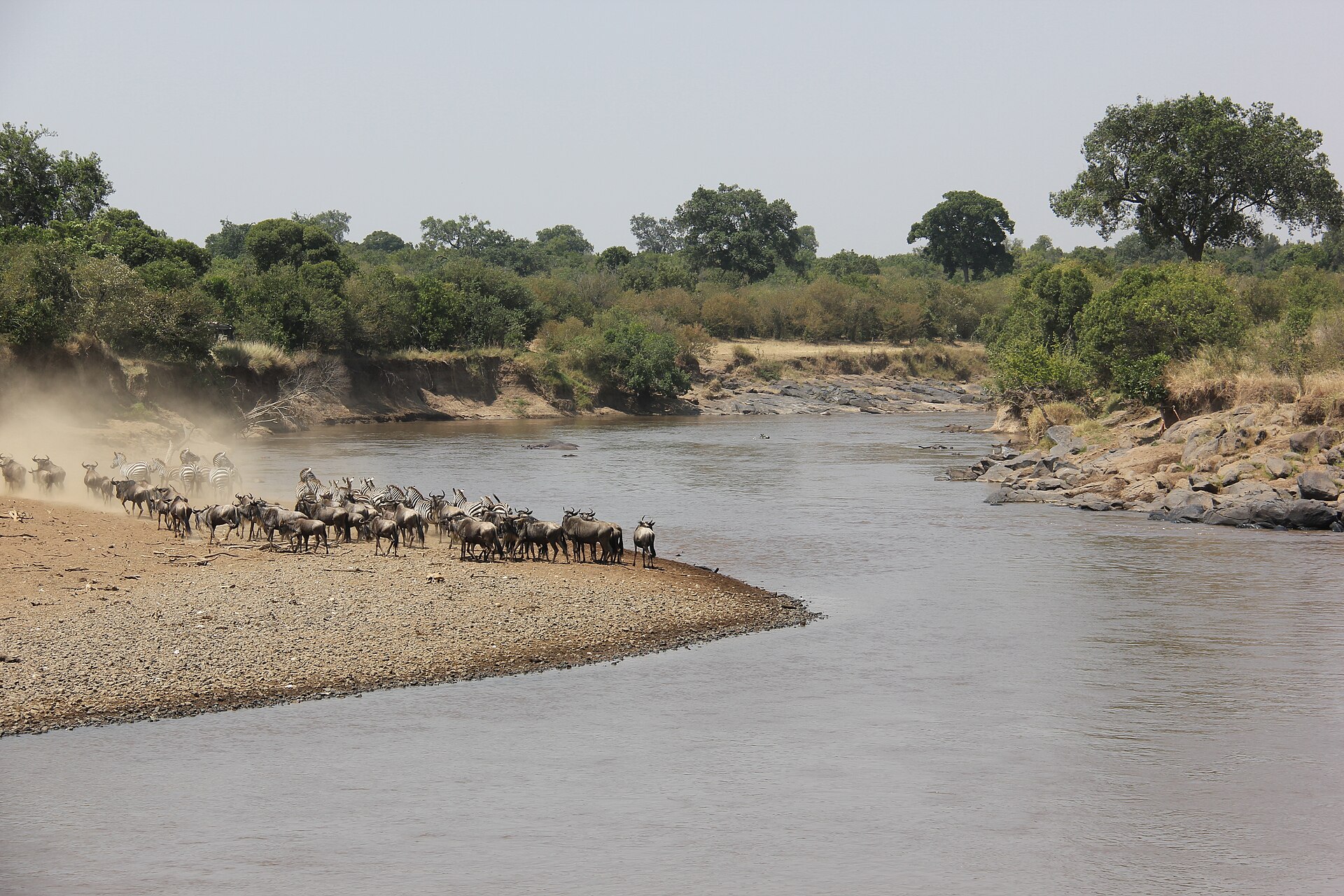
Here the herds are present but spread out, or smaller groups reach the river. The animals cover a journey of roughly 800 km, so a quiet morning at one crossing does not mean the herds are absent. It does mean you may spend a day or two without a crossing.
Crossing points and rivers
One operator guide lists eight named crossing points on the Kenyan side. Some are heavily used and full of crocodiles, others are less dramatic or hard for vehicles to reach, and a river in flood can block some. Names differ between operators and maps. Our guide to Mara River crossings: when, where and how to see one goes into detail.
| Period | What sources describe | How to read it for planning |
|---|---|---|
| Mid-June | Early arrivals possible when Kenya has ample rain | An early year. Do not plan around it |
| July | Usual start: around July, or from mid-July by Kenyan officials’ account. Crossings begin | Most exposed to a late year |
| Late July to September | The busiest window for river crossings | The core of the season |
| Late August to September | Middle of the usual window | Room on both sides if the herds run early or late |
| October | Herds usually start moving back south around October | Herds may still be in the Mara, but the end of the window |
| Early November | Herds start south with the short rains | Not a month to plan around the herds |
The Mara still has resident game
Wildebeest are the headline, not the whole reserve. Lions, cheetahs, leopards, elephants, giraffes, buffalo, hippos and crocodiles are found in and around the Masai Mara through the year, along with plains game such as zebra and impala. In a weak herd year the predators and resident animals are still there, so game drives stay busy.
An optional Masai Mara hot-air balloon flight is another part of the trip that does not depend on the herds. We quote it at USD 550 per person. Fees last verified: October 2026.
Safaris that fit this guide
 5-Day Masai Mara Migration SafariMore time with the herds in the Mara5 days · from $2,750 ppView trip →
 9-Day Migration Majesty SafariAmboseli, Nakuru and the Mara in migration season9 days · from $6,530 ppView trip →
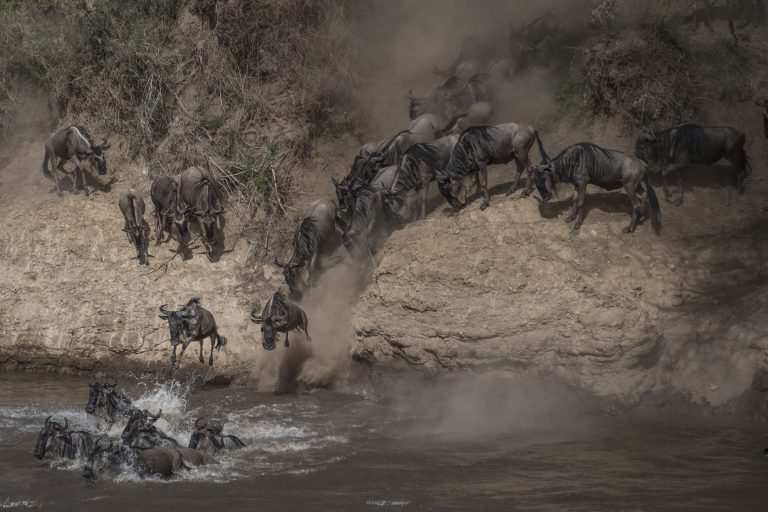 7-Day Masai Mara Migration SafariRiver crossings season, by road7 days · from $4,900 ppView trip →
Every trip is private and can be changed to suit you. Get a free, tailor-made quote in 6 hours →
How to plan dates so the trip works either way
- Aim for late August to September. It sits inside the usual window and the busiest crossing period, with slack if the herds run a few weeks early or late. It is a hedge, not a promise.
- Give the Mara enough nights. Each extra day gives the herds another chance to be where you are. If you can spare more days, the 7-day trip is the longer of our two migration itineraries.
- Stay flexible on dates if you can. Ask for two sets of dates to be quoted side by side.
- Choose camps with room to move. We plan with the river, drive times and the option of shifting a night or an area if the herds move, rather than tying the whole trip to one spot.
- Set expectations. The migration is wild animals following grass, not a scheduled show. Treat a river crossing as a bonus and the rest of the Mara as the trip.
Two Mara trips built around the herds
- 5 days Masai Mara Migration Safari: a shorter Mara trip for travelers with limited time. From USD 2,750 per person.
- 7 Days Maasai Mara Migration Safari: more days in the Mara for travelers who want more chances at the herds. From USD 4,900 per person.
These are from-prices on a midrange, low-season, two-sharing basis. Prices depend on season, group size and lodge choice, so your dates may price differently.
Is the Great Migration worth it?
For most travelers, yes, if the herds are one reason to go and not the only one. If a river crossing is the whole point, the risk of missing it is real in any year, and larger in a late or thin one. If you want big cats, elephants and wide Mara landscapes as well, the herds are a bonus and the trip holds up whatever they do.
Planning for Great Migration 2027
We have no forecast for 2027 and doubt anyone can give one this far ahead, since rain and grass decide the timing. What we can offer is the usual window, the hedge described above and an itinerary with room to adjust. For a wider view of the reserve, see the complete Masai Mara safari guide.
Get your free safari quote in 6 hours
Tell us your dates and who is travelling. A planner in our Nairobi office replies within 6 hours with a day-by-day itinerary, the camps we suggest and a fully itemised price. No payment is needed to enquire.
Prefer to talk? WhatsApp or call +254 799 871 255.
Frequently asked questions
Is the Great Migration worth it if the herds are late?
Yes, if you value the Mara for more than one sight. A late herd means fewer wildebeest early in the season, but the resident wildlife is unaffected. Dates in late August or September leave the most room for the herds to show up.
Why is the migration delayed some years?
Because it follows rain and grass. In 2021, Kenyan scientists linked the delay to drier-than-usual conditions, including depressed March to May rains. When Kenya has ample rain, the herds can arrive as early as mid-June instead.
When is the safest time to book the Mara for the herds?
No month is certain. The herds are usually in the Mara from about July to October, and the busiest crossing period is late July to September. Late August to September sits in the middle of that window.
How many wildebeest are in the Great Migration?
It depends on who counted and how. A March 2023 aerial survey counted 1,366,109, while a 2025 satellite study found fewer than 600,000 in August imagery. We use the range of about 0.5 million to 1.4 million.
Can I see a river crossing in any month?
Not reliably. Crossings happen when herds reach the Mara River, usually from July, and the best window is late July to September. Even then, a crossing on a given day is never certain.
What can I see in the Mara if the herds are not there?
Resident wildlife such as lions, cheetahs, elephants, giraffes, hippos and crocodiles, plus plains game. An optional balloon flight is USD 550 per person. Fees last verified: October 2026.
Will the Great Migration happen in 2027?
The herd circulates between the Serengeti and the Mara each year, but we cannot forecast the timing or the size of the herds in any one year. Plan for the usual July to October window and keep some flexibility.
Photo: Laika ac River Crossing (9679708365) by Laika ac from USA, CC BY-SA 2.0, via Wikimedia Commons


Comments are closed