
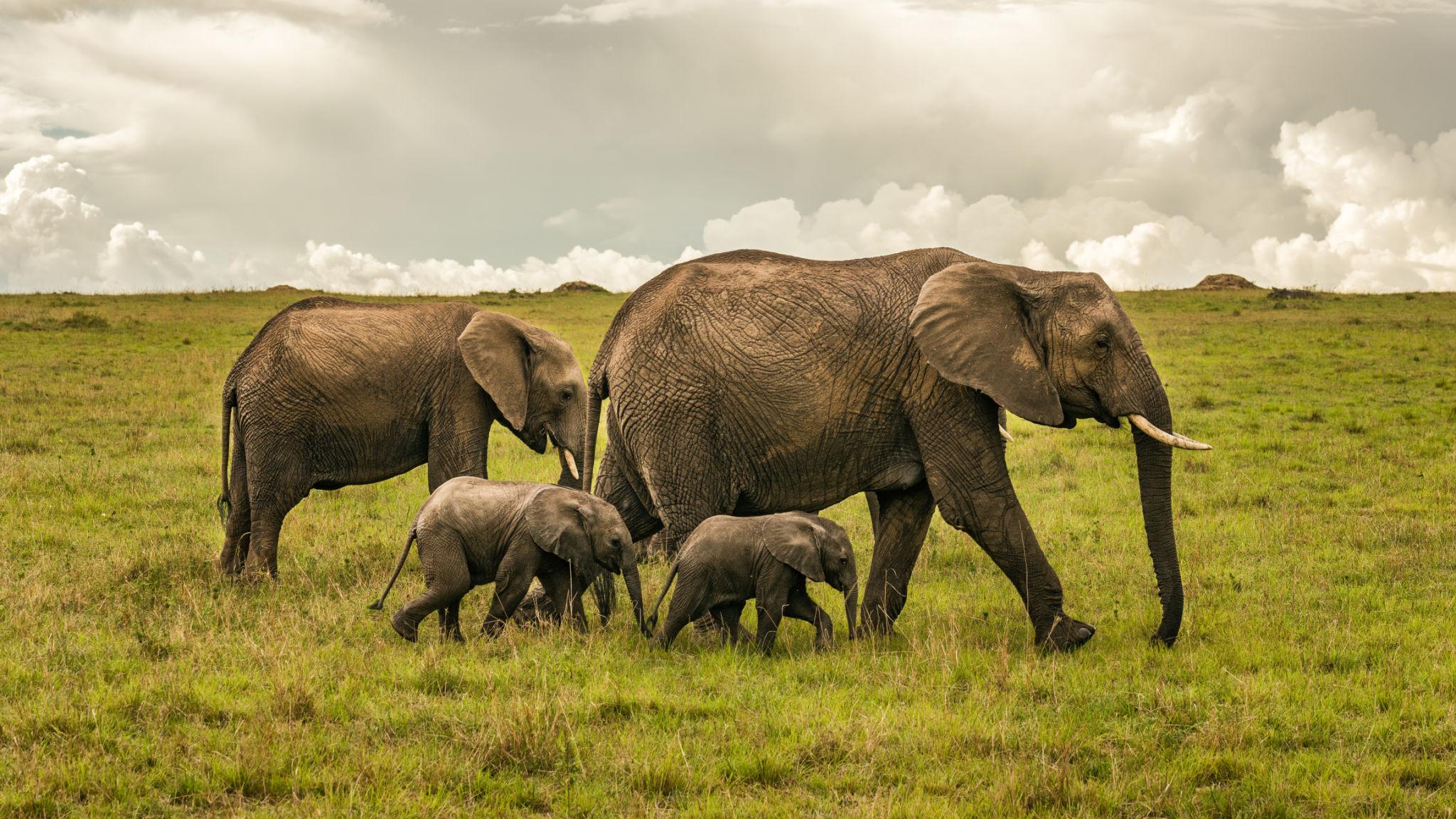

A good Kenya wildlife safari matches the park to the animal. The Maasai Mara is the place for lions and other big cats, Amboseli and Tsavo East are for elephants, Ol Pejeta and Lake Nakuru are for rhinos, and Samburu adds leopards and northern species you will not see in the south. Our private 10-day Samburu-to-Mara route covers the Mara, Samburu, Ol Pejeta and Lake Nakuru in one trip, from USD 5,100 per person, and can add Amboseli for elephants.
This guide goes animal by animal, then matches three private wildlife safari packages to each goal: a 10-day all-rounder, a 9-day big cat route from USD 4,197 per person and a 10-day elephant route from USD 6,640 per person. Prices depend on season, group size and lodge choice, and no guide can promise a sighting.
Planning this trip? Get a free quote in 6 hours →
At a glance
| Question | Answer |
|---|---|
| Best for | Travelers choosing a safari by the animal they most want to see |
| How many days | 9 to 10 days for the three trips in this guide |
| Best months | June to September is dry in the Mara, Amboseli, Samburu and Tsavo East. January and February is a second dry window |
| From price | 10-Day Kenya Safari: Samburu to the Maasai Mara: from USD 5,100 per person. 9 Day The Big Cat Safari: from USD 4,197. 10 Day Save the Elephant Safari: from USD 6,640. Prices depend on season, group size and lodge choice |
| Getting there | Fly into Jomo Kenyatta International Airport (JKIA) in Nairobi. All three trips start and end in Nairobi and run by road in a private 4×4 with your own guide |
Which Kenya park for which animal
The animal you care about most should decide the route. This table shows where each is easiest to find.
| Animal | Best parks | What to know |
|---|---|---|
| Lions | Maasai Mara | The most reliable place for lions. Samburu and Amboseli have them too |
| Leopards | Samburu, Maasai Mara | Secretive everywhere. Guides look first in river thickets and rocky ground |
| Cheetahs | Maasai Mara, Amboseli | Open plains help, but cheetahs are the least certain of the big cats |
| Elephants | Amboseli, Tsavo East, Samburu | Big herds beneath Mount Kilimanjaro in Amboseli, red-stained herds in Tsavo East |
| Black and white rhinos | Ol Pejeta, Lake Nakuru | Hard to find in the Mara, so a rhino stop is worth adding |
| Northern species | Samburu | Grevy’s zebra, reticulated giraffe, gerenuk, Beisa oryx and Somali ostrich |
| Wildebeest migration | Maasai Mara | Usually July to October. River crossings cannot be scheduled |
Big cats: lions, leopards and cheetahs
The Maasai Mara is the lion park. The Mara Predator Conservation Programme estimated 481 lions older than a year in its 2025 survey, across the reserve and surrounding conservancies (2,713 square kilometers, about 1,050 square miles), and calls the Mara one of Kenya’s most important lion strongholds.
Cheetahs are less certain. The same survey counted 16 resident adult cheetahs and describes that population as still concerningly low, although more pass through over a full year. Treat a cheetah as a bonus.
Leopards depend on your guide and your luck. Africa Geographic calls Samburu one of Kenya’s finest places for leopard, with regular sightings along the Ewaso Ng’iro River, and lists lion, cheetah and leopard as resident in Amboseli.
If big cats are your priority, our 9 Day The Big Cat Safari drives from Nairobi to the Mara, Lake Nakuru and Samburu. The Mara gets four or five nights and Samburu two or three, with the exact split settled in your quote. It starts from USD 4,197 per person, and an optional sunrise balloon flight over the Mara is USD 550 per person.
Elephants: Amboseli, Tsavo East and the Sheldrick orphans
Amboseli is where most travelers get closest to elephants. The Kenya Wildlife Service calls it the home of the African elephant, and the Amboseli Trust for Elephants says no wild elephants anywhere have been known for as long or as closely, with research dating from 1972. Mount Kilimanjaro rises about 50 km (31 miles) away in Tanzania, and Africa Geographic notes that cloud usually hides the summit by mid-morning, so early drives give the clearest views.
Tsavo East feels different. It is Kenya’s largest national park, at about 13,747 square kilometers (roughly 5,300 square miles) according to the Kenya Wildlife Service, and its elephants are stained red by the soil. Africa Geographic says it is easily possible to spend a day there without meeting another vehicle.
Our 10 Day Save the Elephant Safari links both parks with the David Sheldrick Wildlife Trust. It starts with a visit to the Trust’s Nairobi nursery, open to the public from 11 am to noon by advance booking, then spends three nights at Ithumba in northern Tsavo East, two at Umani Springs in Kibwezi Forest and two in Amboseli. The Trust says orphans move from the nursery to units like these at around age three, and that visits to a unit are for guests staying at its own lodges, in set visiting slots. Ask us in your quote how those visits are arranged on your dates.
The trip starts from USD 6,640 per person, the low-season rate for a group of four; smaller groups pay more per person. Park and conservancy fees are included. The Ithumba and Umani Springs camps are self-catering with a chef, and the trip page lists food shopping and chef charges as extra, so ask for that figure in your quote.
Two ways to start your Kenya wildlife safari
- 10-Day Kenya Safari: Samburu to the Maasai Mara suits travelers who want big cats, rhinos, elephants and Samburu’s northern species in one trip. From USD 5,100 per person.
- 9 Day The Big Cat Safari suits travelers who want lions, leopards and cheetahs as the main event. From USD 4,197 per person.
Rhinos and the rarer species
Rhinos: Ol Pejeta and Lake Nakuru
Rhinos are the hardest of the Big Five to find in the Mara, so a wildlife route usually adds a rhino stop. IUCN describes Ol Pejeta Conservancy as the largest black rhino sanctuary in East Africa, and the conservancy says it is home to the last two northern white rhinos on Earth. On our 10-day route you can add a guided visit to those two rhinos, run at set times and booked in advance.
Lake Nakuru National Park became Kenya’s first government-managed rhino sanctuary in 1987, and the Kenya Wildlife Service says it holds one of the country’s largest black rhino populations, alongside white rhinos. The park is small and fenced, which makes it one of the more dependable places for rhino. Flamingo numbers rise and fall with the lake, so do not book it for the flamingos.
Samburu’s northern species and other highlights
Africa Geographic lists five northern species that are largely absent from Kenya’s southern parks: gerenuk, Grevy’s zebra, reticulated giraffe, Beisa oryx and Somali ostrich. Our guide to the Samburu Special Five explains how to find each one. Elsewhere on the 10-day route you can see Rothschild’s giraffe at Lake Nakuru.
Which Kenya wildlife safari package suits which goal
| Trip | Route and nights | Best for | From price per person |
|---|---|---|---|
| 10-Day Kenya Safari: Samburu to the Maasai Mara | Nairobi 1, Samburu 2, Ol Pejeta 1, Lake Nakuru 2, Maasai Mara 3 | A bit of everything: big cats, rhinos, elephants and northern species | USD 5,100 |
| 9 Day The Big Cat Safari | Maasai Mara 4 to 5, Lake Nakuru 1, Samburu 2 to 3 | Lions, leopards and cheetahs as the main event | USD 4,197 |
| 10 Day Save the Elephant Safari | Nairobi 2, Ithumba 3, Umani Springs 2, Amboseli 2 | Elephants, the Sheldrick orphans and Kilimanjaro views | USD 6,640 |
Each figure is the from-price on the trip page, at a low-season rate (April to June on the 10-day and 9-day routes). The 10-day and 9-day figures are for two sharing, with budget lodges on the 10-day, and the elephant figure is for a group of four. Busier months, smaller groups and higher lodge levels cost more.
Choose the 10-day Samburu-to-Mara route for one trip with a strong chance at all of the Big Five, with leopard the swing factor. Choose the 9-day route if cats matter most, and the elephant route if elephants and conservation are the point. With under a week, ask for a shorter Mara-only or Mara and Amboseli version.
When to go
The dry months suit most wildlife viewing, because shorter grass makes animals easier to see and herds gather at water. The months below follow Rough Guides for the Mara and Africa Geographic for the other parks.
| Park | Main dry season | Second dry window | Rains |
|---|---|---|---|
| Maasai Mara | June to October | January to February | March to May, with lighter showers in November and December |
| Amboseli | June to October | January to February | March to May and November to December |
| Samburu | June to September | January to February | April to May and November to December |
| Tsavo East | June to October | January to March | April to May and November |
June to September is dry in all four, which makes it the safest window for a multi-park route. It is also when the Mara is busiest, since the wildebeest herds are usually there from July to October, and our Great Migration guide covers the timing month by month. April and May bring the long rains: lush scenery, fewer vehicles and the lowest rates on the 10-day and 9-day routes, but likely showers, and a few camps close for part of the season. Ol Pejeta and the Rift Valley lakes work all year.
Planning notes: what is included, entry and health
All three trips include a private 4×4 Land Cruiser, your own driver-guide, game drives and park entrance fees. They do not include international flights, the Kenya eTA, travel insurance or tips.
Most foreign visitors need a Kenya eTA before they fly. The official portal, etakenya.go.ke, lists normal processing from USD 30, generally within three business days, and asks for a passport valid for at least six months with a blank page. The UK government says the Kenyan authorities recommend applying at least two weeks ahead, and that from 5 October 2026 applicants must buy travel health insurance as part of the application, so check the portal’s current rules before you pay.
The CDC lists malaria transmission in all areas of Kenya below 2,500 meters (8,200 feet), including game parks, and recommends the yellow fever vaccine for most travelers. See a travel clinic well before you go.
Related safari guides
- 9-Day Kenya Safari: Big Cat Itinerary and Price
- Samburu Safari Packages: Road or Fly-In, and How to Add the Mara
- 10 Days in Kenya: Samburu to the Mara Itinerary and Cost
Get your free safari quote in 6 hours
Tell us your dates and who is travelling. A planner in our Nairobi office replies within 6 hours with a day-by-day itinerary, the camps we suggest and a fully itemised price. No payment is needed to enquire.
Prefer to talk? WhatsApp or call +254 799 871 255.
Frequently asked questions
What is the best time for a Kenya wildlife safari?
For most animals, June to September, when the Mara, Amboseli, Samburu and Tsavo East are all dry. January and February is a second good window. July to October adds the wildebeest herds in the Mara, and the most vehicles.
How many days do I need?
A 3 to 5 day trip can cover the Mara alone. A route that adds Samburu and a rhino stop needs 9 to 10 days, and adding Amboseli to the 10-day route takes two more nights. The 10-day Samburu-to-Mara route has five road days, none longer than about six and a half hours, and legs can be flown to shorten them.
Can I see the Big Five on a Kenya wildlife safari?
The 10-day Samburu-to-Mara route gives a strong chance at all five. Elephant and buffalo turn up at several stops, lions are most reliable in the Mara, rhino is easiest at Ol Pejeta and Lake Nakuru, and leopard is the swing factor. No guide can promise a sighting.
How much does a Kenya wildlife safari cost?
Our three wildlife trips start from USD 4,197, USD 5,100 and USD 6,640 per person. Prices depend on season, group size and lodge choice, and your quote gives the exact figure for your dates. Park entrance fees are included; international flights, the eTA, travel insurance and tips are not.
Will I see the Great Migration on these trips?
Only if you travel when the herds are in the Mara, usually July to October, and the Samburu-to-Mara and big cat routes both include Mara nights. River crossings cannot be scheduled, so nobody can promise one on a given day. Outside those months the Mara’s resident wildlife is still there.


Comments are closed