
 Safari, Wildlife & Conservation
The best place to plan an African wild dog safari in Kenya is the Laikipia plateau. Mpala Research Centre says Laikipia’s wild dogs recovered to more than 300 animals, the largest population in the country, before disease struck in 2017. Today they are patchy: several of the Laikipia conservancies, including Suyian, Lewa and Sosian, name them among their wildlife, but packs range widely and no property can promise a sighting.
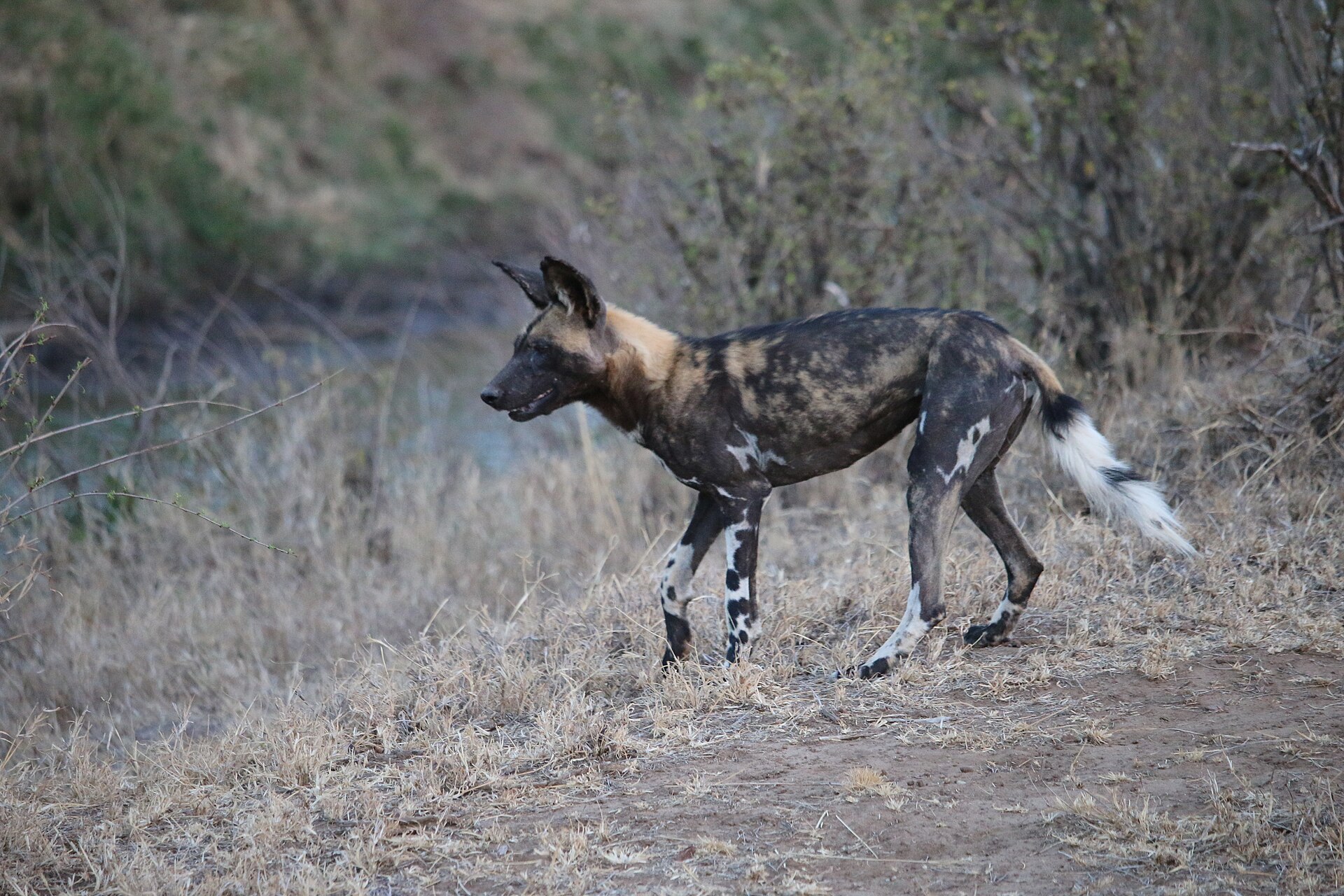
Wild dogs, also called painted wolves or painted dogs, live in close family packs, hunt together in the cooler hours of the day and carry a coat pattern that is different on every animal. This guide covers their status, Laikipia’s recovery story, the properties to ask about, what is known about denning and how to give yourself a fair chance.
Planning this trip? Get a free quote in 6 hours →
At a glance
| Question | Answer |
|---|---|
| Species | African wild dog (Lycaon pictus), also called painted wolf or painted dog |
| IUCN status | Endangered, listed since 1990 |
| Global population | Estimates differ. Mpala gives 3,000 to 5,500 animals; the IUCN assessment gives about 6,600 adults, of which about 1,400 are mature individuals |
| Pack size | Two to 27 adults plus yearling pups; four or five adults is typical in the Maasai Mara |
| Laikipia history | More than 300 dogs at the peak, then a collapse after the 2017 drought and canine distemper |
| Properties that name them | Suyian, Lewa and Sosian (described as semi-resident) |
| Best month | No month guarantees a sighting; ask about denning when you book |
| Your odds | Never guaranteed, even with an expert guide |
A wild dog request fits best into a northern Kenya route rather than a single-lodge stay. Our 7 Day Untamed Skies Safari: Flying The Hidden North of Kenya is one example of the fly-in style of trip, and we can plan extra nights at a conservancy that lists wild dogs. We will tell you plainly what the odds look like before you pay anything.
Laikipia’s wild dogs: from near-gone to a hard setback
Mpala Research Centre, whose researchers have studied wild dogs in the region since 2001 through the Samburu-Laikipia Wild Dog Project, describes Laikipia’s dogs as nearly gone by the 1990s. Disease, including rabies, and conflict with pastoralists had removed most packs. The population then recovered to more than 300 animals, the largest in Kenya. Researchers there work on coexistence with herders, climate change and the Laikipia Rabies Vaccination Campaign.
The 2017 drought reversed that. Herders moved into Laikipia with their domestic dogs, canine distemper spread, and the wild dogs were thought to be entirely wiped out. Loisaba made the same point in a 2019 post: many dogs died of distemper, and a pack was heard again that year.
The recovery restarted in a small way. In 2018 a lone female appeared at Mpala, two males joined her, she denned and raised five pups. Mpala’s article, dated January 2020, reported one pack of nearly 20 animals there. That is a snapshot from 2020, not a current count.
The national picture is sobering. Reports on Kenya’s 2025 wildlife census, launched in December 2025, say wild dogs and cheetahs each lost roughly half their numbers in four years. We have not seen a published count for Laikipia alone, so treat any promise of a “resident pack” with care. For the rest of the plateau’s wildlife, see our guide to Laikipia wildlife: rhinos, wild dogs, Grevy’s zebra and more.
Where to look for wild dogs in Laikipia
No source we checked says where a visitor can count on a pack, because packs move. These are the properties that name wild dogs, and what is published about each.
| Property | What is published about wild dogs |
|---|---|
| Suyian | Listed by andBeyond Suyian Lodge, which opened in July 2025 |
| Sosian | Described by Expert Africa as semi-resident |
| Lewa | Wild dog is on the conservancy’s wildlife list |
| Loisaba | A pack was heard again in 2019 after the distemper losses |
| Mpala | Research centre; the main public record of Laikipia’s dogs |
Suyian
Suyian is a 44,000-acre private conservancy in north-western Laikipia, a former cattle ranch overseen by Space for Giants. The name means wild dog in Samburu, though some sources say Maa. andBeyond Suyian Lodge has 14 suites and lists the African wild dog alongside Grevy’s zebra, reticulated giraffe, elephants and lions. Listed activities include night drives, walking with herders and horseback rides.
Sosian
Sosian is a 24,000-acre working beef and dairy ranch with one exclusive lodge. Expert Africa describes its wild dogs as semi-resident and puts the road transfer from Nanyuki at about two hours. Activities include game drives, walking and riding.
Lewa
Lewa’s own website lists wild dog among the wildlife on the conservancy. We have no published detail on where its packs tend to be, so ask directly when you enquire.
Loisaba
Loisaba sits on a movement corridor linking Laikipia with Samburu and Isiolo. Safarilink and Air Kenya fly daily from Wilson Airport to its airstrip. Our guide to Loisaba Conservancy: Star Beds, Wild Dogs and Wide Horizons covers its camps in more detail.
Mpala
Mpala is a research station rather than a safari lodge, so it is not somewhere to book a wild dog game drive. Its published work is still the most useful public record of how Laikipia’s dogs have fared.
Denning season and what it means for your trip
For most of the year a pack is a moving target, covering ground while it hunts. When a pack has small pups it stays close to a den, usually an old burrow, and the adults return to it after each hunt. A denning pack is therefore the easiest to find, because you know roughly where it will be.
The sources we checked give no reliable calendar for denning in Laikipia, and timing differs between packs, so do not choose your month around it. Ask your lodge whether a pack is denning nearby when you book, and again a few days before you arrive. A pack that moves its den can vanish from the area within days.
How to improve your chances
- Stay longer in fewer places. One morning is a lottery. Several mornings and evenings on one conservancy give you repeat chances.
- Choose properties that name wild dogs, and ask what the local pack has done in the last few weeks.
- Ask for early-morning and late-afternoon drives. These are the cooler hours, when the dogs are usually active.
- Look at the full activity list. Suyian lists night drives, walking and horseback rides; Sosian lists walking and riding. Different activities cover different ground.
- Tell your planner early. If wild dogs are the priority, say so at the quote stage so the nights and lodges are chosen around them.
- Treat a sighting as a bonus. Laikipia offers rhinos, giraffes and Grevy’s zebra as well, so the trip works even if the dogs stay hidden.
Build wild dogs into a northern Kenya safari
Two of our northern Kenya trips make a useful starting point. Tell us wild dogs are a priority and we will say honestly what the odds look like on each route. Prices depend on season, group size and lodge choice.
7 Day Untamed Skies Safari: Flying The Hidden North of Kenya suits travellers who prefer to fly between stops rather than spend long hours on the road. From USD 3,700 per person.
9 Days Untamed Safari to the Hidden Northern Kenya Circuit suits travellers who want more days on the ground in the north. From USD 7,840 per person.
Why sightings are never guaranteed
Wild dogs live at low density and cover large territories. Disease can remove a pack quickly, as the 2017 distemper outbreak showed. A pack can be at a den one week and miles away the next, and a sighting can last a few minutes before the dogs move on. Any operator who promises you wild dogs is promising something the animals will not honour. We plan to give you a realistic chance, not a guarantee.
Practical details
- Getting there: Loisaba is a flight from Wilson Airport; Sosian is about two hours by road from Nanyuki. Routing for the others depends on the lodge, so we confirm it in your itinerary.
- Altitude: Loisaba lies between 1,400 and 2,000 metres, so early drives are cool. Pack a warm layer.
- What to bring: binoculars, a camera with a long lens and neutral clothes in greens and browns. Loisaba only allows 4×4 vehicles in green or brown shades inside the conservancy.
- Fees: Loisaba does not publish a conservation fee, and Elewana lists conservancy fees as separate from its rates. Ask what your quote includes. Fees last verified: October 2026.
Get your free safari quote in 6 hours
Tell us your dates and who is travelling. A planner in our Nairobi office replies within 6 hours with a day-by-day itinerary, the camps we suggest and a fully itemised price. No payment is needed to enquire.
Prefer to talk? WhatsApp or call +254 799 871 255.
Frequently asked questions
Can you see African wild dogs in Laikipia?
Yes, but not on demand. Suyian, Lewa and Sosian name wild dogs among their wildlife, and Expert Africa calls Sosian’s dogs semi-resident. Packs travel far and disease has thinned the population, so the honest answer is a real chance, not a certainty.
Are African wild dogs endangered?
Yes. The IUCN lists the species as Endangered and has done so since 1990. Estimates of the global population range from 3,000 to 5,500 animals up to about 6,600 adults, depending on the source. Reports on Kenya’s 2025 census say wild dogs lost roughly half their numbers in four years.
What is the best time of year to see wild dogs in Laikipia?
The sources we checked do not give a reliable month. A pack with small pups stays near its den, which makes it easier to find, but denning timing varies between packs. Ask the lodge about the local pack before you fix your dates.
How big is a wild dog pack?
Packs range from two to 27 adults plus yearling pups. Four or five adults is typical in the Maasai Mara. Mpala reported one Laikipia pack of nearly 20 animals in January 2020.
Do wild dogs live outside Laikipia?
Yes. The Samburu-Laikipia Wild Dog Project covers Samburu as well as Laikipia, and packs are also reported in the Maasai Mara. We would not plan a safari around seeing them in the Mara.
How many days should I allow to look for wild dogs?
There is no magic number. Each extra morning and evening drive on a conservancy that names wild dogs adds a chance, so allow more days rather than fewer. Our planners can shape the route around them once you tell us they are the priority.
Photo: An African wild dog (Lycaon pictus) in Mpala, Laikipia by Kengitau254, CC BY-SA 4.0, via Wikimedia Commons


Comments are closed