DRAG

Walking Safaris in Kenya: Where To Go and What to Expect

Walking Safaris in Kenya

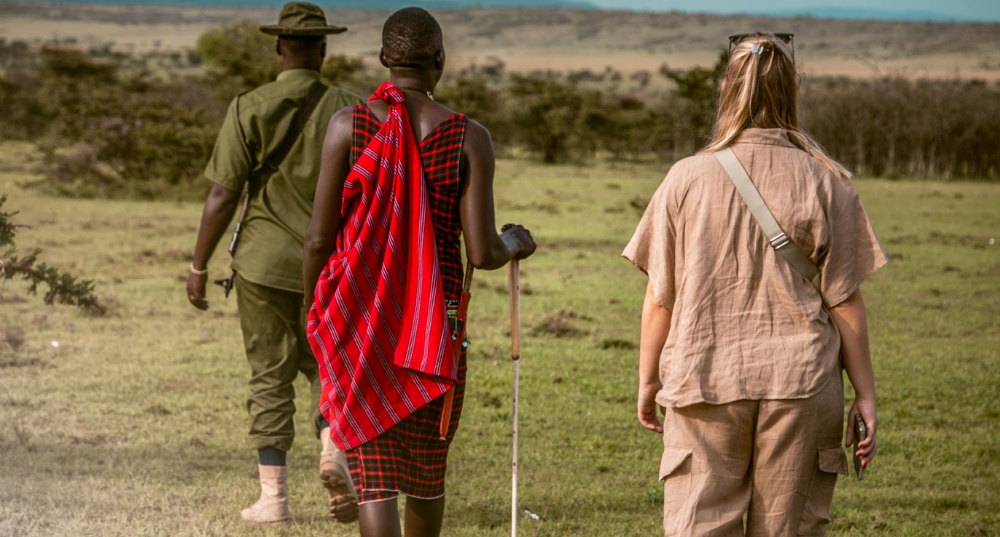
Walking safaris in Kenya are guided, on-foot wildlife experiences conducted in private conservancies, ranches, and wildlife concessions not inside national parks, where walking is generally prohibited. Led by armed professional guides (and often accompanied by Maasai or Samburu warriors with generations of tracking knowledge), a walking safari slows the safari experience down to a human pace.

Key Takeaways

✔  Walking safaris in Kenya are not permitted inside most national parks the best experiences are in private conservancies and ranches where regulations are more flexible.

Planning a safari? Get a free, tailor-made quote in 6 hours →

✔  The leading regions are Laikipia Plateau, the Maasai Mara conservancies, Samburu, the Mathews Range, and Lewa each offering a completely different landscape and wildlife encounter.

✔  Walks range from 2-hour guided morning walks to 5-day fly-camping expeditions your guide, not your fitness level, sets the pace.

✔  June to October is the prime season; January and February are the quieter alternative.

✔  Comfort-level options span from well-appointed permanent tented camps to exclusive fly camps under the stars Kenya offers the full spectrum.

✔  You will not only see wildlife differently you will hear it, smell it, and feel it in a way no vehicle can replicate.

Walking Safaris in Kenya: Where to Go and What to Expect

The vehicle stops. The engine cuts. Silence floods in from every direction, and your guide steps out of the Land Cruiser, adjusts his rifle across his shoulder, and says quietly: “We Walk from here.”

Everything changes in that moment.

You are no longer a passenger watching Africa through a window. You are inside it. The red soil is under your feet. The grass whispers against your trousers. Ahead of you, barely visible through the acacias, a giraffe turns its slow, ancient head and watches you watching it.

This is what a walking safari in Kenya actually feels like and it is unlike anything else in wildlife travel.

Game drives are extraordinary. But they give you Africa framed, curated, observed from a safe elevation. Walking gives you Africa as it is: textured, sensory, slightly unpredictable, and completely alive.

This guide covers where to do it, what to expect, how long to go, and how to choose the right walk for you.

Why Choose a Walking Safari in Kenya?

On a game drive, you track the large and the obvious. A walking safari teaches you to read everything else. The termite mound that tells you which direction the wind is coming from. The scrape in the red dust that a lion made three hours ago. The acacia thorns that show the height of the giraffe that last browsed here. The dung beetle doing something ancient and essential that you’ve never noticed before because you were always moving too fast.

A walking safari does not replace a game drive. It completes it. Guests who do both, in the right sequence, consistently say the walking is what they remember first.

  • Read animal tracks and sign with a professional guide who has spent decades doing this
  • Encounter Kenya’s extraordinary birdlife at ground level over 1,100 species in the country
  • Experience the Maasai or Samburu cultural dimension of the bush a dimension vehicles cannot access
  • Move through landscapes that vehicle tracks simply do not reach
  • Feel the quietness of the bush in a way that transforms how you experience the rest of your safari

A note on safety:

All walking safaris in Kenya are conducted by armed, professionally trained guides who understand animal behaviour at the level of their lives depending on it. The rule is simple: trust your guide completely. Stay behind them. Walk when they walk, stop when they stop, do exactly what they say. In fifteen years of guiding walking safaris across Kenya, the encounters that stay with guests are never the dangerous ones. They are the close, quiet, deeply human ones.

The Best Regions for Walking Safaris in Kenya

Kenya’s national parks including the Maasai Mara National Reserve, Amboseli, Samburu Reserve, and Tsavo do not permit walking safaris within their boundaries. The experiences below take place in the private conservancies and ranches that surround them, where access rules are more flexible and wildlife density is often higher.

Laikipia Plateau: Kenya’s Walking Safari Heartland

If one region defines the modern Kenyan walking safari experience, it is Laikipia. Spread across the highlands north of Mount Kenya, this vast plateau is a patchwork of private ranches and community conservancies that support the second highest density of wildlife in Kenya.

What makes Laikipia exceptional for walking is the combination of terrain, wildlife, and freedom. Unlike the more regulated reserves, Laikipia’s private ranches allow guides to take you virtually anywhere, for any duration, in any direction. You can track black rhino on foot one of the few places on Earth where this is possible. You can follow elephant herds across open plains. You can spend a morning reading sign left by lions you never actually see, and come away feeling that you understand them better than any sighting could have taught you.

The Mathews Range, a ridge of forested hills on the north-eastern edge of Laikipia, offers genuine wilderness walking days-long expeditions in terrain so remote it is accessible only on foot, with fly camps set among the trees and absolute silence at night.

Comfort level: Laikipia offers some of Kenya’s finest permanent tented camps. The walk is wild. The return is to crisp linen, cold gin, and a hot shower.

Maasai Mara Conservancies: Walking with Warriors

Walking safaris are not permitted inside the Maasai Mara National Reserve. But the fourteen private conservancies that border it Naboisho, Mara North, Olare Motorogi, Lemek, Mara Nyika, and others operate independently and actively encourage on-foot exploration.

What the Mara conservancies offer that Laikipia does not is the cultural dimension. Most walking experiences here are led by Maasai guides who have grown up in this landscape. They read the bush the way other people read books tracking spoor, interpreting calls, anticipating animal movement with an intelligence that no amount of formal training can fully replicate. Walking with a Maasai guide is not a wildlife experience with a cultural footnote. It is both, equally and simultaneously.

Multi-day walking expeditions crossing multiple conservancies are available and offer some of the most immersive safari experiences in East Africa: days of walking, nights in fly camps, the entire Mara ecosystem experienced at ground level, with no glass and no engine between you and it.

Comfort level: Permanent tented camps in the conservancies range from comfortable to outstandingly luxurious. Fly camps are well-appointed and thoughtfully managed.

Lewa and the Northern Frontier: Rhino on Foot

Lewa Wildlife Conservancy, in the foothills of Mount Kenya, holds 12% of Kenya’s entire rhino population and was one of the first private conservancies to introduce walking safaris. The experience here is notably different from Laikipia or the Mara: it is tighter, more focused, and the chance of tracking black and white rhino on foot is genuinely high.

Lewa’s guides work closely with the conservancy’s rhino monitoring team, which means your walk is sometimes guided by real-time information about where specific animals have been spotted that morning. It is as close as conservation science and safari experience come to each other.

Samburu: Walking in Kenya’s Arid North

The Samburu ecosystem in northern Kenya is a different Africa entirely drier, wilder, and home to species found nowhere else in the country: the reticulated giraffe, Grevy’s zebra, gerenuk, and beisa oryx. Walking in Samburu means walking in landscapes that feel ancient and undisturbed, along river corridors thick with doum palm and elephant.

Samburu guides, like their Maasai counterparts, carry both a rifle and generations of indigenous ecological knowledge. A morning walk here reads differently from Laikipia or the Mara quieter, more austere, and in many ways more elemental.

Comfort level: Select private camps offer guided walking. Conditions are warm and dry. Footwear and sun protection are particularly important in this region

Kenya Walking Safari Regions at a Glance
Region Walking Safari Style Best For
Laikipia Plateau Big-game tracking and multi-day wilderness walks First-time walkers, rhino encounters and luxury comfort
Mara Conservancies Cultural walks with Maasai guides and fly-camping expeditions Cultural immersion, multi-day walking and Great Migration season
Lewa Conservancy Rhino tracking on foot and focused conservation walks Rhino enthusiasts and conservation travellers
Samburu Arid-bush walking and Northern Frontier wildlife Experienced walkers and off-the-beaten-path explorers
Mathews Range Remote wilderness and multi-day forest expeditions Adventure-focused travellers and wildlife photographers
What Actually Happens on a Walking Safari in Kenya

Every walking safari is different because every guide reads the bush differently and every morning brings something unexpected. However, the experience follows a familiar rhythm that helps you know what to expect.

01. The Morning Walk
TYPICAL DURATION: 2–4 HOURS

Most walking safaris depart between 6:30 and 7:00 am, when temperatures are cool, wildlife may still be active and the soft morning light creates exceptional photography opportunities.

Before departure, your guide explains essential safety procedures, including hand signals, appropriate spacing and how to respond to a close wildlife encounter. Then you set off on foot.

The pace is relaxed. This is not a race or a conventional hike. You may stop for several minutes while your guide studies an animal track, identifies a plant or listens to a distant call. The walk becomes a conversation between your guide and the bush, teaching you to notice details that are easily missed from a safari vehicle.

02. The Fly-Camp Experience
MULTI-DAY ADVENTURE

For travellers who want to go deeper into the wilderness, multi-day walking safaris with fly camps are available in selected areas of Laikipia, the Maasai Mara conservancies and the Mathews Range.

A fly camp is a lightweight, professionally managed camp established ahead of your arrival at a carefully selected site. After walking through the landscape, you arrive on foot, relax, enjoy freshly prepared meals and settle in beneath the African night sky.

Depending on the route and operator, these expeditions may last two to five days. They offer an immersive way to experience Kenya's wildlife, remote landscapes and wilderness atmosphere.

Walking Safari Comfort Levels in Kenya

Kenya allows you to combine adventure with comfort. Whether you prefer a permanent tented camp or an expedition deep into the wilderness, the right experience depends on how you want to explore.

01. Permanent Tented Camp

The ideal choice for travellers who want to explore on foot without giving up the comforts of a well-appointed safari camp.

After a day in the bush, return to comfortable beds, en-suite bathrooms, excellent dining and, at selected properties, a plunge pool or an evening around the campfire. The walk is wild; the evening is all about relaxation.

02. Fly Camp

A mobile camp established specifically for overnight walking expeditions, offering a closer connection to the wilderness.

Depending on the camp, facilities may include proper camp beds, lantern lighting, a campfire and meals prepared by a dedicated support team. Sleeping beneath the night sky and listening to the sounds of the surrounding landscape creates an experience that a permanent lodge cannot quite replicate.

03. Extended Wilderness Walk

The most immersive option involves spending several days exploring different landscapes on foot and camping at different sites along the route.

These expeditions require reasonable fitness, adaptability and an appreciation that wildlife encounters cannot be scheduled.

Entice Africa Safaris can help plan a supported walking itinerary with experienced guides, appropriate safety arrangements and camp support, depending on the destination and selected operator.

Best Time for Walking Safaris in Kenya

The season influences trail conditions, vegetation, wildlife activity and the overall walking experience. Choose your travel dates according to the region and the type of adventure you prefer.

JUNE – OCTOBER
The Long Dry Season

This is often one of the most favourable periods for walking safaris in many Kenyan wildlife areas. Lower vegetation and drier trails can make animal tracks easier to identify, while cooler mornings provide comfortable conditions for exploring on foot.

In the Maasai Mara region, August and September may coincide with significant Great Migration activity. However, herd movements and river crossings depend on natural conditions and cannot be guaranteed.

JANUARY – FEBRUARY
Warm Days and Beautiful Light

These months can offer excellent walking opportunities in suitable regions, with warm weather, attractive photography conditions and fewer visitors at selected properties. Recent rainfall and local conditions influence how green the landscape remains.

APRIL – MAY
The Long Rains

Heavy rainfall can make remote trails muddy or impassable, while thicker vegetation may reduce visibility in some areas. Conditions vary by region, so walking safaris are not automatically ruled out during these months.

Before booking, confirm trail access, weather conditions and walking availability with your safari operator.

Expert tip: Walking safaris depend on local weather, wildlife movements, guide assessments and conservancy regulations. Always confirm the suitability of your chosen destination and travel dates before finalising your itinerary.

Safaris that fit this guide

Every trip is private and can be changed to suit you. Get a free, tailor-made quote in 6 hours →

Plan your safari with a Nairobi team

Tell us your dates and who is traveling. A planner replies within 6 hours with a day-by-day plan and an itemised price. No payment is needed to ask.

Get my free quote

Frequently Asked Questions

Can I do a walking safari in the Maasai Mara National Reserve?

No. Walking is not permitted inside the Maasai Mara National Reserve itself. However, the private conservancies that border the Reserve including Naboisho, Mara North, and Olare Motorogi actively offer guided walking experiences on their land. The wildlife in these conservancies is often as good or better than the Reserve, with the significant advantage of no vehicle limits and no other tourists.

How fit do I need to be for a walking safari in Kenya?

Most walking safaris are designed for average fitness. You are not expected to run. The pace is slow and deliberate, and walks stop frequently. Two to three hours of walking at a comfortable pace, across flat or gently undulating terrain, is the typical morning walk. Multi-day expeditions require a reasonable level of fitness, but the itinerary is always matched to the group. Tell your consultant about your fitness level when planning Entice Africa Safaris designs every itinerary around the real capabilities of real people.

What should I wear on a walking safari in Kenya?

Neutral colours: khaki, olive, beige, grey. Avoid white (too visible) and bright colours (disturbs wildlife). Closed shoes or lightweight hiking boots, broken in before the trip. Long trousers for bush walking. Light layers for early morning. A hat with a full brim. High-SPF sunscreen applied before you start. Leave the perfume at camp.

Is it safe to walk with lions, elephants, and buffalo?

Yes, with a professional armed guide who has trained for exactly these situations. The guide’s job is to read the animal before it reads you adjusting the approach, distance, and direction based on continuous observation of behaviour. Follow your guide’s instructions completely and the experience is safe. The feeling of controlled proximity to large wild animals on foot is the reason people come back.

What is the minimum age for a walking safari in Kenya?

Most walking safaris have a minimum age of 12–16 years depending on the camp and the duration. Full-day and multi-day walking expeditions typically require a minimum age of 16. Morning walks at many camps can be tailored for younger guests with strong parental supervision. Confirm specific age requirements with us when planning your itinerary.

Plan Your Walking Safari in Kenya with Entice Africa Safaris

Walking safaris in Kenya are not an add-on. They are a different kind of safari entirely one that requires the right region, the right camp, the right guide, and the right amount of time.

Talk to us — Entice Africa Safaris

→  Tell us how long you have, where you are drawn to, and your comfort level. We will take it from there.

Comments are closed

Start Your Expedition
Destination Kenya
Explore Tanzania
Relax Zanzibar
Serengeti Odyssey
Entice Africa Safaris • Tailor-Made Expeditions
Step 1: Choose Your Safari Experience
Signature Game
Photography
Sky Safaris
Bush & Beach
Senior Safaris
Honeymoon
Bird Watching Expedition
Step 2: Dates & Travelers
Estimated Start
Duration
Adults
Children
← Back to Experiences
Step 3: Final Personalization
Primary Wildlife Focus
Lead Explorer Name *
WhatsApp Number / Phone *
← Adjust Dates