
 Safari Planning, Travel Guides & Practical Advice
The best time to visit the Masai Mara depends on what you want from it. For the wildebeest herds and the Mara River crossings, plan on July to October, with the busiest action from late July to September. For lower park fees and fewer vehicles, plan on January to June, when the non-resident park fee is USD 100 per adult per day; it doubles to USD 200 on 1 July.
Wildlife stays in the Mara all year, so the choice is a trade-off between the herds, cost, crowds and mud. This page covers timing only; for the reserve as a whole, see our Masai Mara safari guide. If your window is short, the 3-Day Maasai Mara Roar & Roam Safari starts from USD 1,420 per person (midrange lodges, low season, two sharing). Prices depend on season, group size and lodge choice.
Planning this trip? Get a free quote in 6 hours →
At a glance
| Question | Short answer |
|---|---|
| Best months for the migration herds | Usually July to October; busiest river crossings from late July to September |
| Best months for lower costs | January to June, when the non-resident park fee is USD 100 per adult per day |
| When the park fee rises | 1 July, to USD 200 per adult per day until 31 December |
| Long rains | Roughly March to May, wettest in April |
| Short rains | Roughly November to December |
| Altitude | Roughly 1,500 to 2,100 m, so mornings are cool all year |
| Wildebeest calving | January to March, in the southern Serengeti in Tanzania, not in the Mara |
Best time to visit the Masai Mara, month by month
The table brings together weather, wildlife, crowds, the park-fee season and the usual tone of camp prices. Rain dates shift from year to year, so read “long rains” and “short rains” as rough windows rather than fixed dates.
| Month | Weather | Wildlife and migration | Crowds | Park fee (adult, per day) | Camp prices |
|---|---|---|---|---|---|
| January | Mostly drier, showers possible | Resident game; herds calving in southern Serengeti | Quiet after the holidays | USD 100 | Lower |
| February | Mostly drier; rain can arrive early | Resident game; herds still in Tanzania | Quiet | USD 100 | Lower |
| March | Long rains begin, from mid-March in some years | Green plains; herds in Tanzania | Quiet | USD 100 | Lowest |
| April | Wettest month; muddy tracks | Lush grass, babies of resident species | Very quiet | USD 100 | Lowest |
| May | Rains ease | Herds move north-west within Tanzania | Quiet | USD 100 | Lowest |
| June | Drier and cool | Herds usually still in Tanzania; early arrivals possible from mid-June after good Kenyan rains | Building | USD 100 (to 30 June) | Rising |
| July | Dry, cold mornings | Herds usually in the Mara from about July; crossings begin | Busy | USD 200 | High |
| August | Dry | Peak river-crossing season | Busiest | USD 200 | Highest |
| September | Dry | Crossings continue; herds spread across the plains | Busy | USD 200 | Highest |
| October | Mostly dry; rain returning | Herds usually start heading south around October | Easing | USD 200 | High |
| November | Short rains begin | Herds leaving; resident game and green plains | Quieter | USD 200 | Moderate |
| December | Short rains, green landscape | Herds usually back in the south; resident game | Busy at Christmas and New Year | USD 200 | High over the festive weeks |
Crowds and camp prices describe general patterns, not quotes. Individual camps differ and rates change from year to year. Our Masai Mara weather month by month guide goes deeper on rain and temperature, and our best time to visit Kenya for safari guide covers the whole country.
Weather, altitude and what to pack
The reserve sits roughly 1,500 to 2,100 m above sea level, which is why it feels cooler than its position near the equator suggests. Climate figures put dawn temperatures at roughly 10 to 14 C and afternoons at roughly 20 to 25 C. Annual rainfall rises from about 800 mm in the east to 1,200 mm in the west. Showers can fall in the drier months too.
- Warm layers and a windproof jacket for dawn drives, in any month.
- A light rain jacket, essential from March to May and in November and December.
- A hat, sunglasses and sunscreen for the midday sun.
- Binoculars and a camera with spare batteries and storage.
Park fees through the year
Park fees change on a fixed date, so they shape the best time to go for many travellers. The reserve is run by Narok County, which has charged non-residents two seasonal rates since 2024. Fees are per person for each day in the reserve.
| Visitor | 1 January to 30 June | 1 July to 31 December |
|---|---|---|
| Non-resident adult | USD 100 per day | USD 200 per day |
| Non-resident child, 9 to 17 | USD 50 per day | USD 50 per day |
| Younger children | Free | Free |
The ticket runs for 12 hours, from 6 am to 6 pm, whatever time you enter, and does not carry over to the next day. Three days of game drives therefore cost an adult USD 300 in fees before July and USD 600 from 1 July. Confirm the rate for an eight-year-old with your planner, as sources differ on that age. Kenyan citizens and East African residents pay lower rates.
The Mara Triangle in the west is run by the Mara Conservancy, which sells its own 12-hour ticket. Its 2023 notice used the same USD 100 and USD 200 non-resident rates, so check current amounts with the Conservancy. If you leave by road on your departure morning, sources give a cut-off of 10 am or 11 am before an extra day’s fee applies, so plan an early exit. A hot-air balloon flight on your last morning may also need a full-day park fee. The optional Masai Mara balloon ride is USD 550 per person with us. Fees last verified: October 2026.
Safaris timed for the migration
- 5 days Masai Mara Migration Safari: suits travellers who want the herds as the focus of a first Mara trip, from USD 2,750 per person.
- 7 Days Maasai Mara Migration Safari: suits travellers who want more days in the reserve to wait for a crossing, from USD 4,500 per person.
From-prices are per person for midrange lodges in low season with two sharing, so a July to September departure costs more. Prices depend on season, group size and lodge choice.
Best time to go for what you want to see
Wildebeest herds and river crossings
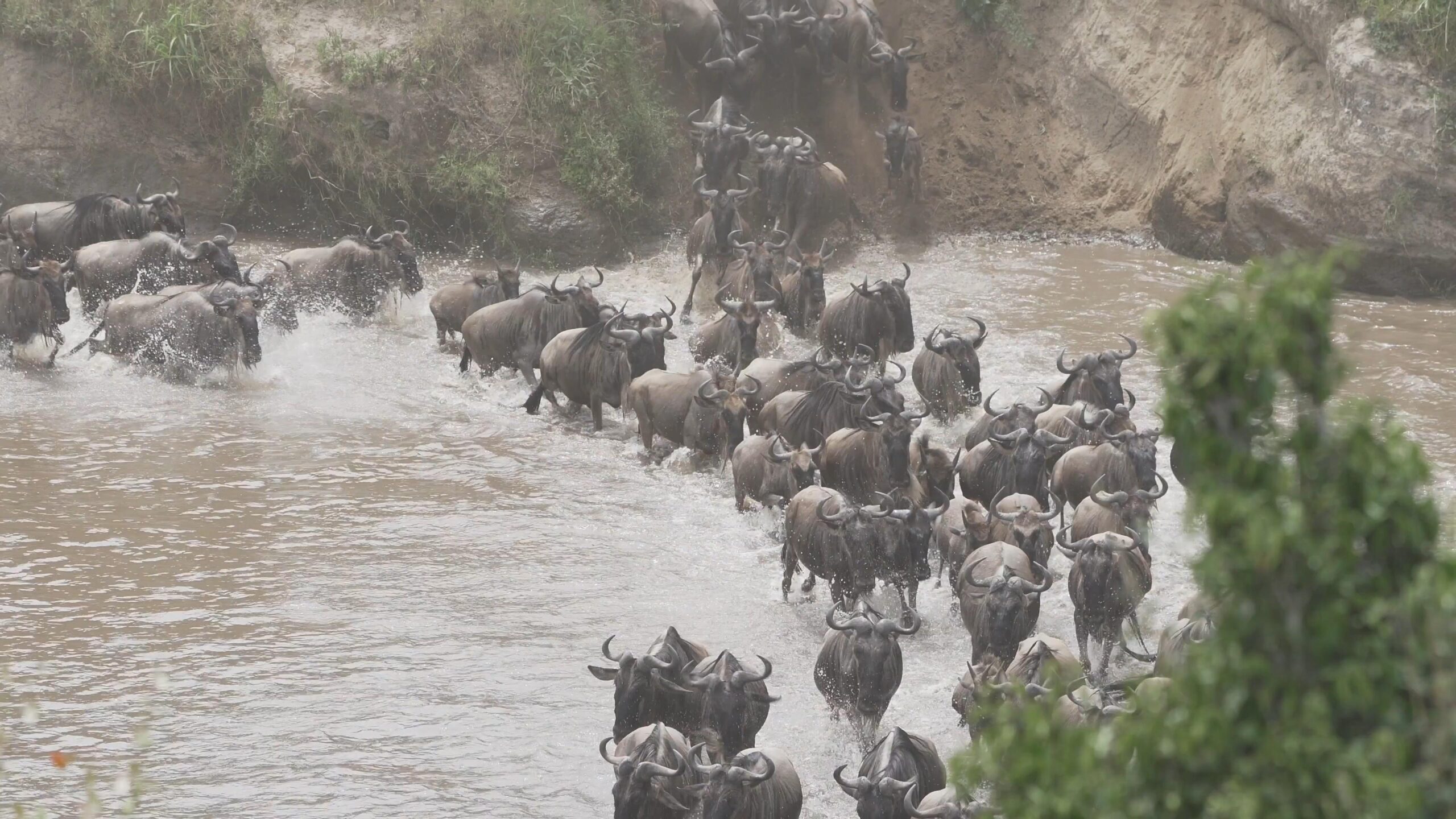
Aim for July to October, with the best crossing sightings from late July to September. The herds are one population that moves between the Serengeti in Tanzania and the Mara, following rain and grass, so dates move. In 2021 Kenyan scientists said the arrival was delayed significantly after weak March to May rains, while in good years the herds can reach Kenya by mid-June. Estimates of herd size range from about 0.5 million to 1.4 million wildebeest depending on the method, and either figure is a vast gathering. Our Great Migration calendar follows the herds month by month. Longer stays give more chances at a crossing, which is why the two migration safaris above run to 5 and 7 days.
Big cats
Lions, leopards and cheetahs live in the Mara in every month, so no month is wrong. Crossing season draws predators to the river, and the shorter grass of the drier months generally makes cats easier to spot than the tall grass after the rains. In the green season you share sightings with fewer vehicles.
Value and quiet
The park fee is USD 100 a day for adults until 30 June, and March to May usually brings the lowest camp rates and the fewest vehicles. April is the wettest month, so tracks can be slow. January, February and June are a good compromise, with lower fees and mostly drier weather. Our guide to low season in the Masai Mara weighs the pros and cons.
Photography
The dry months bring dust and golden light, plus action at the river. After rain, the air is clearer, the plains are green and storm skies add drama behind the animals. Crossings take patience, so photographers should allow extra days.
Birding
The Mara offers good birding in every month. The green months, when many species breed and migrants are present, are generally the better time. Tell your planner if birds matter so the camps and guides suit you.
Families
Children aged 9 to 17 pay USD 50 a day in both seasons, and younger children are free, so the low-season saving comes mainly from the adult fee. The drier months suit children better, with less mud and steadier game viewing. Long waits at a river crossing can test young patience, and dawn drives are cold, so pack layers.
Get your free safari quote in 6 hours
Tell us your dates and who is travelling. A planner in our Nairobi office replies within 6 hours with a day-by-day itinerary, the camps we suggest and a fully itemised price. No payment is needed to enquire.
Prefer to talk? WhatsApp or call +254 799 871 255.
Frequently asked questions
What is the best month to visit the Masai Mara?
There is no single best month. For the herds, late July to September is the usual peak. For lower costs, choose January, February or June. For the fewest vehicles, March to May, accepting more rain.
When is the Great Migration in the Masai Mara?
The herds are usually in the Mara from about July to October. They can arrive from mid-June after good rains in Kenya, or later after dry years. They head south again around October and early November.
Is the Masai Mara worth visiting in the rainy season?
Yes, if you accept some mud. The long rains peak in April, the plains are green, vehicles are fewer and camp rates are usually lower. Cats and resident game are still there, but the herds are in Tanzania.
When is the cheapest time to go to the Masai Mara?
Generally January to June, when the park fee is USD 100 per adult per day, with March to May usually lowest for camp rates. Our from-prices use low season, two sharing, for that reason.
How much are the Masai Mara park fees?
Non-resident adults pay USD 100 per day from 1 January to 30 June and USD 200 from 1 July to 31 December. Children aged 9 to 17 pay USD 50. Our itemised quote shows what is and is not included.
Can anyone guarantee a river crossing?
No. Crossings depend on the herds, the grass and the river, and the herds may wait at the bank for hours before one begins. The best odds come from travelling between late July and September and spending several days in the reserve.
What should I pack for the Masai Mara?
Pack layers for cold dawns of roughly 10 to 14 C, a rain jacket, a sun hat, neutral clothing and binoculars. Layers matter even in the dry season, because early drives start before the sun warms the plains.


Comments are closed