
 Destinations, Experiences & East Africa Travel
Olare Motorogi Conservancy is a privately leased wildlife area on the north-western edge of the Masai Mara National Reserve, covering roughly 33,000 acres (about 15,000 hectares) of Maasai-owned land. It is one of the most carefully limited places to watch big cats in Kenya, because only guests staying at its camps can drive there and the beds are spread very thinly across the land. It is one of the Kenya wildlife conservancies we plan safaris around.
This guide covers where it is, how it works, what you can do there that the reserve does not allow, which camps are listed inside it, and how it compares with the reserve and its neighbours. Where a figure comes from a travel company rather than the conservancy itself, we say so.
Planning this trip? Get a free quote in 6 hours →
Olare Motorogi Conservancy at a glance
| Question | Answer |
|---|---|
| Where is it? | North-west of the Masai Mara National Reserve, acting as a buffer zone for the reserve |
| How big is it? | About 15,200 hectares per the Mara Conservancies association; roughly 33,000 acres per a travel company. Sources differ, so treat it as about 33,000 to 37,000 acres |
| Who owns the land? | Maasai landowners, who lease it for tourism and receive a lease fee |
| How crowded is it? | About one bed per 650 acres and one game-viewing vehicle for every 2,100 acres (Brilliant Africa) |
| Camps | Around eight lodges and 95 rooms in total, according to the same source |
| Who can drive there? | Only guests staying at member camps; self-driving is not allowed |
| Allowed here, not in the reserve | Night drives, off-road driving and guided walks |
| Best known for | Lions, leopards, cheetahs and quiet sightings with few other vehicles |
Where it sits in the Mara
The Mara ecosystem is not one park. The Masai Mara National Reserve sits at its centre, and around it lies a ring of conservancies on land that Maasai families own. The Mara Conservancies association lists 22 conservancies and conservation areas in the wider Mara region, while other lists count 14 to 16 of the better-known ones. Olare Motorogi is on every list.
Its neighbours matter, because animals do not follow lease boundaries. Naboisho lies to the east, Mara North to the north-west and Ol Kinyei further out beyond Naboisho. Wildlife moves between them and the reserve, which is why a good morning in Olare Motorogi can include animals that were in the reserve the day before. You can read about each neighbour in our guides to Naboisho Conservancy, Mara North Conservancy and Ol Kinyei Conservancy.
How the conservancy works
Landowners lease their plots to a conservancy, which works with a small number of tourism partners. The tourism partners pay the lease fee to the families, and in return the land is kept for wildlife and for a limited number of guests. Some conservancies also let Maasai herders graze cattle, so you may see livestock near wildlife in places; this varies from one conservancy to another.
The model is simple to describe. Fewer beds mean fewer vehicles, fewer vehicles mean calmer sightings, and calmer sightings justify a higher rate, which pays the landowners. That is the reason conservancy nightly rates are generally higher than those in the reserve.
Size and bed density
Two figures matter here. The Mara Conservancies association gives the size as 15,200 hectares, and its own text says 33,386 acres. Those two numbers do not quite match, so we round and say about 33,000 acres or more. Brilliant Africa, a travel company, adds that Olare Motorogi works out to one bed per 650 acres, with 95 rooms across eight lodges. By comparison, it puts Naboisho at fewer than one bed per 350 acres. Africa Geographic describes conservancies in general as typically allowing one tent for every 350 to 700 hectares. The sources use different units, so read these as an indication of how thin the camp density is, not as exact rules.
What you can do here that you cannot do in the reserve
The reserve and the conservancies follow different rules. The reserve allows wildlife activity from sunrise to sunset on marked tracks only. The conservancies allow more.
| Activity | Masai Mara National Reserve | Olare Motorogi Conservancy |
|---|---|---|
| Night drives | Not permitted | Offered by member camps |
| Off-road driving | Not permitted | Allowed to view wildlife, under the conservancy’s rules |
| Guided walks | Not permitted | Offered, led by an armed ranger |
| Who can enter | Any paying visitor | Guests at member camps |
| Vehicle crowding | Can be busy at river crossings and big cat sightings | Limited by bed numbers |
Night drives
Night drives let you look for animals that rest through the day, such as bat-eared foxes, genets and sometimes leopards on the hunt. Brilliant Africa says night drives in conservancies run until about 10 pm. Mara North Conservancy, next door, publishes its own rule that vehicles must be back at camp by 10 pm and use red filters, and that cubs can only be viewed at night once they are four months old. We have not read an equivalent published rule for Olare Motorogi, so expect something similar and ask your camp.
Walking safaris
Guided walks are a quiet way to notice small things: tracks, dung, insects and plants that a vehicle passes. The walks are led by an armed ranger, and vehicles keep away from walkers. Your guide will brief you on how to behave, and some camps do not allow children on walks, so check each camp’s policy.
Vehicle limits at a sighting
This is the point many travellers care about most. Mara North Conservancy publishes a limit of five vehicles at a sighting, with extra cars waiting 100 metres away. For Olare Motorogi we found a density figure, about one vehicle for every 2,100 acres, but no official per-sighting cap. In practice, the low bed count does much of the work: there are not many vehicles to crowd a lion.
Wildlife you can expect
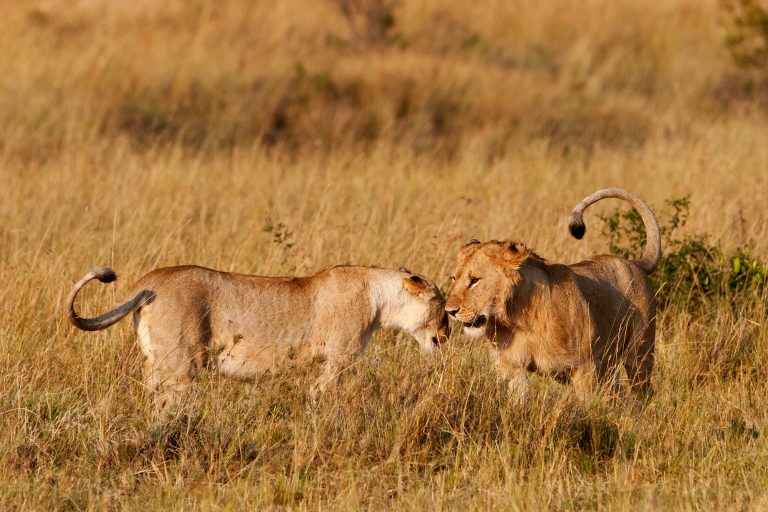
The conservancy is best known for predators. Lion prides, leopards in the riverine woodland and cheetahs on the open plains are the headline animals, and the low vehicle numbers give them space to behave naturally. Alongside them you will find elephants, buffalo, giraffe, zebra, topi, impala and many smaller species. The mix of open grassland and bush works for both quiet watching and active tracking.
The Great Migration is a seasonal event, with wildebeest and zebra moving through the wider ecosystem during the second half of the year. The herds do not stay in one place, so treat the conservancies as a quieter base for resident wildlife rather than a guaranteed river-crossing stage. For crossings and timing, see our complete Masai Mara safari guide.
Camps listed inside Olare Motorogi
The camps below are listed in safari directories as being in Olare Motorogi Conservancy. A directory listing is not the same as a confirmed booking, so we check availability with each camp before we quote.
| Camp | Directory notes |
|---|---|
| Mahali Mzuri | Listed as luxury |
| Mara Plains Camp | Tier not stated by the directories we checked |
| Porini Lion Camp | Tier not stated by the directories we checked |
| Mara Toto Tree Camp | Described as ideal for couples or small groups |
Directories sometimes disagree. Kicheche Bush Camp, for example, appears under Olare Motorogi in one directory and near Talek Gate in another, so we confirm such camps before recommending them. We do not quote nightly rates for these camps here. Prices change with season, and we give a full itemised price once we know your dates.
Getting there
Most guests reach the conservancy by road from the Mara gates or by light aircraft to an airstrip, then a short game drive to camp. Your camp arranges the final transfer. If you are short on time, a fly-in package avoids the long road from Nairobi. Our 3-Day Maasai Mara Roar & Roam Safari is a compact way to see the Mara, from USD 1,420 per person. Prices depend on season, group size and lodge choice.
Two ways to see the Mara
3-Day Maasai Mara Roar & Roam Safari suits travellers with only a few days who want game drives and a Maasai village visit. From USD 1,420 per person.
7 Days Maasai Mara Migration Safari suits travellers who want more time in the Mara across the migration season. From USD 4,900 per person.
Prices depend on season, group size and lodge choice. Ask us to tailor either trip around a conservancy stay.
Safaris that fit this guide
 3-Day Masai Mara SafariBig cats and the Mara in a long weekend3 days · from $1,420 ppView trip →
 5-Day Masai Mara Migration SafariMore time with the herds in the Mara5 days · from $2,750 ppView trip →
 9-Day Hidden Northern Kenya SafariLaikipia, Meru and Samburu off the beaten track9 days · from $4,730 ppView trip →
Every trip is private and can be changed to suit you. Get a free, tailor-made quote in 6 hours →
Fees and what they cover
Conservancy fees are separate from the reserve’s entry fee. Africa Geographic notes that conservancy nightly rates are generally higher than rates in the reserve, partly because land-lease fees go to Maasai landowners. For guests staying in a conservancy camp, the conservancy fee is normally part of the nightly rate, so ask whether it is included.
No official tariff for Olare Motorogi was available to us. One travel company’s 2026 guide gives a range of roughly USD 80 to 120 for a non-resident adult and USD 45 to 75 for a child across the private conservancies, but that is a commercial blog and not a tariff. Treat it as a rough guide and confirm exact amounts with your camp. Also ask how the conservancy fee and the reserve’s daily entry fee combine on a day that crosses both. Fees last verified: October 2026.
Olare Motorogi compared with its neighbours
| Area | Size (approximate) | Character |
|---|---|---|
| Olare Motorogi | About 33,000 acres | Thin bed density, strong big cat reputation, buffer for the reserve |
| Mara Naboisho | About 50,000 acres | Eight camps on the north-eastern edge; the association says it strictly monitors tourist numbers |
| Mara North | About 70,000 acres | The largest, with 12 tourism partners; it publishes a five-vehicle limit at a sighting |
| Ol Kinyei | About 18,500 acres | Smaller and quieter, with two camps |
If you are choosing between them, the practical difference is usually the camp rather than the land, because wildlife crosses the boundaries. Pick the camp style and budget you like first, then the conservancy. Our article on the reserve versus the conservancies explains the wider trade-offs, and our guide to conservancy camps covers night drives and walks in more detail.
Who Olare Motorogi suits
- Big cat enthusiasts who want long, undisturbed sightings.
- Photographers who value space around a sighting and the freedom to position a vehicle within the rules.
- Repeat Mara visitors who have done the reserve and want a quieter second trip.
- Travellers who want walks and night drives, which the reserve does not allow.
It may suit you less if you are watching your budget closely, or if your main aim is a river crossing, which happens along the rivers rather than in the conservancy. Many travellers combine both, spending some nights in a conservancy and some near the reserve.
Practical tips
- Book early for peak months. A small number of beds means camps fill up first.
- Ask about children. Age limits vary by camp, and walks and night drives often have their own rules. Ask us before you book.
- Pack for early mornings. Layers, a warm jacket for dawn drives, a hat, sunscreen and neutral clothing.
- Bring a good zoom lens. Off-road driving helps, but you will still want reach.
- Respect the rules. Stay in the vehicle near wildlife, keep voices low and follow your guide.
Get your free safari quote in 6 hours
Tell us your dates and who is travelling. A planner in our Nairobi office replies within 6 hours with a day-by-day itinerary, the camps we suggest and a fully itemised price. No payment is needed to enquire.
Prefer to talk? WhatsApp or call +254 799 871 255.
Frequently asked questions
Can I visit Olare Motorogi Conservancy for a day?
Generally no. Only guests staying at member camps may game drive in the conservancy, and self-driving is not permitted. To experience it, you need to stay at one of its camps.
Is Olare Motorogi better than the Masai Mara National Reserve?
It is different rather than better. The conservancy has fewer vehicles and allows night drives, off-road driving and walks. The reserve has the river crossings and a wider range of lodge prices. Many travellers include both.
Are there many vehicles at sightings?
Far fewer than in busy parts of the reserve. The conservancy has about one vehicle for every 2,100 acres, according to Brilliant Africa. We found no official per-sighting cap for Olare Motorogi, unlike Mara North, which limits sightings to five vehicles.
Is it suitable for children?
Camps in conservancies often welcome families, but age limits vary by camp and walks may be restricted. Tell us the ages of the children and we will check each camp before we suggest it.
How much does the conservancy fee cost?
There is no official tariff we could verify. One travel guide gives roughly USD 80 to 120 per adult for non-residents across the private conservancies, but for guests at a camp the fee is normally part of the nightly rate. Ask whether it is included. Fees last verified: October 2026.
Can I combine the conservancy with the reserve?
Yes. Many itineraries split nights between a conservancy camp and a camp near the reserve, which lets you add river crossings or an optional hot-air balloon flight at USD 550 per person. Our 7 Day 6 Nights Fly Package, from USD 3,985 per person, is one way to save road time.


Comments are closed