
 Destinations, Experiences & East Africa Travel
Kenya has more than a dozen wildlife conservancies in the Masai Mara alone (the Mara Conservancies association lists 22 conservancies and conservation areas in the wider Mara), plus large private and community conservancies in Laikipia, Samburu, Amboseli, Tsavo, the southern Rift Valley, Naivasha and Nakuru. A conservancy is land set aside for wildlife and tourism under a lease or community agreement, usually with fewer vehicles, fewer beds and more freedom than a national park, such as night drives and guided walks. The Mara sits about 270 km (170 miles) from Nairobi, a 5 to 6-hour drive or a 45 to 60-minute flight, while Ol Pejeta in Laikipia is about 220 km away, roughly 4 to 4.5 hours by road.
This page is the overview. It explains what a conservancy is, how it differs from a national park or reserve, where the main conservancy regions are, what the fees mean, and which region suits which kind of traveller. Each region has its own detailed guide, linked in the sections below and in the list at the end.
Planning this trip? Get a free quote in 6 hours →
Kenya conservancies at a glance
| Question | Short answer |
|---|---|
| What is a conservancy? | Land managed for wildlife and tourism, owned by private landowners, communities or trusts rather than run by the government as a park |
| Main regions | Masai Mara, Laikipia, Samburu and the north, Amboseli, Tsavo, the southern Rift, Naivasha and Nakuru |
| How many in the Mara? | 14 named by Wikipedia, 16 by the Mara Predator Conservation Programme, 22 by the Mara Conservancies association (the count depends on who is counting) |
| What you can do that a park may not allow | Night drives, off-road driving to view wildlife and walking safaris, depending on the conservancy |
| Crowds | Lower, because bed numbers and vehicles at a sighting are limited |
| Fees | Paid separately from park entry, usually built into the camp rate; confirm what your rate includes |
| Self-driving | Not permitted in the Mara conservancies; you go out with your camp |
What a Kenya wildlife conservancy actually is
A national park or national reserve in Kenya is government land run for the public, with a daily entry fee and one set of rules for everyone. A conservancy is different. The land belongs to someone else, and wildlife and tourism share it by agreement. Three models cover most of what you will meet.
Leased community land
In the Masai Mara, Maasai landowners lease their land to conservancies and receive a lease fee or a share of profits. Some conservancies also let Maasai graze cattle in set areas, so you may see cattle and wildlife in the same view. The Mara conservancies are the clearest example, and our guide to Masai Mara conservancy camps covers how they work for a guest.
Private conservancies
In Laikipia, many former cattle ranches became wildlife conservancies. Ol Pejeta, Lewa, Borana, Loisaba and Segera are privately or trust-run, often with a working ranch and a strong rhino conservation programme alongside the lodges.
Community conservancies
In the north, community-owned conservancies are managed by local people and supported by the Northern Rangelands Trust (NRT). NRT says on its own website that it has 47 member community conservancies covering 6.37 million hectares. The community owns the land, the lodge or both, and the income stays local.
Conservancy vs national park or reserve
The practical differences matter more than the definitions. Here is how they compare on the Mara, where the contrast is easiest to see.
| Feature | Masai Mara National Reserve | Mara conservancies |
|---|---|---|
| Night drives | Not permitted | Offered by many camps, in designated areas |
| Off-road driving | Not permitted; marked tracks only | Often allowed to view wildlife, under conservancy rules |
| Walking safaris | Not permitted | Offered, led by an armed ranger |
| Vehicles at a sighting | Busy at peak times | Capped; Mara North Conservancy allows no more than 5 cars at a sighting |
| Beds | Many lodges and camps | Typically one tent for every 350 to 700 hectares (Africa Geographic) |
| Self-driving | Possible | Not permitted; only guests of member camps may drive in |
| Entry | Daily park fee | Conservancy fee, normally part of the camp rate |
Mara North Conservancy publishes its own etiquette rules, which show how seriously these limits are taken. Extra vehicles wait 100 metres away, each vehicle has 10 minutes at a sighting before giving way, the speed limit is 40 kph, and night drives run in designated areas only and finish by 10 pm. Rules vary by conservancy, so treat these as an example rather than a universal standard.
How conservancy money reaches landowners
The reason a landowner keeps wildlife on their land is income. In the Mara, camps pay for the right to operate in a conservancy, and the conservancy passes lease money to the landowners who signed up. Those payments can be a fixed lease fee or a share of profits, depending on the arrangement.
In community conservancies the money often goes further. At Il Ngwesi in Laikipia, which is owned by Laikipiak Maasai pastoralists, 40 percent of the eco-lodge’s net profit goes to community development such as water, schools and health. Naibunga Conservancy, run by nine group ranches in Laikipia North, has member ranches paying 20 percent of their earnings to the trust. When you choose a conservancy camp, part of what you pay supports people who could otherwise turn the land to farming or grazing alone.
Conservancy fees explained
Conservancy fees are separate from a national park or reserve entry fee. In the Mara, Africa Geographic notes that conservancy nightly rates are generally higher than reserve rates, partly because the land-lease fees go to Maasai landowners. A 2026 commercial guide puts the private Mara conservancy fee for a non-resident adult at roughly USD 80 to 120 and for a child at USD 45 to 75. That is a travel company’s blog rather than an official tariff, and other guides quote higher figures, so confirm the amount with your camp. Ask whether conservancy fees are included in your rate, and how they combine with the reserve fee on a day you cross into it.
Laikipia prices differ by property. Ol Pejeta lists a non-resident adult daily entry fee of USD 110 and USD 55 for a child aged 3 to 11, which includes the chimpanzee sanctuary visiting windows and an all-day game drive. At Lewa, lodge pages for 2026 quote about USD 165 to 183 per adult per day for non-residents, either included in the rate or added on top. Fees last verified: October 2026.
Masai Mara conservancies
The Mara is the best-known conservancy region. The conservancies sit along the northern and eastern edges of the Masai Mara National Reserve, so a stay can combine the quiet of a private conservancy with a day trip into the reserve for the Mara River and, in season, the wildebeest migration. Our comparison of the Masai Mara National Reserve versus the conservancies goes deeper on that choice.
If you want a short taste, our 3-Day Maasai Mara Roar & Roam Safari is from USD 1,420 per person, with prices depending on season, group size and lodge choice.
Mara North
Mara North is the largest of the group, at about 28,000 to 29,000 hectares (roughly 70,000 acres). It lies in the north-western Mara, along the southern border of the reserve, and holds around 15 camps according to Brilliant Africa. Its published etiquette rules are the most detailed of any Mara conservancy. Read the full Mara North Conservancy guide.
Olare Motorogi
Olare Motorogi covers about 15,000 hectares and acts as a buffer for the reserve. Brilliant Africa describes roughly one bed per 650 acres and one game-viewing vehicle for every 2,100 acres. Our Olare Motorogi guide covers camps, rules and wildlife.
Naboisho
Naboisho is about 22,500 hectares on the north-eastern edge of the reserve, and the association says it strictly monitors tourist numbers. It is known for lion viewing and walking safaris. See the Naboisho Conservancy guide.
Ol Kinyei and the smaller conservancies
Ol Kinyei is smaller, at about 7,500 hectares, and sits between the reserve and the Loita plains. Lemek, Enonkishu, Siana and others are smaller still and often cheaper. Read about Ol Kinyei and the smaller Mara conservancies before you choose.
Laikipia conservancies
Laikipia, on the plateau north of Mount Kenya, is the heartland of Kenya’s private conservancies. The scale is large: Ol Pejeta covers about 90,000 acres (about 360 km2), and Lewa about 62,000 acres. Our full Laikipia conservancies guide covers each property.
Ol Pejeta
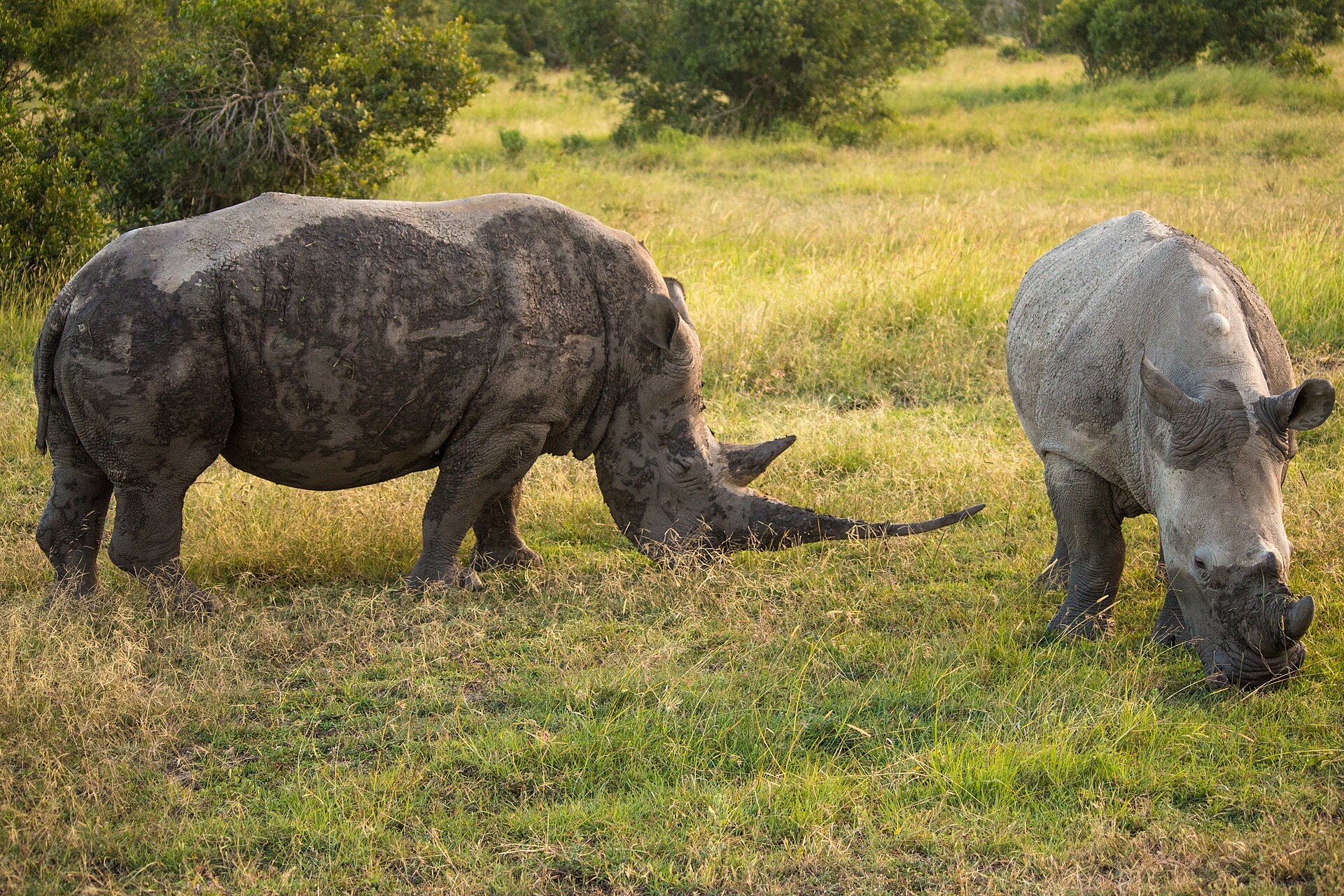
Ol Pejeta is a not-for-profit conservancy west of Nanyuki. It is home to the last two northern white rhinos, Najin and Fatu, both female, and to the largest black rhino population in East Africa according to Ol Pejeta, with well over 150 animals. It also has the Sweetwaters Chimpanzee Sanctuary, where rescued chimpanzees live. Kenya's rhino population stood at 2,102 at the end of 2024, up from 384 in 1987, according to the Kenya Wildlife Service.
Lewa and Borana
Lewa and Borana share one connected landscape for rhinos. Lewa says more than 280 rhinos live across Lewa and Borana, and its own count shows 264 Grevy's zebra across the wider landscape. Lewa lists lodges including Elewana Kifaru House, Elewana Lewa Safari Camp, Sirikoi Lodge, Lewa House and Lewa Wilderness, and Borana has Borana Lodge. Lewa is about four hours by road from Nairobi, or a direct flight from Wilson Airport.
Loisaba, Segera and the north-west
Loisaba is about 58,000 acres in northern Laikipia, with star beds on a rocky kopje above a waterhole. Segera is about 50,000 acres, and in 2025 it received 21 black rhinos moved from Ol Pejeta. Suyian, Sosian, Mugie and Ol Jogi are also private conservancies in the same region, each with its own character. Ol Pejeta, Lewa, Borana and Loisaba are the ones most visitors start with.
Laikipia community conservancies
Il Ngwesi, Lekurruki and Naibunga are community-owned. Il Ngwesi's eco-lodge has six open-fronted cottages and offers guided walks with a Maasai guide and an armed ranger, plus night game drives. These are a good choice if you want the community side of conservation, not just the wildlife.
Ready to see a conservancy yourself?
- 3-Day Maasai Mara Roar & Roam Safari: a short Mara trip for first-timers, from USD 1,420 per person.
- 9 Days Untamed Safari to the Hidden Northern Kenya Circuit: for travellers who want the north beyond the Mara, from USD 4,730 per person.
Prices depend on season, group size and lodge choice.
Samburu and the Northern Rangelands
North of Laikipia, the landscape turns drier and more open, and the conservancies are almost all community-owned. Our guide to the Samburu community conservancies covers Kalama, Westgate, Sera and Namunyak. Wildlife here includes species of the dry north such as Grevy's zebra and reticulated giraffe, and the experience feels quieter and more remote than the Mara.
The Northern Rangelands Trust supports the member conservancies, and its tourism arm, The Big North, lists lodges, campsites and cultural experiences. If you want a longer route through the north, our 9-day Northern Kenya circuit is built around this region.
Amboseli group ranches and conservancies
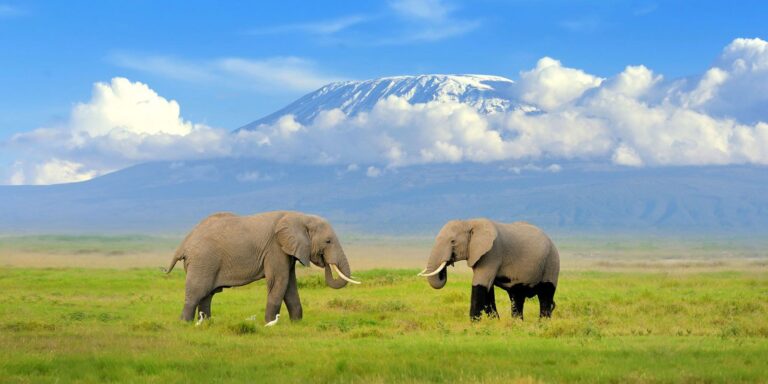
The land around Amboseli National Park is owned by Maasai communities, and several group ranches and conservancies there host camps and lodges. Kimana, Olgulului, Selenkay and the Chyulu Hills are the names to know. The appeal is the setting and the elephants against Mount Kilimanjaro on clear mornings, with fewer vehicles than inside the park. Our Amboseli conservancies guide covers how to choose between them.
Tsavo: Lumo and Taita Hills
Tsavo is one of Kenya's largest park areas, and the private conservancies on its edges offer a different way in. Lumo and the Taita Hills conservancies are the main ones, and they suit travellers who want to combine bush and hills, or add a few quiet nights to a coast stay. See Lumo and Taita Hills for details.
The southern Rift: Shompole and Olkiramatian
Shompole and Olkiramatian lie in the southern Rift Valley, in Maasai-owned land away from the standard safari circuit. They suit travellers who have done the Mara and want something less visited, with open land and few other guests. Our Shompole and Olkiramatian guide explains the area.
Safaris that fit this guide
 9-Day Hidden Northern Kenya SafariLaikipia, Meru and Samburu off the beaten track9 days · from $4,730 ppView trip →
 14-Day Kenya Safari and Diani BeachMara, lakes, Amboseli, Tsavo, then the beach14 days · from $4,860 ppView trip →
 9-Day Big Cat SafariLions, leopards and cheetahs: Mara, Nakuru, Samburu9 days · from $4,900 ppView trip →
Every trip is private and can be changed to suit you. Get a free, tailor-made quote in 6 hours →
Naivasha and Nakuru: Soysambu and Oserengoni
Soysambu and Oserengoni are conservancies in the Naivasha and Nakuru area. They are closer to Nairobi than the Mara, so they suit short trips, families with young children and travellers who want a gentler first day or last day. Read the Naivasha and Nakuru conservancies guide.
Comparing the regions
| Region | Main conservancies | Feels like | Best for |
|---|---|---|---|
| Masai Mara | Mara North, Olare Motorogi, Naboisho, Ol Kinyei, Lemek, Enonkishu, Siana | Classic plains, big cats, fewer vehicles | First-time safaris, big cats, the migration season |
| Laikipia | Ol Pejeta, Lewa, Borana, Loisaba, Segera | Plateau and rhino country, varied activities | Rhinos, walking, horse riding, families |
| Samburu and north | Kalama, Westgate, Sera, Namunyak | Dry, remote, community-run | Second or third safaris, cultural visits |
| Amboseli | Kimana, Olgulului, Selenkay | Open plains with Kilimanjaro views | Elephants and photography |
| Tsavo | Lumo, Taita Hills | Hills and thornbush | Combining with a coast stay |
| Southern Rift | Shompole, Olkiramatian | Remote Maasai land | Travellers seeking quiet |
| Naivasha and Nakuru | Soysambu, Oserengoni | Close to Nairobi, lake country | Short trips and easy starts |
Which conservancy region suits you
- First safari, mostly about big cats: the Masai Mara conservancies. You get the open plains without the crowds at sightings.
- Rhinos and varied activities: Laikipia. Ol Pejeta and Lewa are the starting points, and walking, riding and night drives are common.
- Something quieter and more remote: Samburu, the southern Rift or the Laikipia community conservancies.
- Photography: Mara and Amboseli for scenery, Laikipia for variety. Our 11-Day Best of Kenya Photography Hide Safari is priced on request, so ask for a tailor-made quote.
- Combining regions: our 7 Day 6 Nights Fly Package is from USD 3,985 per person and uses flights between regions to save road time.
- Short on time: Naivasha and Nakuru, or a short Mara stay.
What to pack and how to prepare
Conservancy camps are usually small and the dress code is relaxed. Pack neutral clothing in greens, browns and khaki, since some conservancies, including Loisaba, only allow vehicles in those shades. Bring layers: Lewa sits at 1,400 to 2,000 metres, where days are usually hot and dry and nights are cool. A warm jacket for early drives, a hat, sun protection and good walking shoes are worth the luggage space if you plan to walk.
Small camps often run on generators or solar power, so bring a charger that fits British three-pin sockets, which Lewa uses, and ask your camp what it supplies. Light aircraft flights between regions normally have baggage limits and favour soft bags, so check the allowance before you pack.
Activities you may not find in a park
Conservancies tend to offer a wider list of activities than a national park. Ol Pejeta alone lists lion tracking, night game drives, guided bush and bird walks, rhino monitoring, a Run with Rangers route of 5 to 7 km, and behind-the-scenes time with the chimpanzees. Borana Lodge lists tracking rhino on foot at first light, e-bike rides through zebra herds, horse riding and fly camping. In the Mara conservancies, walking with an armed ranger, night drives and sundowners in the bush are the most common extras. Some activities carry a separate charge, so ask what your rate includes before you arrive.
Planning notes that apply everywhere
Always ask your camp three things: whether conservancy fees are included, what the vehicle and group rules are, and whether walks and night drives are available and at what cost. Walks in the conservancies are led by an armed ranger, and guests should follow the guide closely. Rhino-country sanctuaries such as Ol Pejeta also run strict rules on how close you may approach.
Health and entry advice changes. The UK FCDO and US State Department publish current guidance for Kenya, and the US level was raised to Level 3 on 19 October 2026 for health reasons, according to Reuters. Check the live pages before you book, and ask your planner about any region you are considering.
All our conservancy guides
- Olare Motorogi Conservancy: Camps, Rules and Wildlife
- Naboisho Conservancy: Lions, Walks and Where to Stay
- Mara North Conservancy: A Guide to the Northern Mara
- Ol Kinyei Conservancy: Small, Quiet and Private
- Lemek, Enonkishu, Siana and the Smaller Mara Conservancies
- Samburu Community Conservancies: Kalama, Westgate, Sera and Namunyak
- Amboseli Conservancies: Kimana, Olgulului, Selenkay and the Chyulu Hills
- Lumo and Taita Hills Conservancies: Tsavo's Private Side
- Shompole and Olkiramatian: Kenya's Southern Rift Conservancies
- Soysambu, Oserengoni and the Conservancies of Lake Naivasha and Nakuru
Get your free safari quote in 6 hours
Tell us your dates and who is travelling. A planner in our Nairobi office replies within 6 hours with a day-by-day itinerary, the camps we suggest and a fully itemised price. No payment is needed to enquire.
Prefer to talk? WhatsApp or call +254 799 871 255.
Frequently asked questions
What is the difference between a conservancy and a national park in Kenya?
A national park is government land with a daily entry fee and uniform rules. A conservancy is privately, community or trust-owned land managed for wildlife and tourism, usually with fewer beds and vehicles and more flexible activities such as night drives and guided walks.
Are conservancies better than the Masai Mara National Reserve?
They are different rather than better. Conservancies offer fewer vehicles at sightings, night drives, walks and off-road viewing. The reserve is larger and holds the Mara River crossings. Many travellers combine the two.
How much does it cost to enter a Kenya conservancy?
It varies by conservancy and season. Ol Pejeta lists USD 110 for a non-resident adult per day. Lewa-area lodges quote about USD 165 to 183 per adult per day, and a 2026 guide gives roughly USD 80 to 120 for the private Mara conservancies. In many cases the fee is built into the camp rate, so ask what is included. Fees last verified: October 2026.
Can I drive myself in a Mara conservancy?
No. Self-driving is not permitted in the Mara conservancies, and only guests staying at member camps may game drive in them.
Can I go on a walking safari or night drive in a conservancy?
Often yes. Night drives, off-road driving and walking safaris are offered in conservancies but are not permitted in the Masai Mara National Reserve. Walks are led by an armed ranger, and availability depends on the conservancy and the camp.
Which conservancy is best for rhinos?
Laikipia. Ol Pejeta holds the last two northern white rhinos and a large black rhino population, and Lewa and Borana share a connected rhino landscape. Kenya had 2,102 rhinos at the end of 2024, according to the Kenya Wildlife Service.
Do conservancies help local people?
Yes. Landowners receive lease fees or a share of profits, and community-owned conservancies such as Il Ngwesi put a share of lodge profits into water, schools and health. The amounts differ by conservancy.


Comments are closed